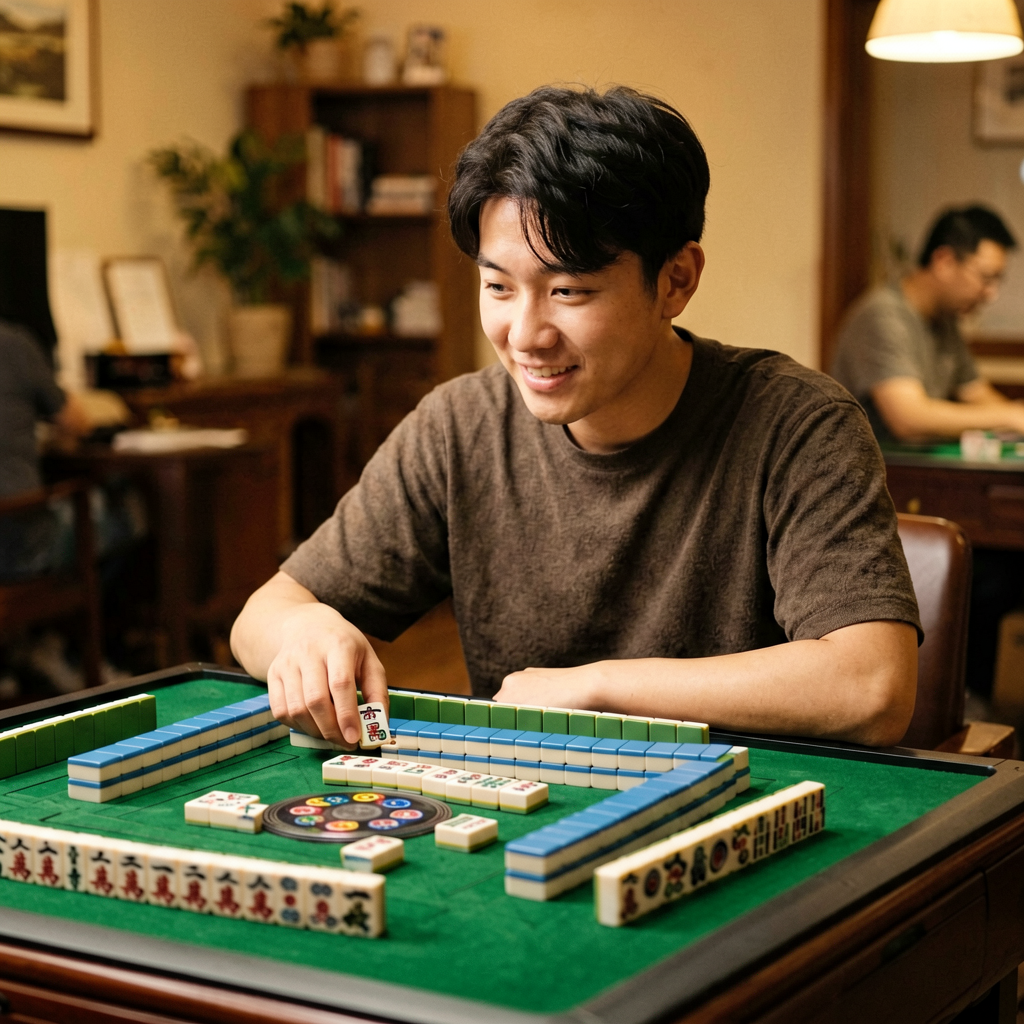
Your First American Mahjong Game: A Step-by-Step Walkthrough
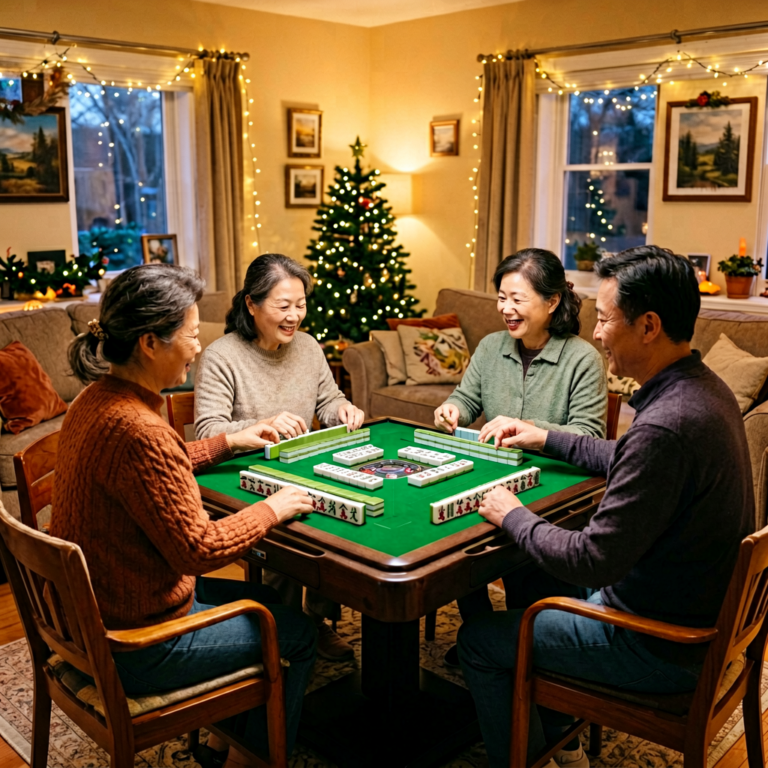
You said yes to a game before you thought about it, and now you are parked at a table with 150-odd tiles in front of you and a card full of colored numbers that everyone else seems to understand. Nobody is moving yet. This is the part where new players freeze. So here is exactly what happens, in order, from the moment you sit down to the moment someone yells Mahjong.
Two things before you touch a tile
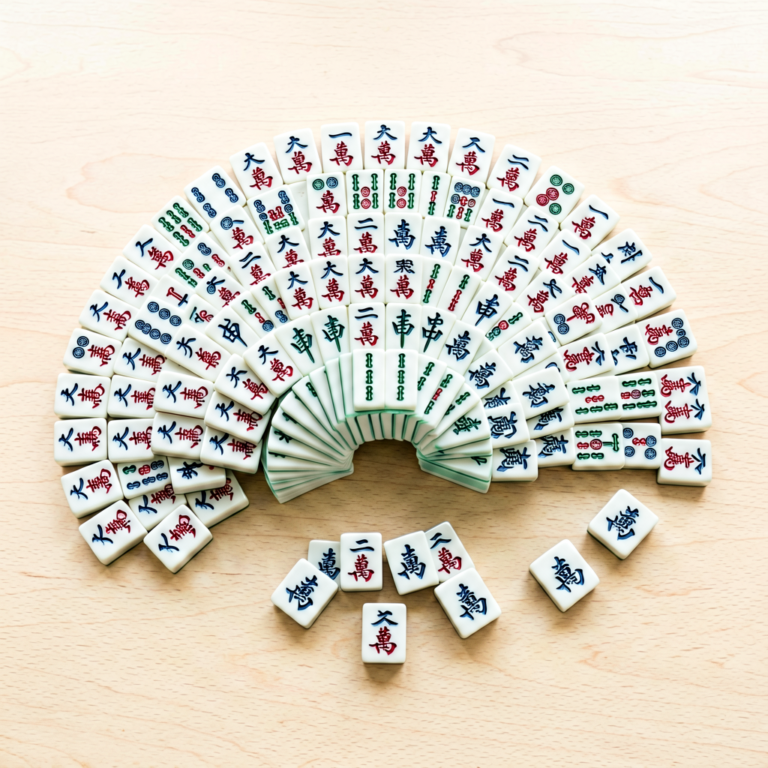
First, you are not building any hand you want. You are building one specific hand printed on the annual card from the National Mah Jongg League. Pick it before you start. Second, the set has 152 tiles, and you will hold 13 at a time, drawing a 14th on your turn. Hold that number. Thirteen in hand, fourteen to win. People lose games because they forget which number they are on.
Step 1: Build the wall
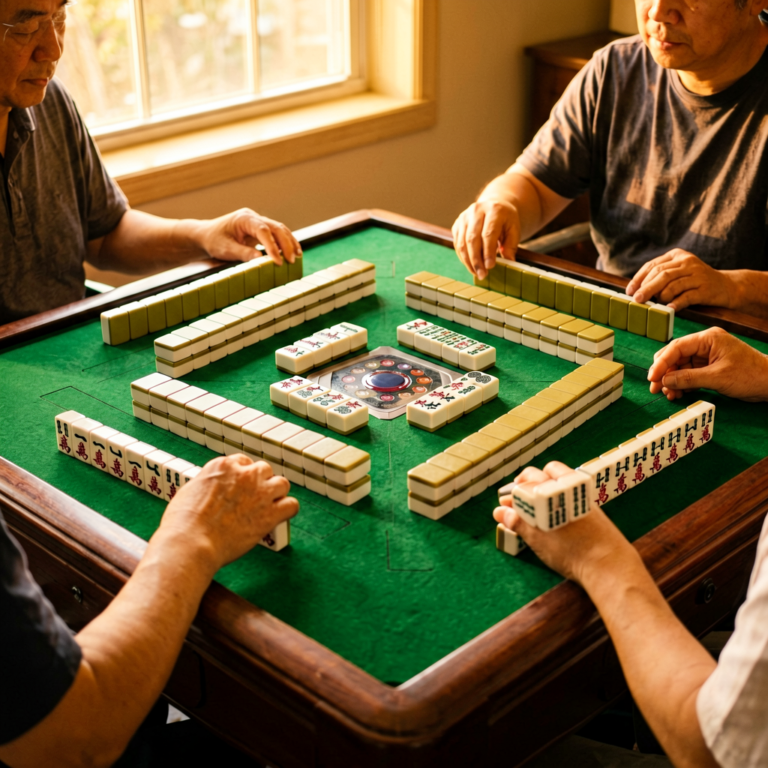
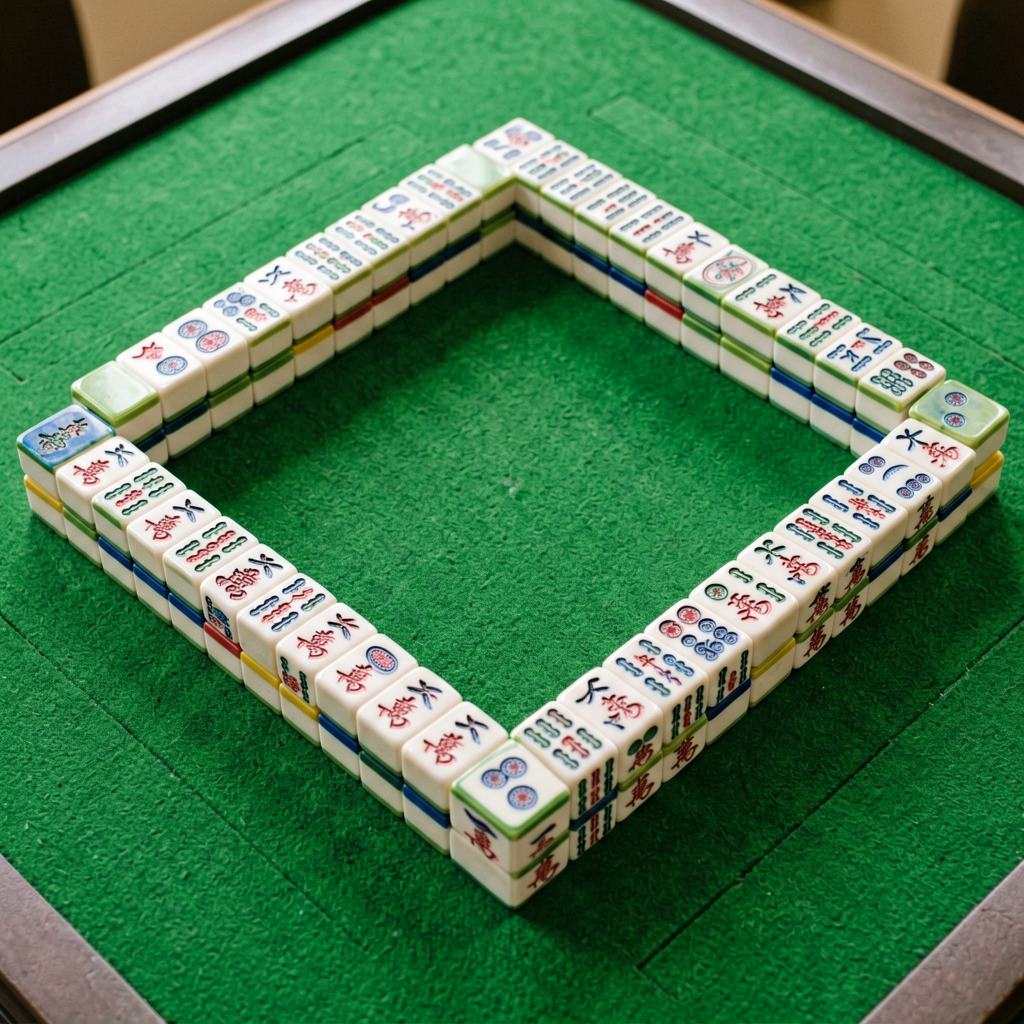
Everyone helps. You take your tiles and build a wall, a double row stacked two high, arranged into four sides around the center of the table. It ends up looking like a little square fort. The exact heights vary by group, but the purpose is the same: a neat supply of concealed tiles you can draw from later. When all four walls are up, the game can start.
Step 2: Break the wall and get dealt
One player is the dealer. They roll dice, count that many tiles along the wall, and that spot is where the deal begins. You get 13 tiles, everyone does. Keep yours face down at first, then turn them over and organize them. The dealer draws a 14th tile to open, which is just the first draw of the game. From here on, the rest of you are fishing from 13.
Step 3: The Charleston
Before anyone plays a tile into the middle, the table does the Charleston. This is the part that exists in almost no other version of mahjong and defines the American game. You pass three tiles to the player on your right. Then three to the left. Then three across. Then, if everyone at the table agrees, two more in either direction. The point is to trade away the junk you were dealt and pick up pieces that nudge you toward your hand. Watch what people pass. It hints at what they are collecting.

Step 4: Draw and discard
Now the real game. Play goes counterclockwise, which is backwards from what most people expect. On your turn you draw one tile from the wall, decide if it helps, and throw one back. That discarded tile lands in the middle, face up, available to everyone. Your whole game is a loop: draw, decide, discard. Thirteen in hand. Always thirteen, until you win.
Step 5: Calling tiles
Here is where it gets loud. If a tile someone discards is exactly what you need to complete a group, you can call it. Take three of a kind, a pung. Four, a kong. Five, a quint, which only works because of those extra American tiles and the jokers. Exposing a group means laying it face up on your rack. It locks that part of your hand, but it gets you closer. Some hands on the card allow exposures, marked X. Some demand you stay concealed, marked C. Know which one you picked.

Step 6: Mahjong
You win the moment the 14 tiles in front of you exactly match the hand you chose from the card. No more, no less. You call Mahjong, and the table stops. In casual games people might just show their hand. In stricter games a wrong call can cost you the whole game, so check twice. The winner collects from the table based on the value printed next to that hand on the card.
After the first hand
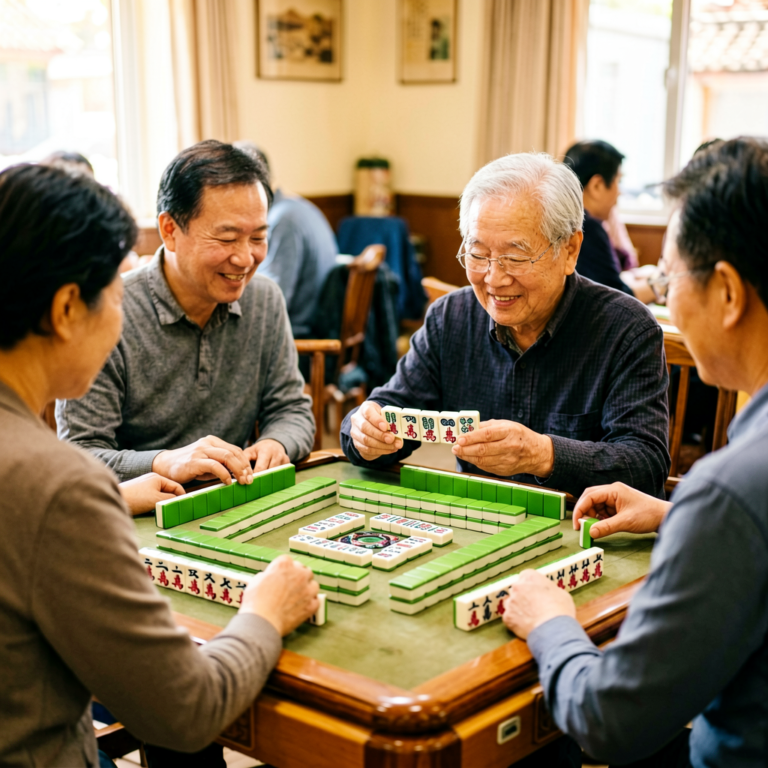
The wall gets rebuilt and you go again. A full game is usually four hands, one for each player as dealer. By the second hand the rhythm starts to feel normal. By the fourth you will catch yourself reading other people’s discards and quietly judging their taste in hands.
A few things nobody tells beginners
- Say what you are doing out loud. Passing three. Taking that. Mahjong. It keeps the table honest and stops confusion.
- Do not grab a discard you do not need just because it is sitting there.
- If you picked a hand and it died, switch. You can change targets right up until you expose.
- Jokers are wild, but only inside a group of three or more. They cannot be your pair.
- The card expires every year. This year’s game is this year’s card, so an old one is just a souvenir.
The short version
Your first game will feel chaotic. That is normal. The wall, the Charleston, the counterclockwise draws, the shouting, it all clicks faster than you expect, usually around the third hand. Bring the card, pick one hand, and let the table teach you the rest. The players are, almost without exception, happy to have you.