Can You Play American Mahjong With 2, 3, or 5 Players? What Actually Works
The rule says four players. The group chat says three people are free on Thursday. Or it’s just you and your partner, and you’d still like to touch the tiles.
This comes up more than the official rules admit. American mahjong is written for a table of four, but most of us don’t live in a four-person world. So the real question isn’t “is this legal” — it’s “does it still feel like the game.” Here’s what I’ve seen actually work.
Four is the design, but the game bends
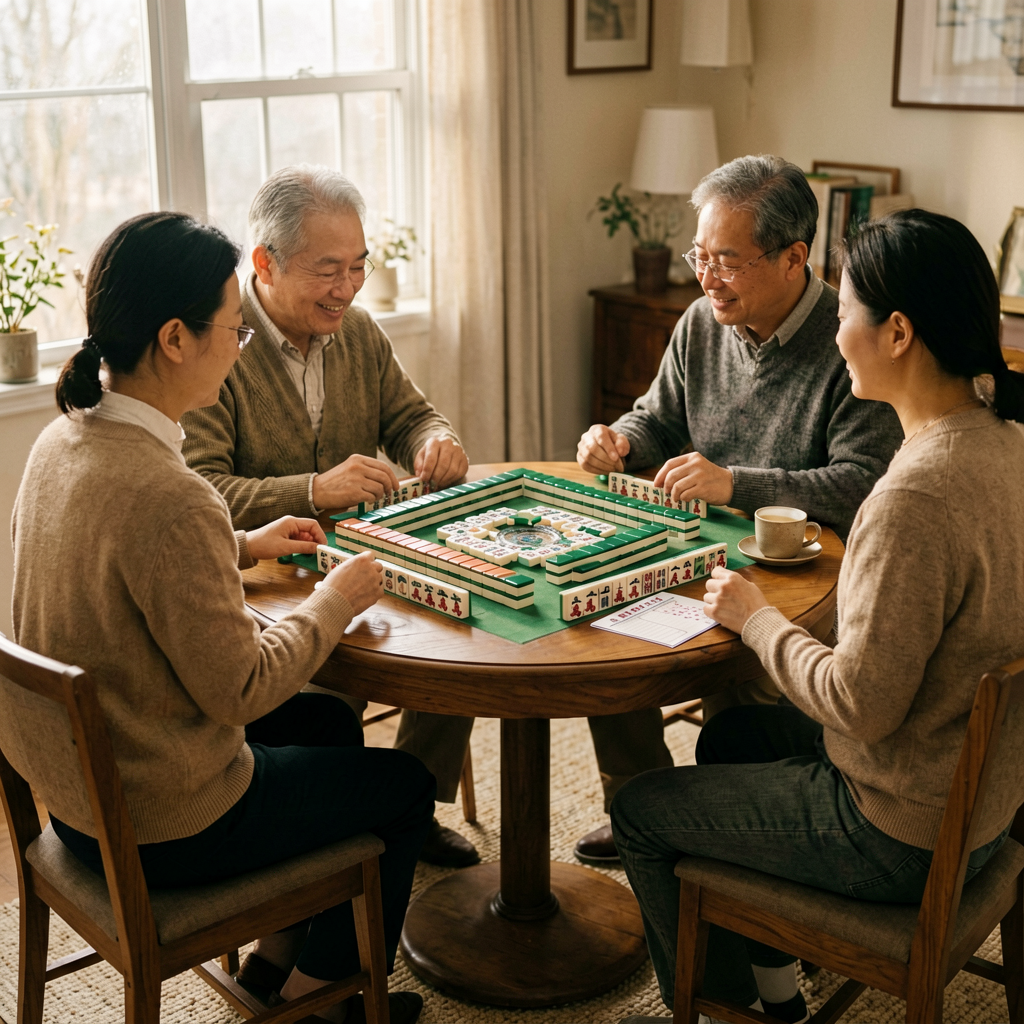
Standard American mahjong uses 152 tiles and a fixed rotation of four seats, with the Charleston passing tiles between all four players at the start of every hand. That structure assumes four. Drop or add a person and something has to give.
The good news: the core loop — draw a tile, decide if it helps, discard, repeat until someone completes a hand from the card — survives just fine with two or three. What you lose is the social richness of the full table, not the actual play. A two-player game is thin. A three-player game is genuinely good. Both are worth knowing.
Three players: the easiest fix
Three is the sweet spot for a short night. You play almost exactly as normal, with one seat empty. The empty seat just doesn’t draw or discard.
The one real adjustment is the winds. In a four-player game, each player owns one of the four winds — East, South, West, North — and certain hands on the card depend on them. With three players, decide early whether you’re keeping all four winds in play (so the card stays untouched) or dropping North and treating it as a “dead” tile everyone passes. Most groups keep all four winds and just leave the empty seat where it is. Simpler, and the card never needs a footnote.
The Charleston needs a tiny patch too: instead of passing to three neighbors, the three of you pass across and to the sides, and one pass direction just loops back. It takes thirty seconds to explain and then it feels normal.

Two players: practice, not a match
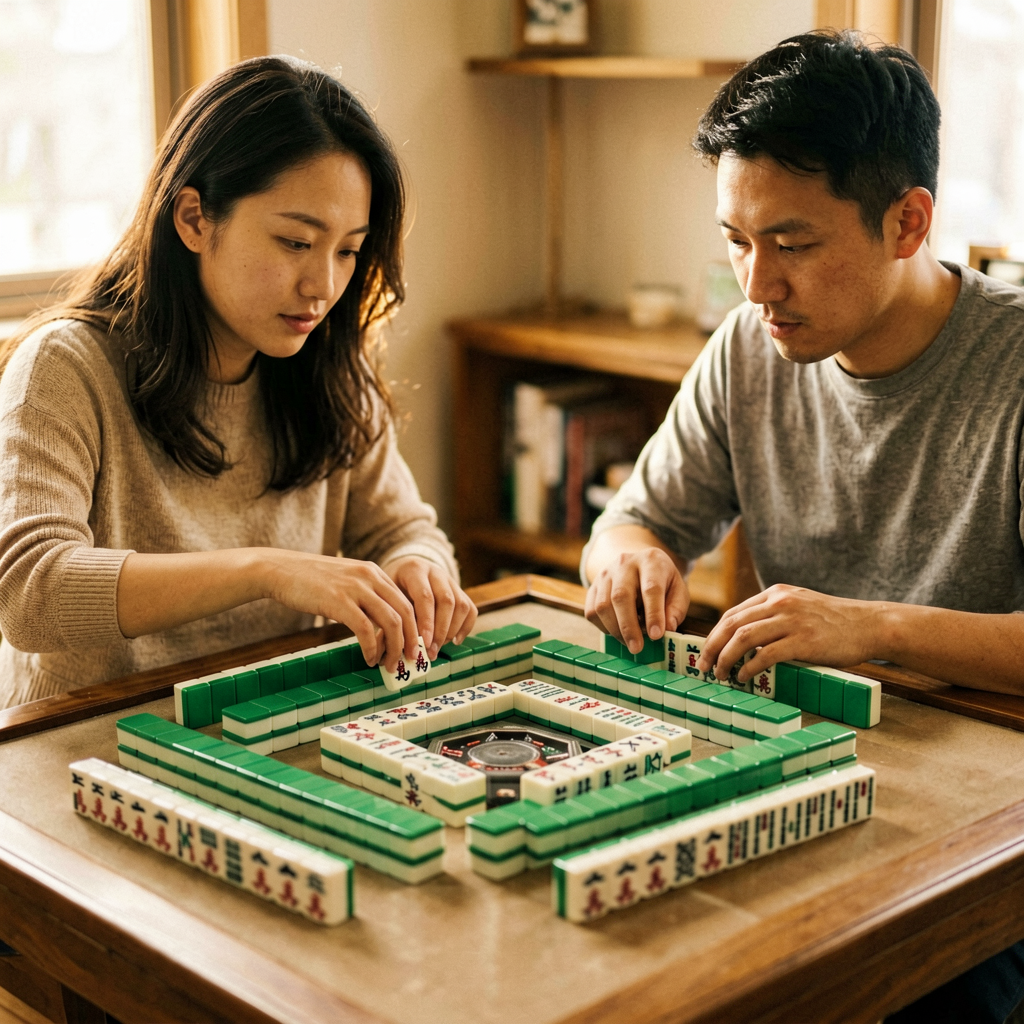
Be honest about this one. Two-player American mahjong is not a real contest — there’s no one to discard into your hand by accident, no bluffing, no reading the table. What it is, and what it’s great for, is practice.
The cleanest version: both players build a hand from the same card line at the same time, drawing from a shared wall, and the first to complete it “wins” the round. It’s a solo workout in disguise. You learn to read the card, sort your rack, and stop second-guessing every discard. Do this for twenty minutes with a beginner and they’ll walk into a four-player game looking like they’ve played for months.
Some people play a “give one, take one” version where each turn you hand your partner a tile and take one back, racing to finish a line. It’s silly and it works. Treat two-player as the driving range, not the course.
Five players: the rotation problem
Five is the awkward one. You can’t sit five people at a four-wind game without breaking the seating, and you can’t deal a clean rotation when one person is always out.
The version that works: four play, one sits out each hand, and the dealer rotates so everyone sits out roughly equally across the night. The person on the bench becomes the caller — announces discards, confirms wins, keeps score. It’s a real job and it keeps them in the game instead of on their phone. The downside is waiting, so keep hands short and let the bench player run the next hand immediately so there’s no dead air.
If nobody wants to sit, the other option is two tables of two and one of one — but then you’ve got a lonely practice player, so the rotation bench is usually the better call.
Why the card still does the heavy lifting
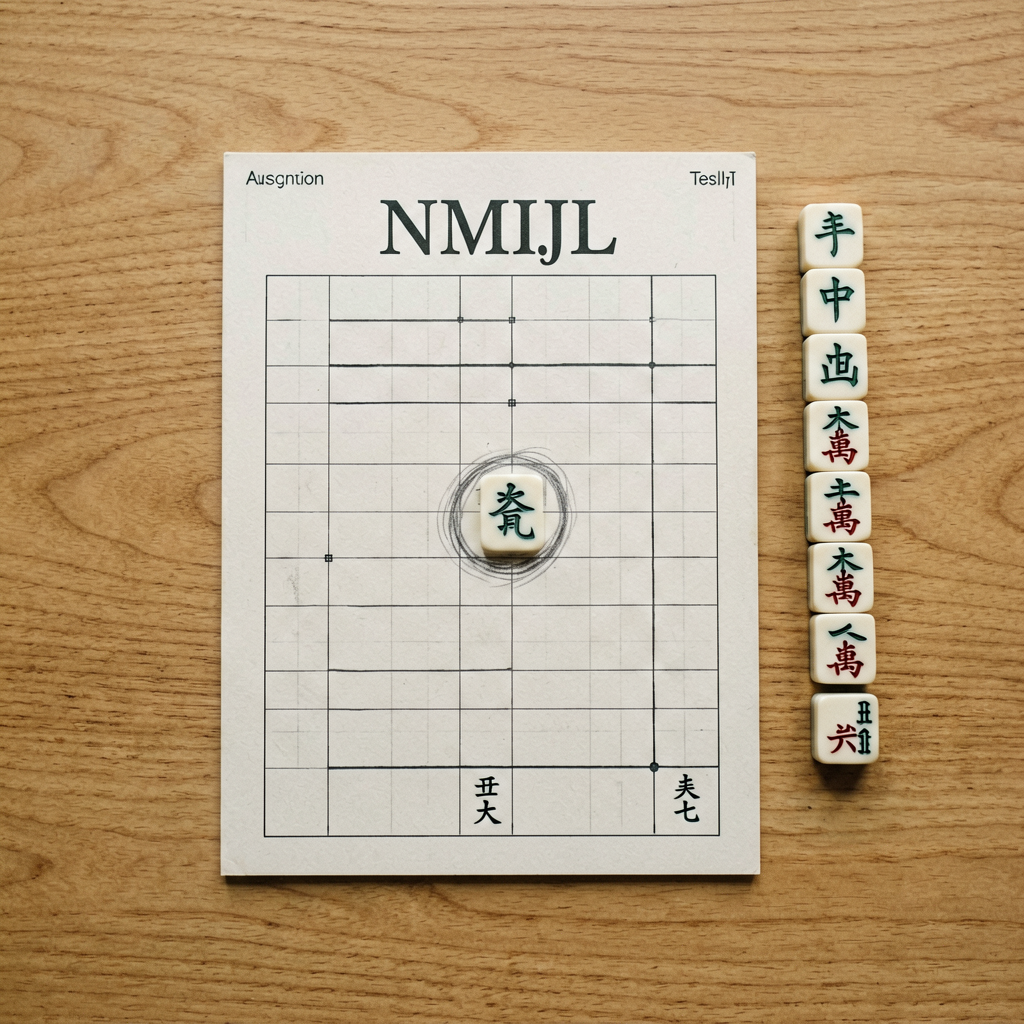
No matter the player count, the single biggest tip is the same: pick one hand from the card and play only toward it. The card has dozens of options, and that’s overwhelming for two or three people who are also juggling a weird seat setup. Circle one line. Maybe two. Everything else stays in your pocket.
When the table is small, a narrow target is what keeps people from quitting. A three-player game where everyone is hunting the same kind of run is fast and readable. A three-player game where everyone is scanning the whole card is a quiet, confused room.
What quietly breaks, and how to patch it
Two things go wrong most often when you stray from four.
Jokers pile up. With fewer players drawing, jokers don’t circulate the way they do at a full table, so a hand that needs three jokers can stall. Patch: agree that any hand using more than two jokers is off the table for the night. Nobody misses it.
The Charleston gets lopsided. Passing to an empty seat means tiles just vanish for a turn. Patch it by having the tiles pass “through” the empty seat back to the next real player, so the count stays even. Once you’ve done it once, you stop noticing.
Neither fix changes how the game feels. They just remove the two moments where a small table would otherwise grind.
A house rule that saves the night
If you take one thing from this: when the player count is off, lower the stakes and raise the patience. Short hands, one circled line on the card, no shot clocks, and the person who’s out gets a real job as caller instead of a spectator.
Four is the rule. Three is the sweet spot. Two is the practice table. Five just needs a bench and a rotation. None of them is a reason to put the tiles back in the box — and a set that’s easy to pull out, with tiles you can actually read, is the reason any of these nights happen at all.