How to Discard Smarter in American Mahjong: A No-Math Guide to Tile Efficiency
There is a moment every American mahjong player hits, usually around their twentieth game. You are staring at your rack, the wall is nearly gone, and you realize you have been one tile away from a hand for the last eight draws. Meanwhile the person across from you, who you were sure was lost, quietly calls a discard and wins. The difference was not luck. It was what each of you threw away an hour earlier.
The thing nobody tells beginners is that in American mahjong your draws matter less than your discards. You have no control over what comes off the wall. You have total control over what leaves your rack. Learn to throw the right tiles and you stop waiting on fortune and start building your own wins.
What tile efficiency means in plain words
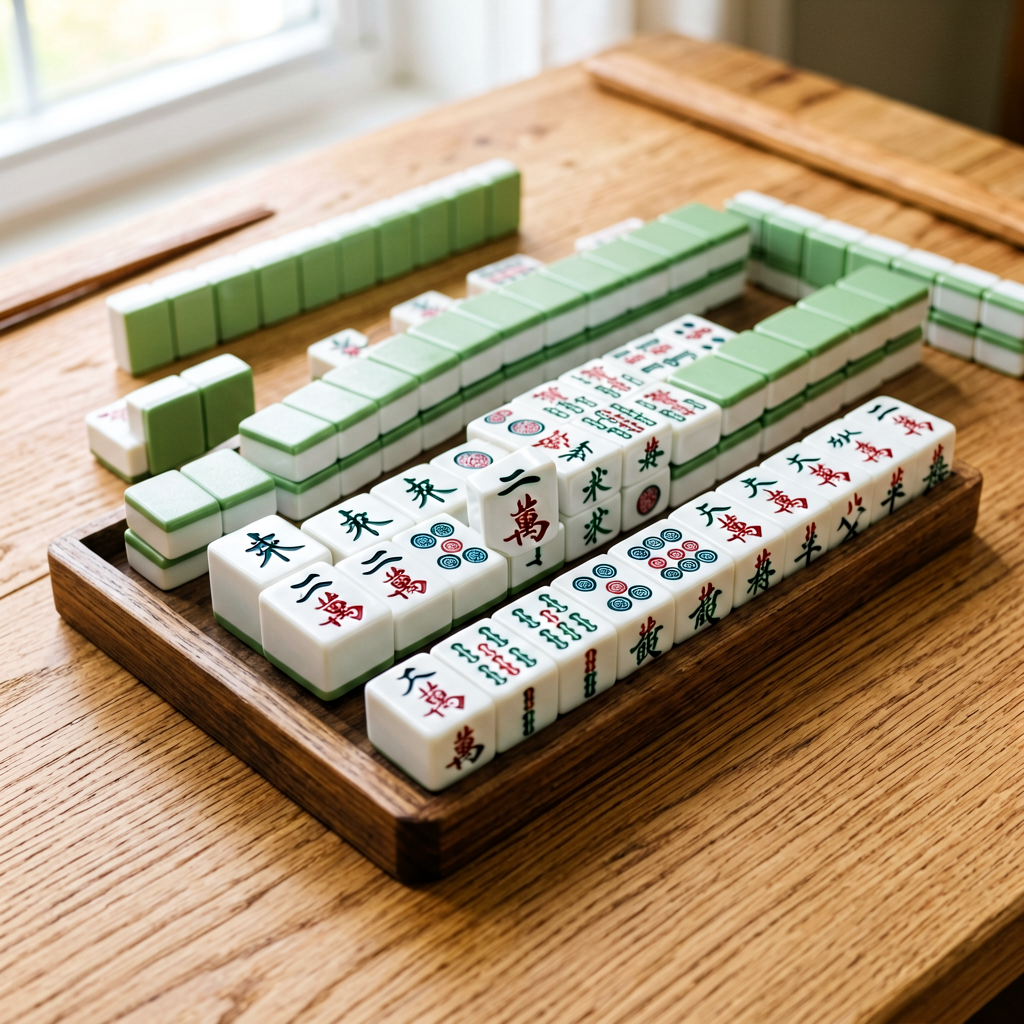
Forget the spreadsheet reputation. Tile efficiency is just one question, asked over and over: of the tiles still in play, how many actually help my hand get to a winning combination on the card?
A hand is efficient when lots of tiles can move it forward. A hand is inefficient when it is waiting on one specific tile, or three specific tiles, that almost nobody is going to discard. Most new players build the second kind without noticing, because it feels like progress. It is not.
Count useful tiles, not pretty pairs
The most common beginner trap is falling in love with a pair. You have two red dragons, so you keep drawing and hoping for a third, then a fourth, then a kong. Meanwhile those draws were spent on tiles that only ever served one narrow purpose.
Try this instead. After each discard, ask what your hand is actually trying to become. Then count: how many different tiles, anywhere in the game, would still improve it? If the answer is two, your hand is brittle. If the answer is fifteen, you are in good shape even if nothing looks tidy yet.
Messy and flexible beats neat and stuck. A rack that could become three different hands on the card is worth more than a rack that is one tile from a single hand nobody can feed you.
The safe tile that is actually wrong
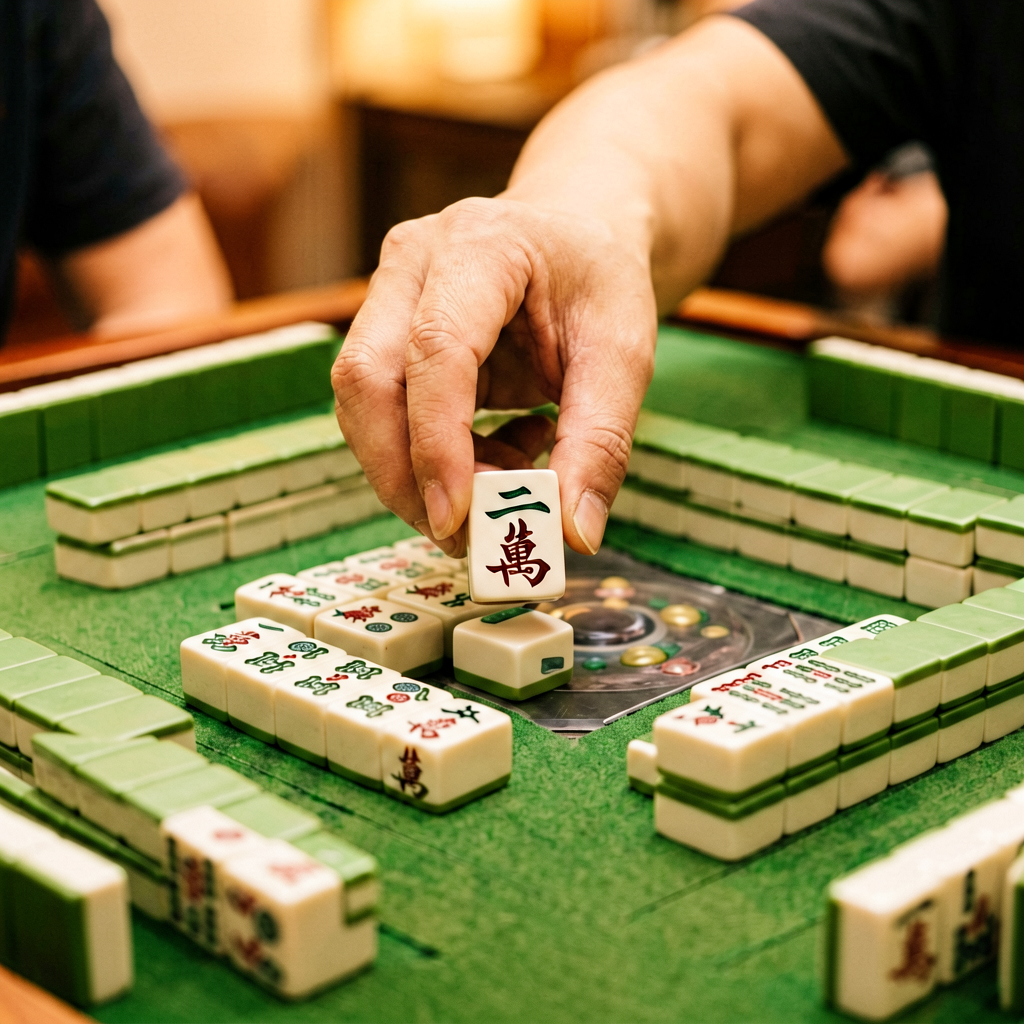
Efficiency is not the same as defense. Defense is about not feeding the player who is about to win, and that is its own skill. But here is where people mix them up: they throw a tile that is safe against everyone, when in fact their hand needed that tile and the table was nowhere near a call. They traded a live hand for a false sense of security.
Early in a hand, when nobody has exposed anything, efficiency usually wins the argument. Keep the tiles that help you. Worry about safety once someone has shown you they are close. Playing scared from the first draw is how you end every game with a dead hand and a clear conscience.
You really win the Charleston
Here is the part most guides skip. A lot of your efficiency is decided before the real game starts, during the Charleston. The passes are where you shape whether your hand has options.
When you pass, do not just dump your lowest tiles. Pass the ones that fit only one hand on the card, and keep the ones that fit three. A tile that works for a consecutive run, a pair, and a punch at the same time is gold, even if it looks ordinary. The players who move through their Charleston keeping flexible tiles are the ones who, an hour later, seem to draw exactly what they need. They did not. They set it up.
The one-second test
You do not need to count anything precisely. Just run this check before each discard: if the next tile I draw is random, how many tiles in the game would I be happy to see?
If the number feels low, your hand is narrowing. That is the signal to break it open while you still can, not after you have already thrown away the tiles that would have widened it. The fix is usually to abandon one of your three half-finished ideas and commit to the one with the most live tiles left.
Mistakes that quietly kill efficiency
A few habits show up again and again.
Keeping a tile because it is almost part of something, when it has been almost part of something for ten draws. Throwing a tile your opponent only might need, early, out of panic. Holding flowers and jokers without a plan for where they land. And the big one: chasing a hand on the card that nobody at the table is feeding, because you like how it looks.
None of these are crimes. They are just slow leaks. Over a four-hour game they add up to two or three hands you could have won.
Why it compounds
The reason efficiency feels invisible is that it pays off in hands you never notice losing. You do not win more because you suddenly complete a miracle hand. You win more because you stop dead-ending, you call discards you would have missed, and your opponent’s Charleston passes you something useful instead of something dead.
Do that consistently and the scoreboard tilts without any single dramatic moment. That is the whole game. Draw what comes, throw what helps, and let the card do the rest.