How to Keep Score in American Mahjong: Scorecards, Columns, and Settling Up
There’s a moment in every American mahjong game where the tiles go quiet and someone says, “Okay, who had what?” That’s the scorecard doing its job — or, more often, not doing it, because nobody wrote anything down three hands ago.
If you’re new to the game, the scorepad can feel like a second rulebook. It isn’t. It’s just a way to remember who won, what they won with, and how much everyone owes by the time the last tile is drawn. Get comfortable with it and the end of the game stops being a small argument and starts being the fun part.
What the scorecard actually is
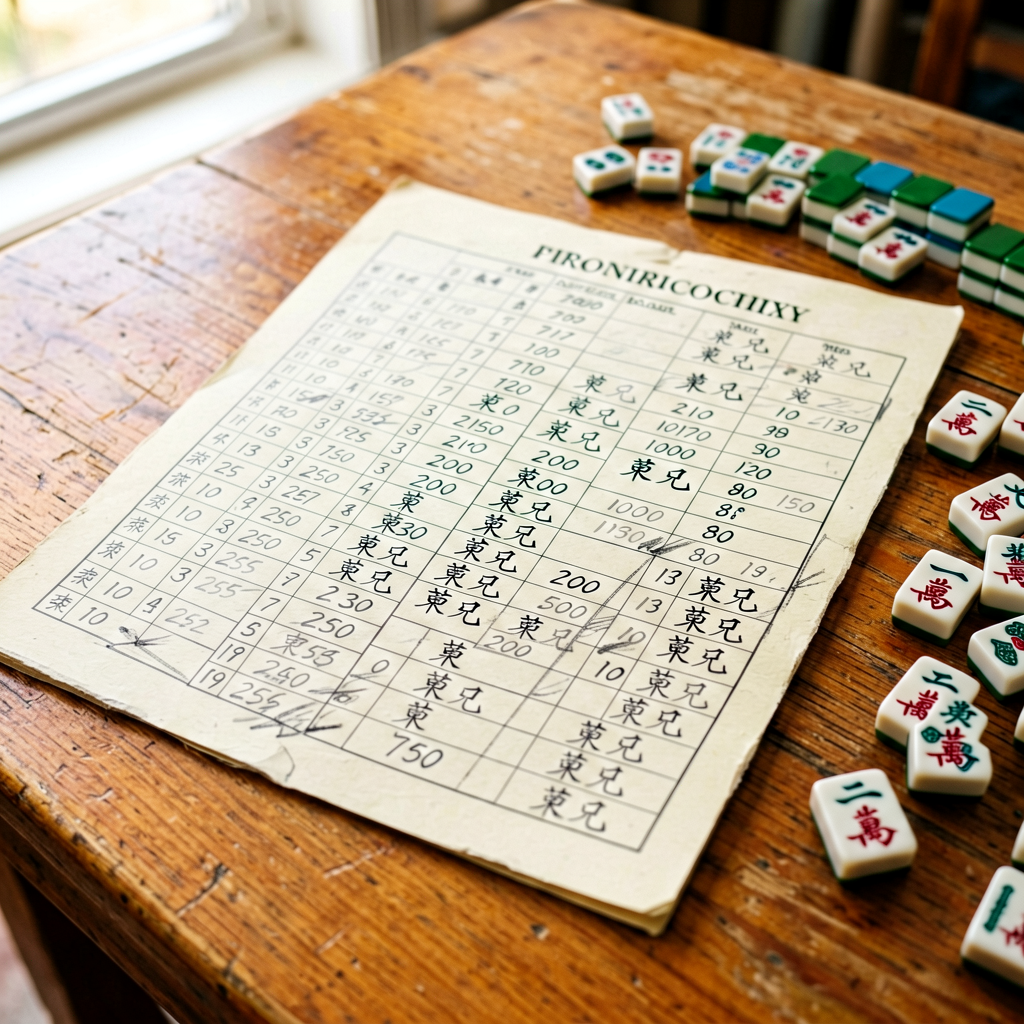
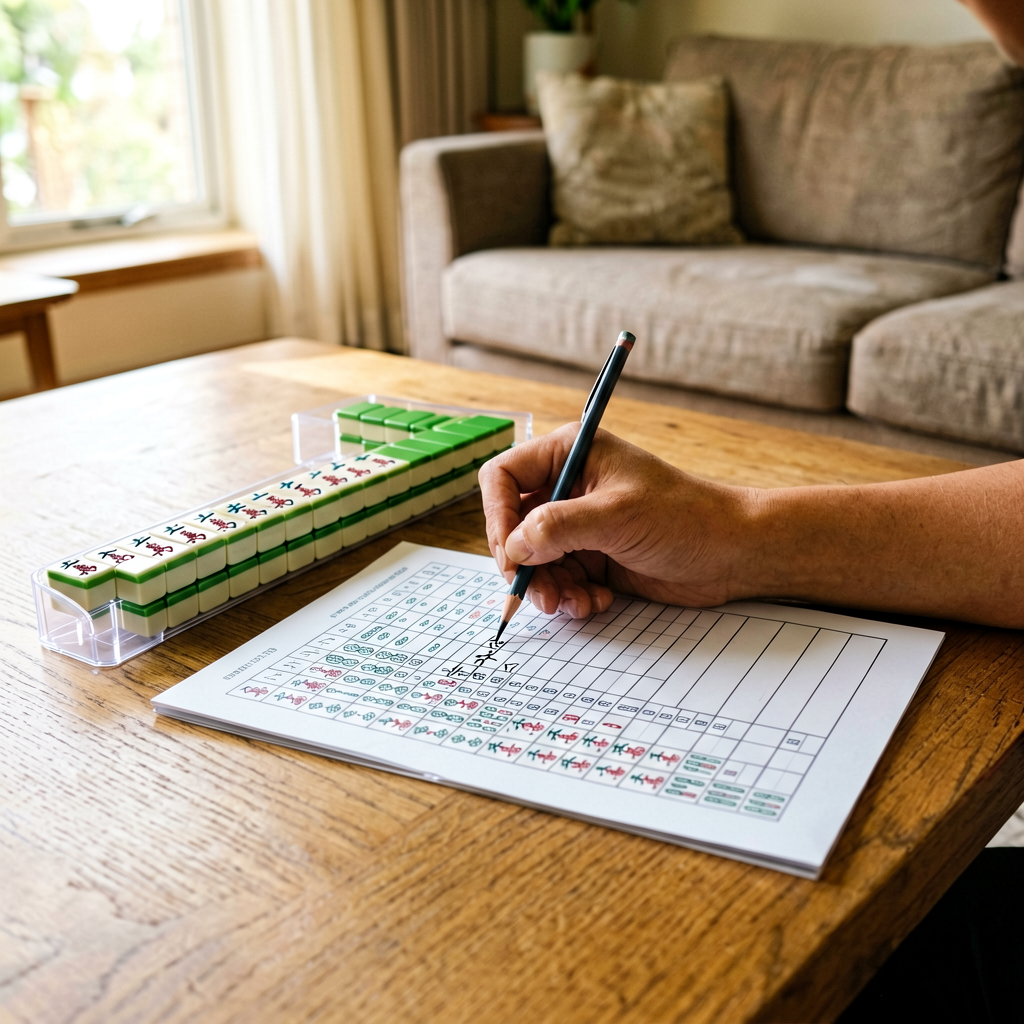
Most American mahjong scorepads are a grid. Down the side you’ve got the players; across the top you’ve got the hands, one column per hand played. Some pads print the card families along the edge so you can jot which line you called. Others are blank and trust you to fill in the details. Either works. The pad isn’t grading you — it’s keeping the peace.
Before the first hand, everyone writes their initials at the top of their column. That’s it. That’s the setup. The rest fills in as you play.
The one rule that drives the whole pad
Here’s the thing that trips up almost every beginner: in American mahjong, the minimum a winning hand is worth is 25 points. Not 10, not whatever you feel like — 25. So when you win, you’re writing down at least 25, and usually more depending on the hand you built and the bonuses you stacked on it.
Write the points in your own column when you win. Simple enough. The trouble starts when people try to remember the tally instead of writing it, or when someone “wins” for 25 but actually built a 50-point hand and nobody caught it until the end.
Recording a win without the squabble
When you call mahjong, say what you had. Not just “I won” — the actual hand, or at least enough that the table can check it against the card. “Quints, line three” is plenty. Then write the points in your column and let the next player start the deal.
Do it out loud and do it then. The single biggest cause of scorecard fights is a win that got written down two hands later from memory. Memory is bad at this. The pad is good at it. Use the pad.
Settling up at the end
Most groups keep a running tally: every time you win, the losers mark what they owe in their own columns, or the winner marks what everyone owes them. By the last hand, each column shows a running total. Add them up and you’ve got who’s ahead and who’s buying the coffee.
The math is usually simple. If you played with a kitty, the pot gets split or carried by whoever’s on top — that’s a whole other conversation, and we’ve covered it separately. If you didn’t, it’s just column totals against each other.
Here’s a plain example. Four players, columns A, B, C, D. A wins three hands worth 25, 50, and 25. B wins one for 75. C never closes one out. D wins twice, 25 and 100. At the end A’s column reads 100, B’s 75, C’s 0, D’s 125. If you’re settling each hand as you go, the losers already marked their debts; if you’re tallying at the end, you add the winners’ columns and compare. Either way D had the night, and C’s on snack duty.
One habit saves more friendships than any other: total the columns together, out loud, before anyone reaches for their wallet. Disagree at the table, not in the group chat three days later.
Paper or phone?
Plenty of groups now keep score in a notes app or a dedicated mahjong tracker. It’s fine — faster math, no smudged pencil. The downside is the table can’t see it, which is exactly when someone starts to feel cheated. If you go digital, read the running totals out loud the same way you would with paper. The pad’s job was never the writing. It was the trust.
Little things that keep the peace
- Agree on the floor before you start. Everybody knows it’s 25, but saying it once means nobody “forgets” on a bad beat.
- Initial every hand, even the ones nobody won. A blank column invites “did we even play that one?”
- Keep one person as the unofficial scorekeeper if your table tends to forget. Rotate it each game so it’s not always the same sorry soul.
- Write the hand name, not just the number. “NEWS, 75” means more in two weeks than “75” ever will.
When the card changes, the pad doesn’t
The NMJL card swaps every year on July 1, and the hands you can build change with it. Your scorepad doesn’t care. The 25-point floor stays. The columns stay. What you write in them is just whatever you actually played that season.
That’s the quiet genius of the scorecard. It’s the one part of American mahjong that doesn’t move when the rules do. Learn it once and it serves you for every game after.
Why it’s worth getting right
A good scorecard does more than tally points. It lets a four-hour game end with a clear winner and no hard feelings, which is the whole point of playing in the first place. And if you ever want a pad that’s easier on the eyes — bigger boxes, clearer lines, room for the hand name — that’s exactly the kind of small upgrade that makes game night smoother.
So next time you sit down, don’t treat the scorepad like homework. Treat it like the scoreboard it is. Write it as you go, settle it together, and get back to the tiles.