How to Sort Your American Mahjong Tiles (So Your First Turn Isn’t a Quiet Panic)
You sit down. Someone pushes a pile of tiles toward you, everyone else is already flipping theirs face-up and lining them up, and you’re holding a small混乱 of plastic you can’t quite read yet. We’ve all been there. Sorting your rack is the first real skill in American mahjong, and almost nobody explains it — you’re just supposed to pick it up.
Here’s the good news: there’s no single correct way. There’s just a way that lets you see your tiles, and a way that doesn’t. This is the way that does.
Why sorting is the actual first move
Each player starts with 13 tiles in hand; the dealer (East) draws one more to open, so they’re working with 14. That’s your whole world for the next however-many minutes. If those 13 tiles are a jumble, you’ll miss pairs, you’ll miscount, and you’ll stall when the wall comes back around to you.
Sorting isn’t busywork. It’s how you find out what hand you’re even building before the first tile hits the table.
The simplest sort: by suit, then by number
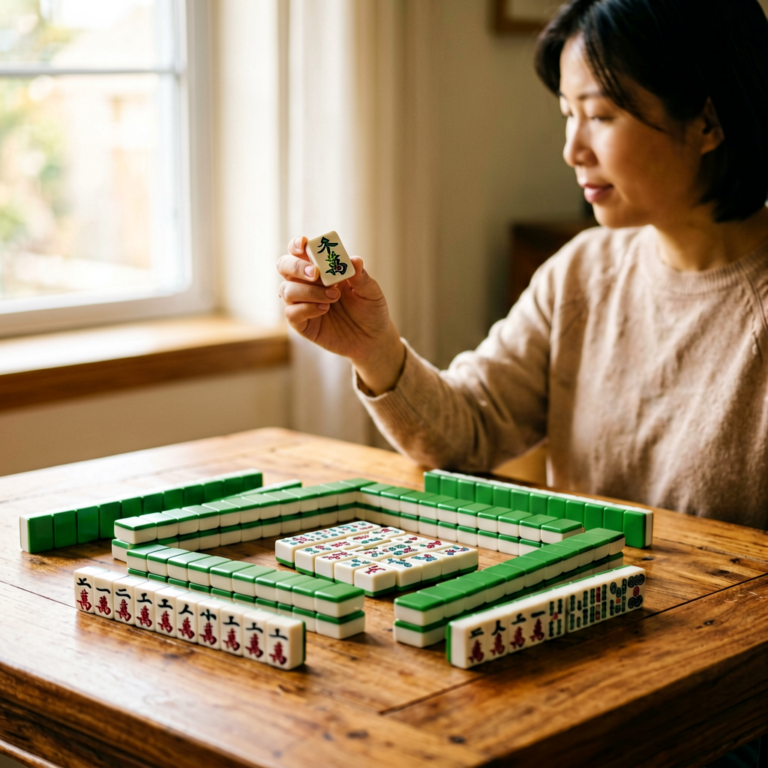
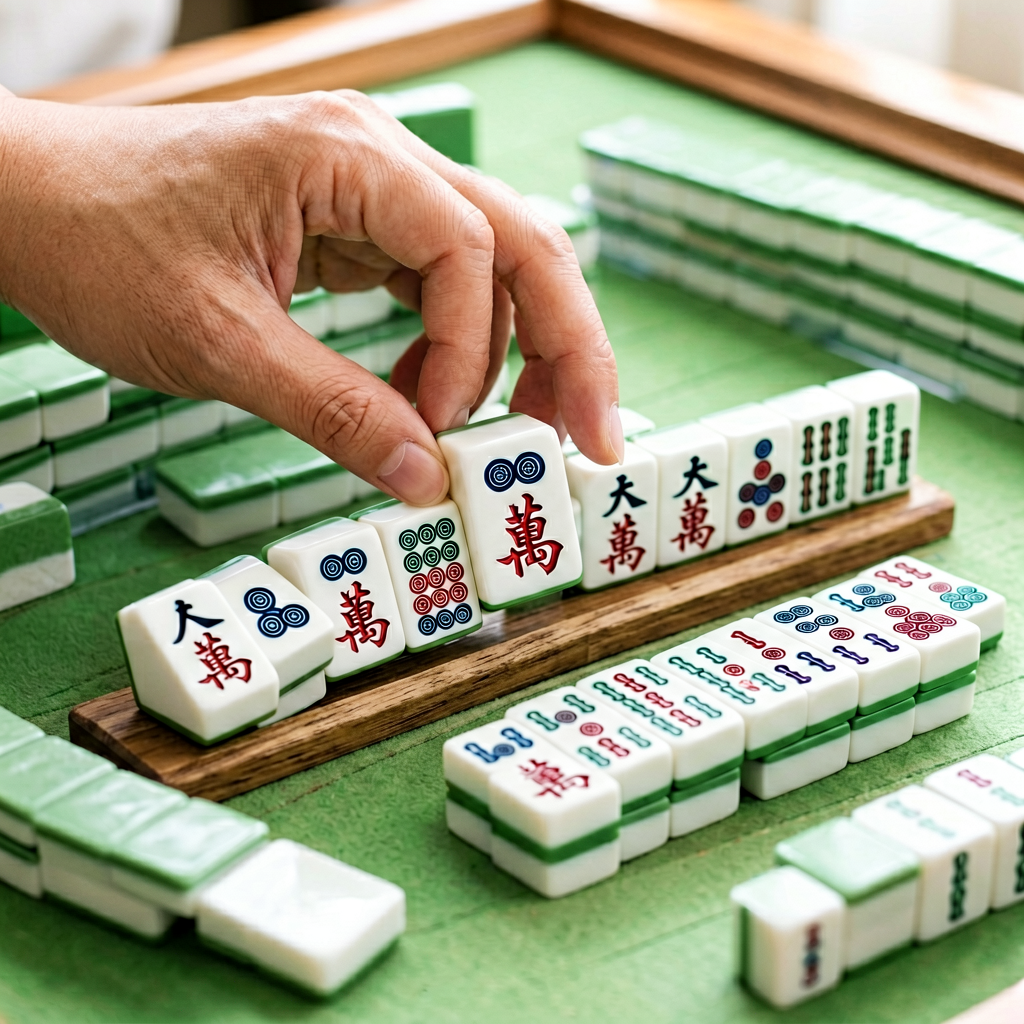
American mahjong has three numbered suits — craks (the characters), dots (the circles), and bams (the bamboo) — each running one through nine. Start there. Pull all your craks together, all your dots, all your bams. Within each suit, line them up low to high. Left to right usually works, but your rack, your rules.
Then set the honors aside in their own spot: the winds (North, East, South, West) and the three dragons (red, green, white). They don’t chain into runs the way numbered tiles do, so keeping them at one edge stops them from breaking up your sequences.
A rack order that just works
If you want a default that saves thinking, go left to right: craks, dots, bams, then winds, then dragons, then flowers and jokers at the far end. It’s not a rule anyone will check. It’s just consistent, and consistent means your eye finds things without hunting.
The point isn’t neatness for its own sake. It’s that when you glance down mid-game, you can tell in half a second whether you’re one tile from a pair or three tiles from nowhere.
What to do with flowers and jokers
Flowers are easy to forget about, and that’s fine — in most American games they score at the end and don’t live in your hand. Slide them to the front lip of the rack or set them beside it so they’re not in the way.
Jokers are the opposite problem. They’re wild, which means they’re useful anywhere, which means you should NOT tuck them into a suit where you’ll forget they’re flexible. Keep them at one end, clearly separate. When you’re scanning for a match, you want to remember “oh, I’ve got a joker for that” instead of “wait, was that a real tile?”
Why a tidy rack wins you time
American mahjong moves. The Charleston alone is three passes of three tiles, and after that the discards come fast. The player who can read their own rack at a glance makes cleaner calls and cleaner throws. The player still digging through a pile donates tiles to everyone else.
You don’t need a perfect system. You need a readable one.
East draws, then it’s your problem
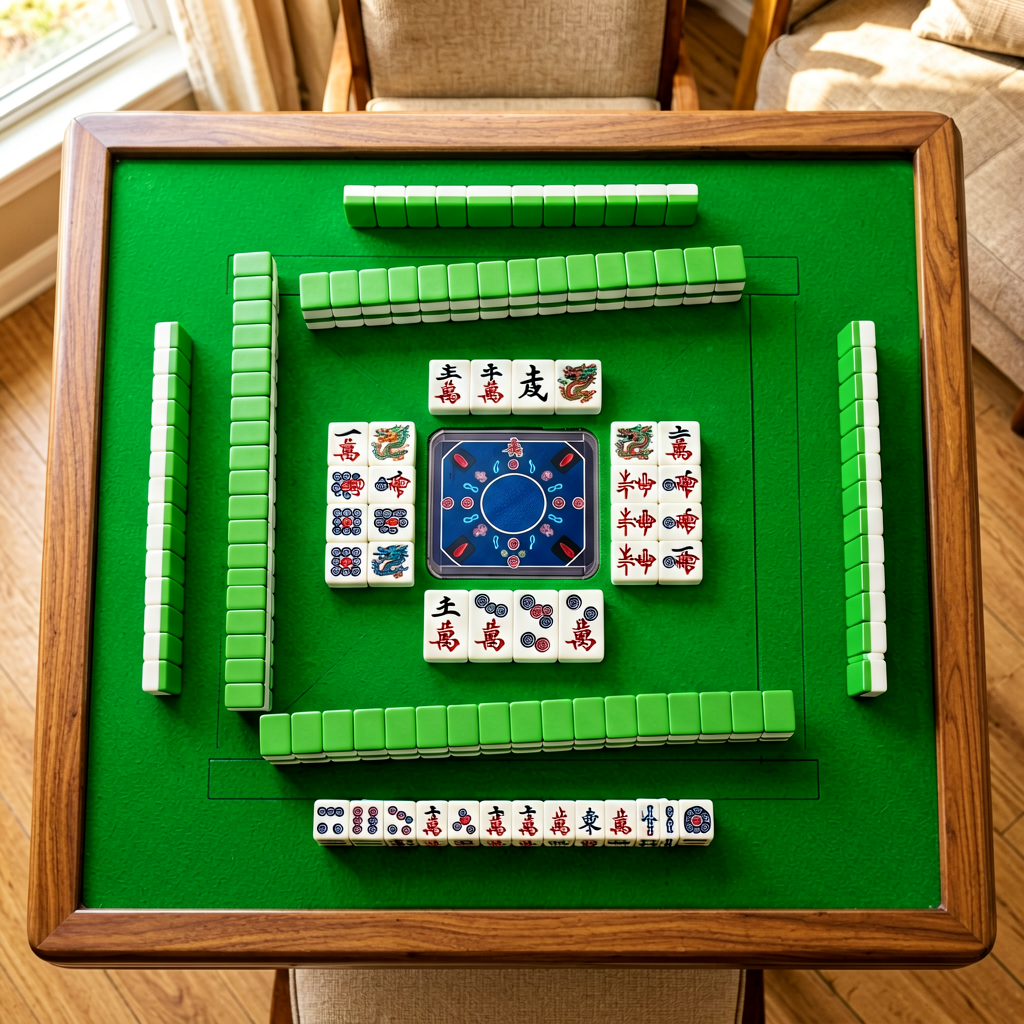
The dealer draws first and either takes a discard or pulls from the wall. Then the turn passes, and eventually it’s yours. If your rack is already sorted, that moment is calm — you look, you decide, you go. If it isn’t, that’s exactly when you fumble a tile onto the floor and the table gently loses its mind.
Sort before the wall reaches you. Future-you will thank you.
Beginner shortcuts that nobody mentions
- Sort as you’re dealt if you can. Most hosts deal in small batches, and tidying between batches beats one big scramble at the end.
- Use a rack with a lip. Tiles stay put, your sort stays put, and the cat can’t redeal the game for you.
- Re-sort whenever you want. Mid-game reshuffles are normal, not a confession that you did it wrong the first time.
- Don’t memorize the order. Pick one and repeat it. Muscle memory beats a clever system you can’t recall.
Small upgrades that make sorting painless
A few things quietly remove the friction. Larger tiles are easier to tell apart when you’re tired. A rack with real spacing between slots means groups don’t blur together. Left-handed racks flip the layout so the sort reads the way your hand actually moves. None of it changes the game — it just makes the first thirty seconds less of a chore.
And if your set lives in a soft case that dumps everything in a heap, a proper hard case with trays keeps the suits from mixing during storage, so the next game starts already half-sorted.
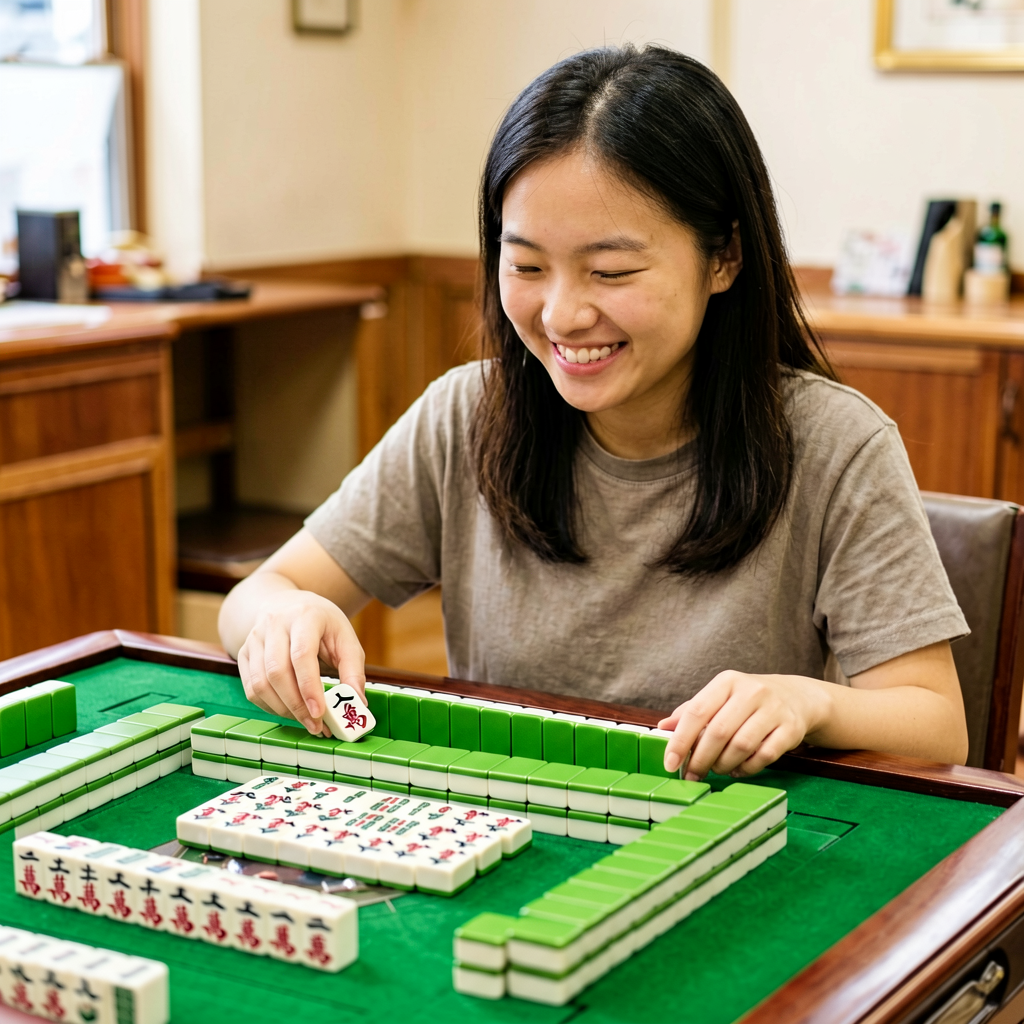
Give yourself the easy start
Sorting your tiles is the one part of American mahjong you control before anyone else moves. Do it the same way every time, keep your jokers where you’ll remember them, and the rest of the hand gets a lot calmer. The tiles aren’t trying to confuse you — they’re just waiting for you to line them up.
So next game, take the thirty seconds. Sort the suits, park the honors, free the jokers, and get back to the fun part: actually playing.