How to Practice American Mahjong by Yourself (and Actually Get Better)
There’s a small myth that keeps new players stuck. The myth says you can only get better at American mahjong by playing full games with three other people. So if your friends are busy, or you only own one set, or you’re just shy about sitting at a table full of sharp regulars, you wait. And wait.
Here’s the truth: you can sharpen most of the skills that actually win games while sitting alone at your kitchen table. Nobody’s watching. Nobody’s judging your discards. You can take ten minutes, make a mistake, reset, and try again. Solo practice is underrated, and it’s one of the fastest ways to stop feeling like the weak link at the table.
Build and break the wall until it’s muscle memory
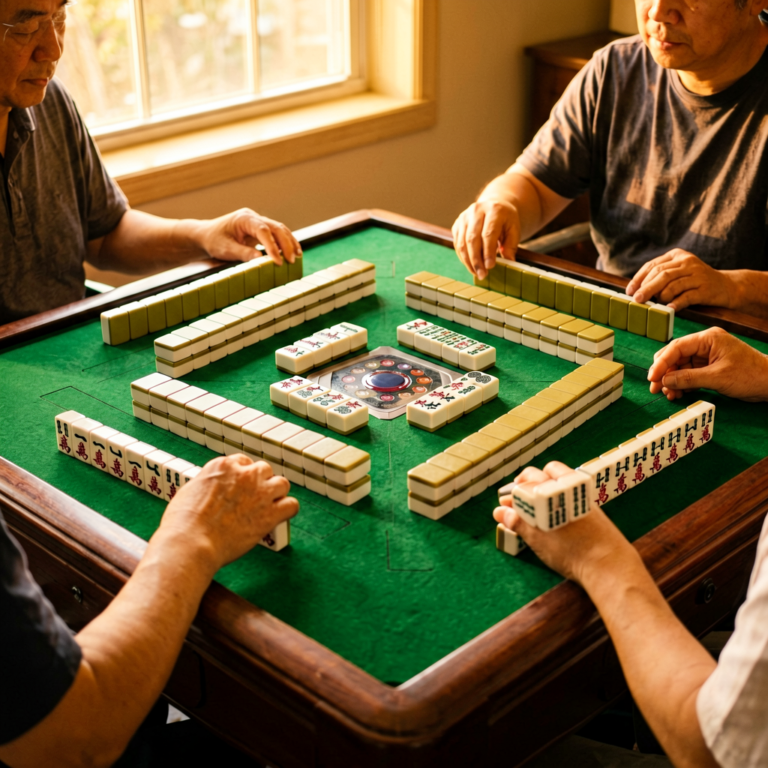
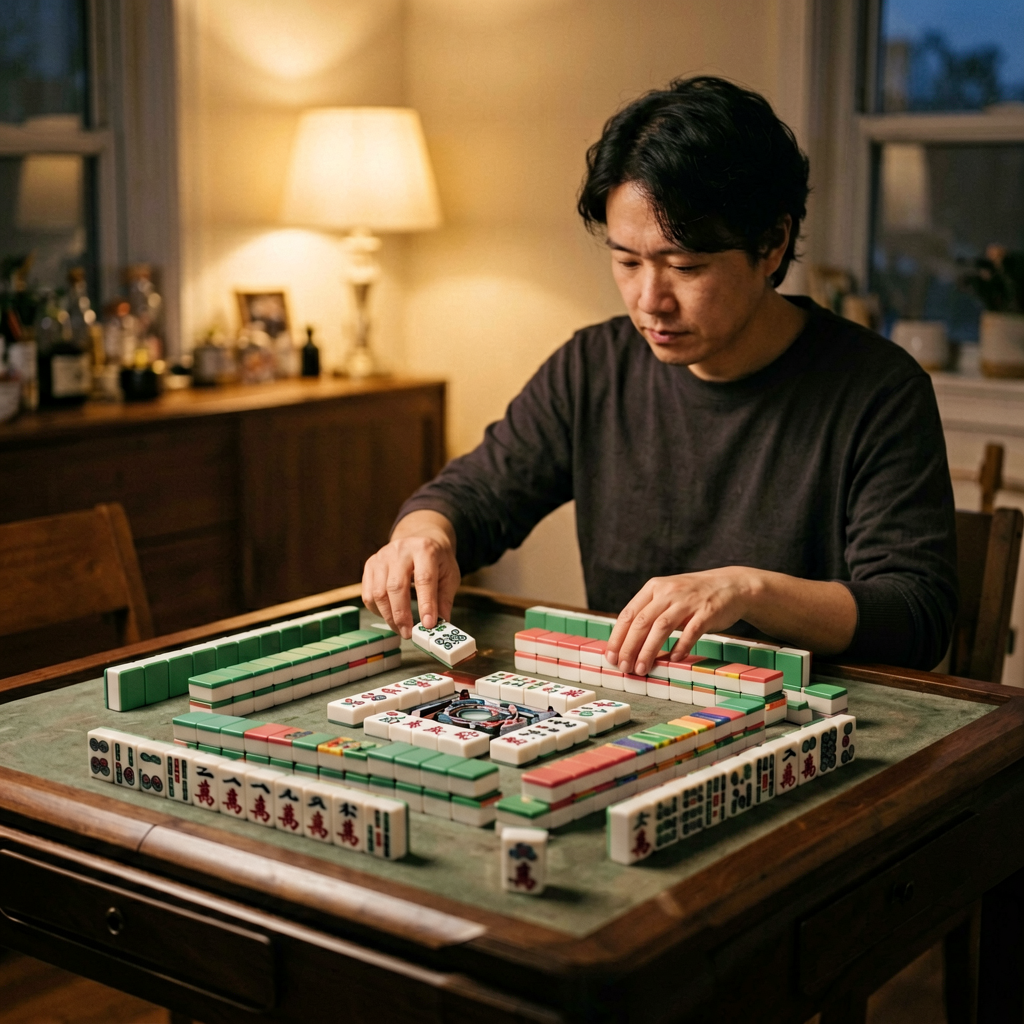
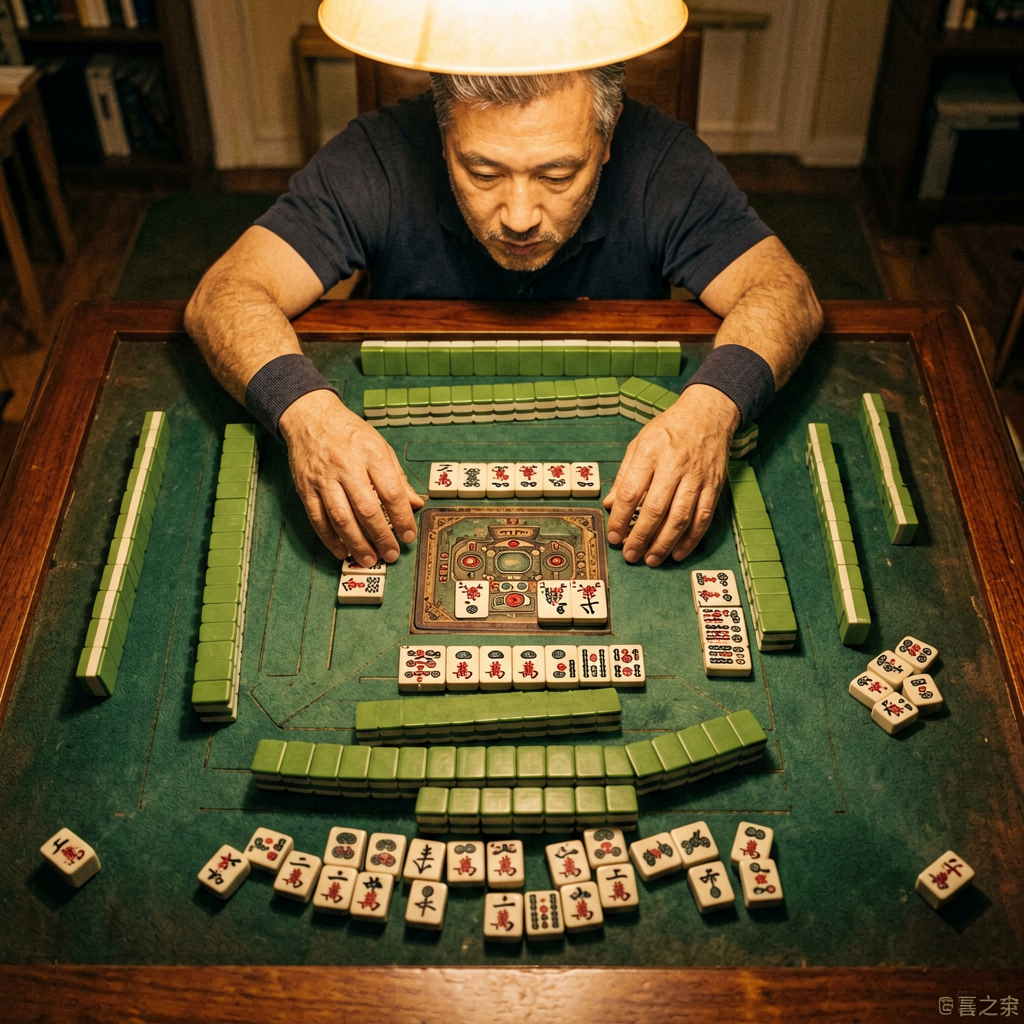
Start with the dullest part of the game, because it’s where beginners lose the most time. Shuffle your 152 tiles, build the four walls, and break them into your 13-tile hand plus the dead wall. Do it slowly the first time. Then do it again, and again, until your hands know where the tiles go without your brain narrating every step.
Why bother? Because in a real game, the wall-building ritual is your warm-up. If you fumble it, you burn the first five minutes looking flustered while everyone else is already reading their card. Get it smooth at home and you’ll walk into the next game calm.
Learn the card without touching a tile
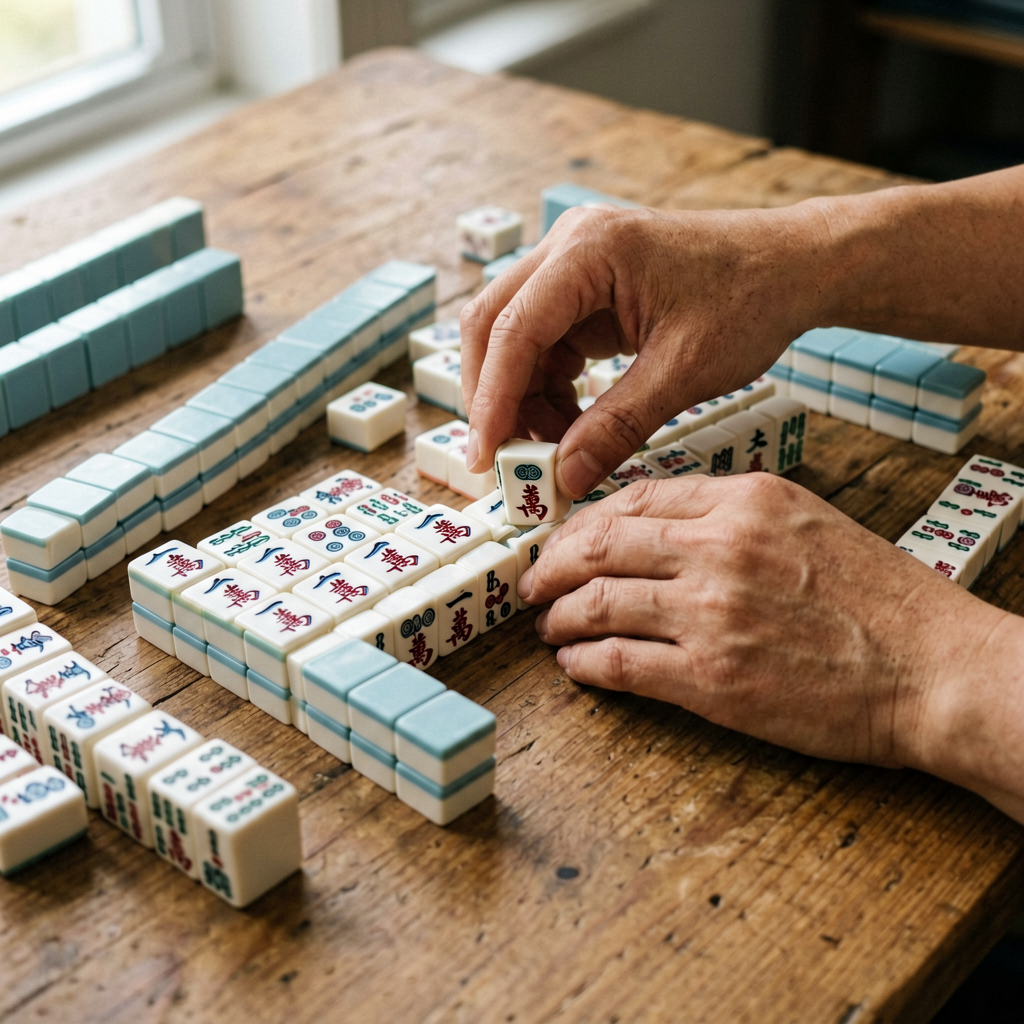
The NMJL card is where most newcomers freeze. All those colored sections, the symbols, the hands that change every year. You don’t need a full table to start learning it. You need the card and a quiet fifteen minutes.
Pick one section. Read three hands out loud. Trace the combinations with your finger. Ask yourself what tiles each one needs. Do this a few times a week and the card stops being a wall of noise and starts being a menu of options. By the time you sit down with other people, you’ll recognize a hand on sight instead of decoding it line by line.
Sort by suit until it’s automatic
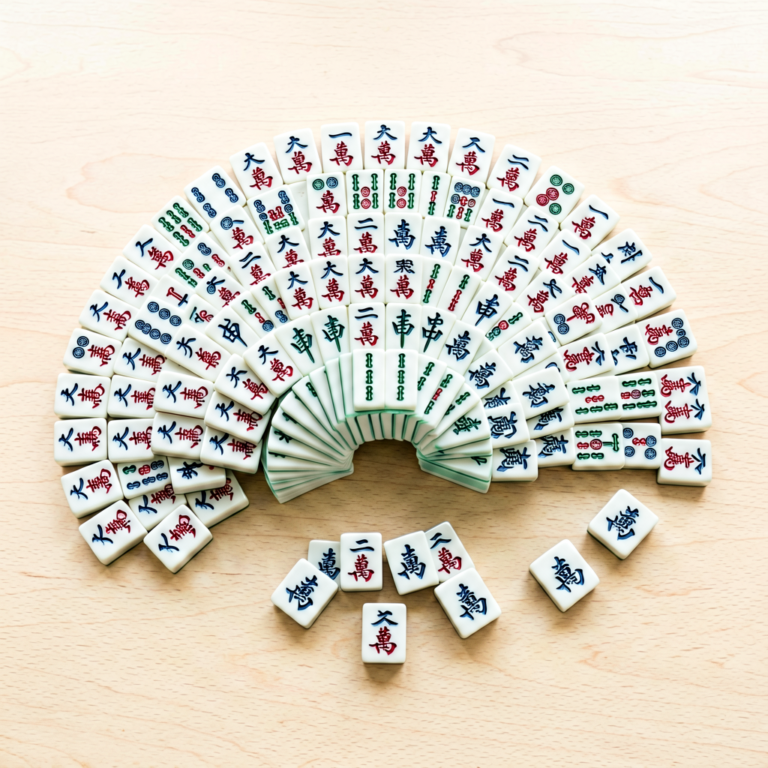
Grab a handful of tiles and sort them. Dots with dots, bams with bams, cracks with cracks, then winds, dragons, flowers, and jokers. Do it fast. Then dump them back in the bag and do it again.
This sounds pointless until you’re mid-Charleston and need to spot a pair in two seconds. Sorting fast is the same skill. The players who look effortless at the table? Most of them just sorted a lot of tiles alone on a Tuesday night.
Play ghost hands
Here’s a drill that feels silly and works better than it should. Deal yourself a 13-tile hand from a shuffled wall. Look at the card. Find the best hand your tiles could build. Then draw one tile at a time, pretending three invisible opponents are discarding, and play it out as far as you can.
You’re not keeping score. You’re training your eye to connect a random handful to a real pattern on the card. Do this twenty times and you’ll start seeing hands in tiles the way experienced players do, almost without trying.
Turn your set into flashcards
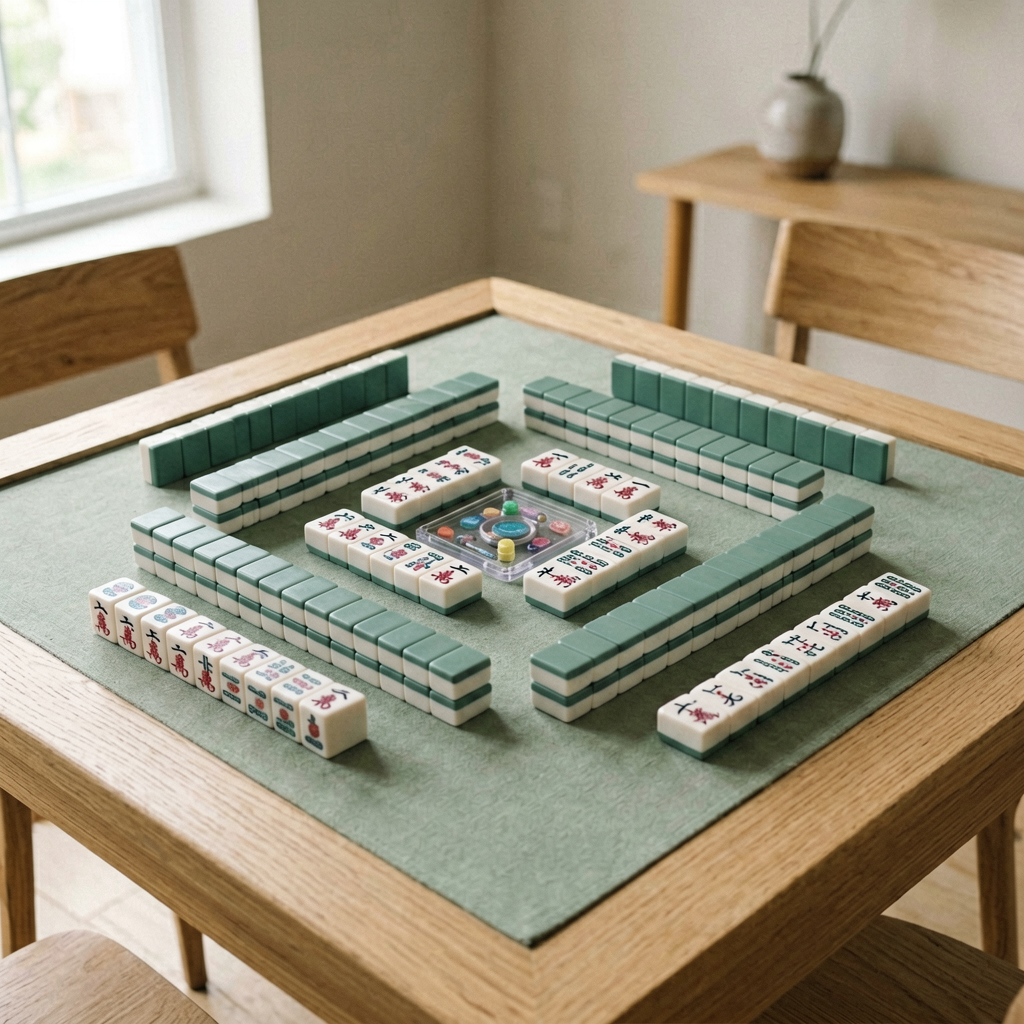
Your tiles are a vocabulary deck. Pull out one of each numbered tile, one of each wind, the dragons, a flower, a joker. Lay them face up. Close your eyes, point, and name the tile before you look. Miss one? That’s the one to drill.
This is especially handy for the honors and the flowers, the tiles that don’t follow the neat number logic of the suits. Five minutes of this on a boring evening beats an hour of scrolling, and it pays off the first time you need to call a tile fast.
Walk the Charleston by yourself
The Charleston is the one part of American mahjong that has no equivalent anywhere else, and it’s the part solo players skip. Don’t. Set up three rows of three tiles in front of you, the passes you’d make to the right, across, and left. Move them. Say the direction out loud. Do the optional passes too.
You’re building the rhythm, not the strategy. In a game, the Charleston happens fast and everyone’s talking. If your hands already know the pattern, you’ll keep up instead of freezing.
Short sessions beat rare marathons
None of this requires a free afternoon. Ten minutes a day does more than one guilty two-hour cram on a Sunday. Your brain files the patterns better in small, repeated doses. Keep your set somewhere you’ll actually see it, not buried in a closet, and the practice happens almost on its own.
And when you do sit down with real opponents, don’t announce that you’ve been drilling alone. Just play. Let them notice that you’re faster, calmer, and reading the card like you’ve been at it for years. You have. You just did it in your kitchen.