
How Scoring Works in American Mahjong (and Why 25 Points Is the Floor)
You finally build the hand, you call Mahjong, the table stops, and then comes the question nobody prepared you for. How much did you just win? In American mahjong the answer is never whatever feels right. It is printed on the card, and there is a floor under it that trips up more new players than a bad Charleston.
The score is on the card, not in your head
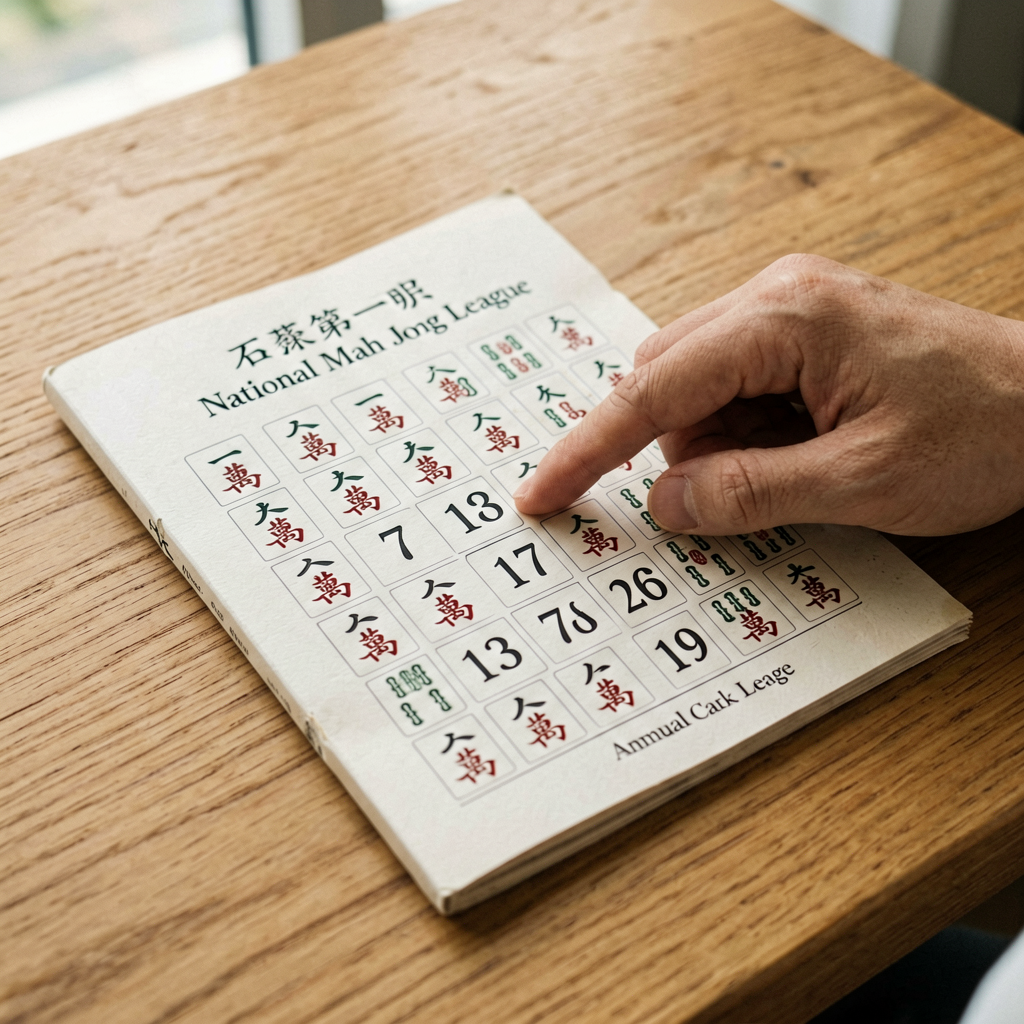
Every hand on the National Mah Jongg League card has a number next to it. That number is the value of the hand. You do not negotiate it, you do not estimate it, and you do not get bonus points for style. A 25-point hand is worth 25. A 50 is worth 50. The card does the math so you don’t have to. Before the game starts, most players circle the hands they are going for and note the values, because nobody wants to announce a win and then squint at the card for thirty seconds.
The 25-point minimum, and why it exists
Here is the rule that surprises people. A hand worth less than 25 points is not a legal winning hand. If the only thing you can finish is worth, say, 10, you keep playing. You cannot just declare Mahjong on a 10-point hand and call it a night. The League sets 25 as the floor so games don’t end on a sneeze. Most hands on the card clear it easily, but a few of the simpler ones sit right around the line, and that is exactly where beginners get stuck. If your chosen hand is worth less than 25, you either build it into a bigger version or you pick a different hand. The card usually shows you how to bump a 20 into a 25 with one extra tile.
Where the points come from
The values are not random. Longer and harder hands score more. A straight run of consecutive numbers is cheap. A quint, five of a kind, which only exists because American sets carry extra tiles, is worth more. Hands that force you to collect all one suit, or to build a long specific sequence, sit at the top of the chart. Singles and Pairs hands, the ones built from scattered tiles, tend to land in the middle. The takeaway is simple. The more the card asks of you, the more it pays.
Jokers change the number
Jokers are wild, and they pull double duty in scoring. Some hands on the card have a separate line labeled for jokers, and that line is often worth more than the plain version. Drop three jokers into a group and the hand can jump twenty points. But the card is specific about where jokers count. A hand marked to be played without jokers pays less, or not at all, if you sneak one in. Read the joker line before you commit, because a joker that helps you build the hand can quietly change what the hand is worth.
Calling it and tallying
When you call Mahjong, you name the hand and the value out loud. The table checks your tiles against the card. If it lines up, you collect that many points, chips, or dollars from each player, depending on what your group agreed to before the game. In casual home games it is often a set amount per point. In clubs it might be a quarter a point. Either way, the number comes off the card, not off a vibe. If you called the wrong hand, or your tiles don’t match what you said, that is a dead hand, and in stricter games you pay the table instead of collecting.
Dead hands and the penalty nobody likes
A dead hand is what happens when you call Mahjong and you are wrong. Maybe you miscounted. Maybe the tile you needed got claimed by someone else and you didn’t notice. Maybe you exposed a group the hand didn’t allow. Once you call it, the hand is locked and the score is checked. If it doesn’t hold, you don’t just lose the hand, you usually pay the full value of the hand you falsely claimed to every player at the table. This is why experienced players say the hand out loud and then close their mouth while the table confirms it. The thirty seconds of silence is cheaper than the penalty.

A few things nobody tells you about scoring
- Circle your hands and their values before the game. Looking it up mid-win makes you look like you hoped it was worth more than it is.
- The 25 floor applies to the hand as you actually built it, not the hand you meant to build.
- Joker lines are separate. Treat them as a different hand with a different price.
- If two people could win on the same discard, the one who called first gets it. Calling fast matters.
- In many groups a wrong Mahjong call ends your whole game, not just that hand. Know your table’s rule.
The short version
The card tells you what each hand is worth. Nothing pays less than 25. Harder hands pay more. Jokers can raise the price if the card allows it. You call the hand and the value out loud, the table checks, and you collect. Get it wrong and you pay. That is the whole scoring system, and once you have circled your values once, it stops being the scary part of the game.