Three Generations, One Mahjong Table: How to Get Kids, Parents, and Grandparents Playing Together
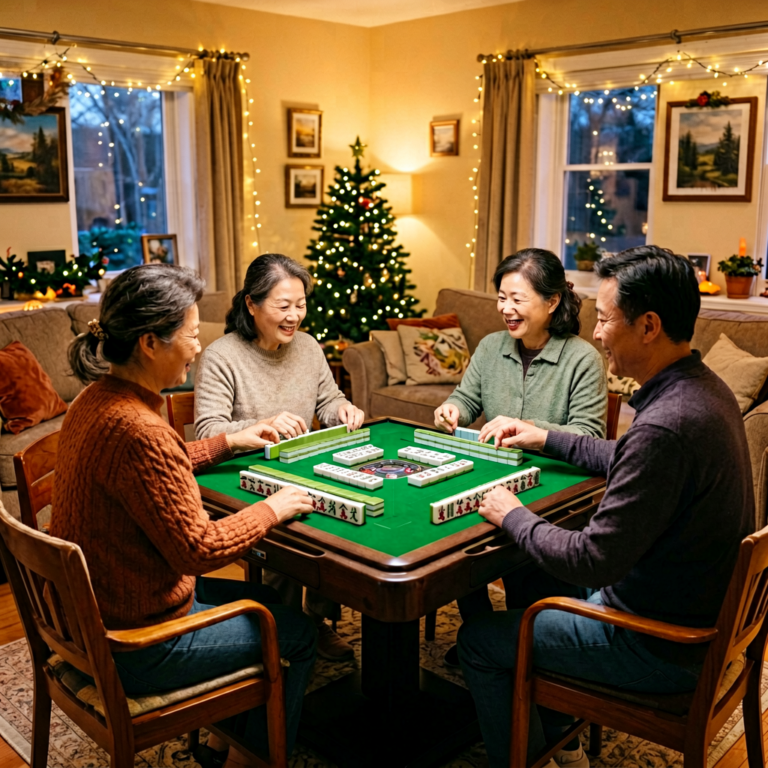
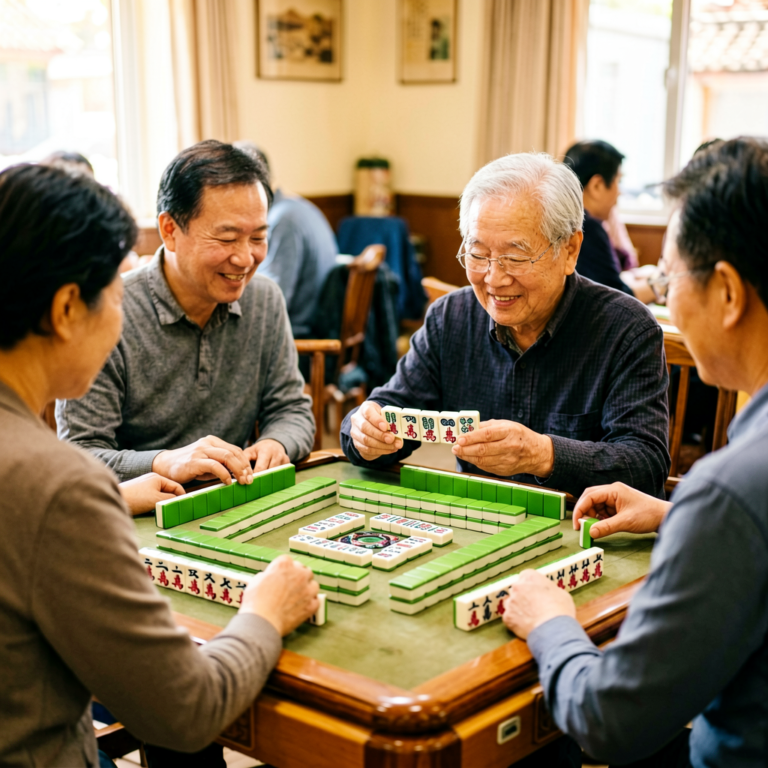
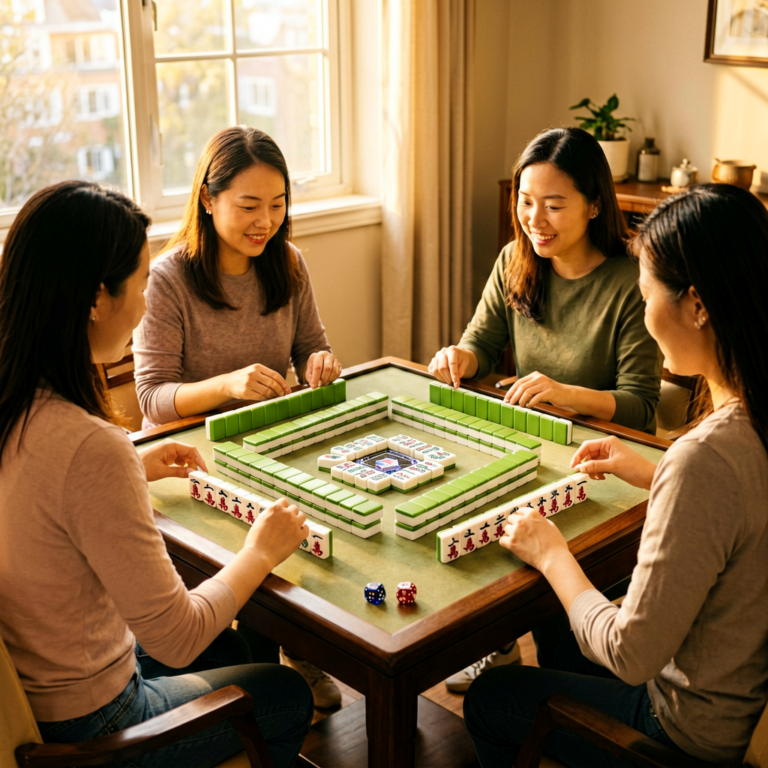
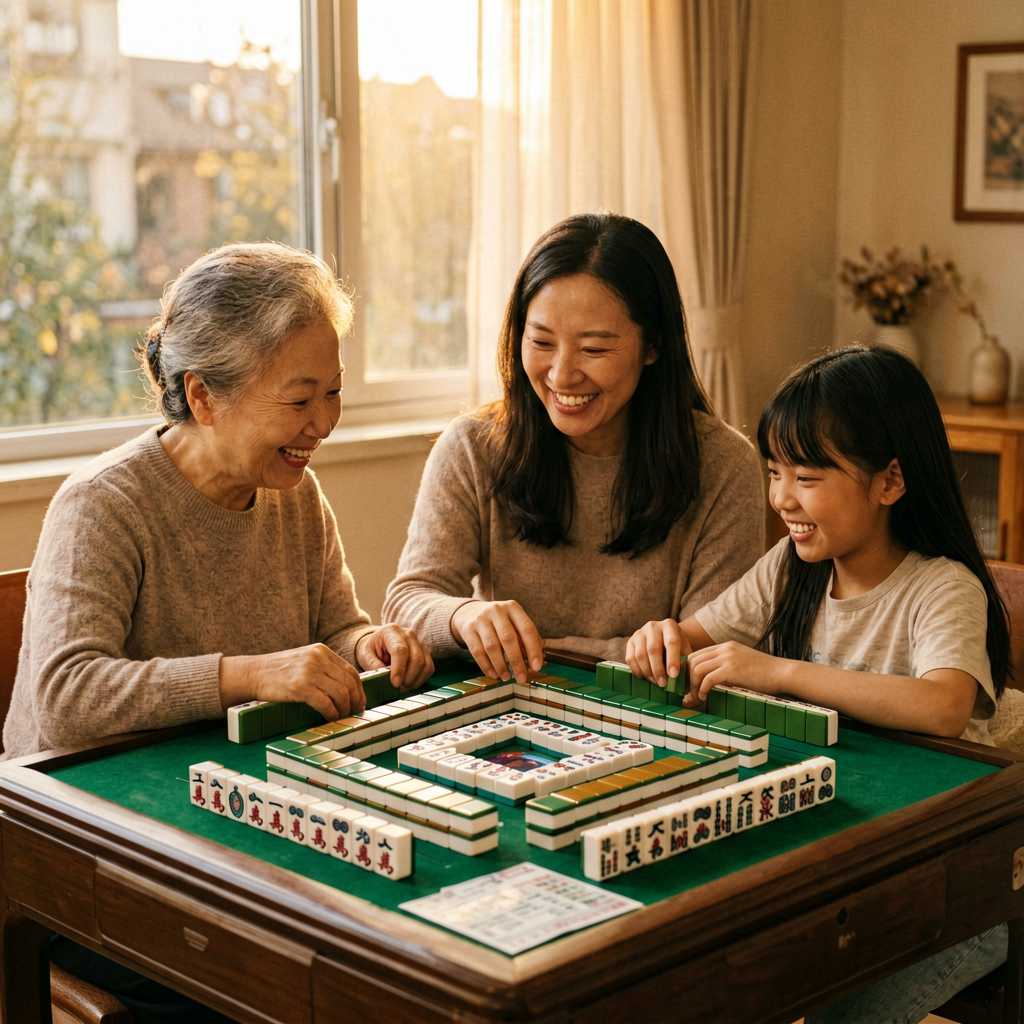
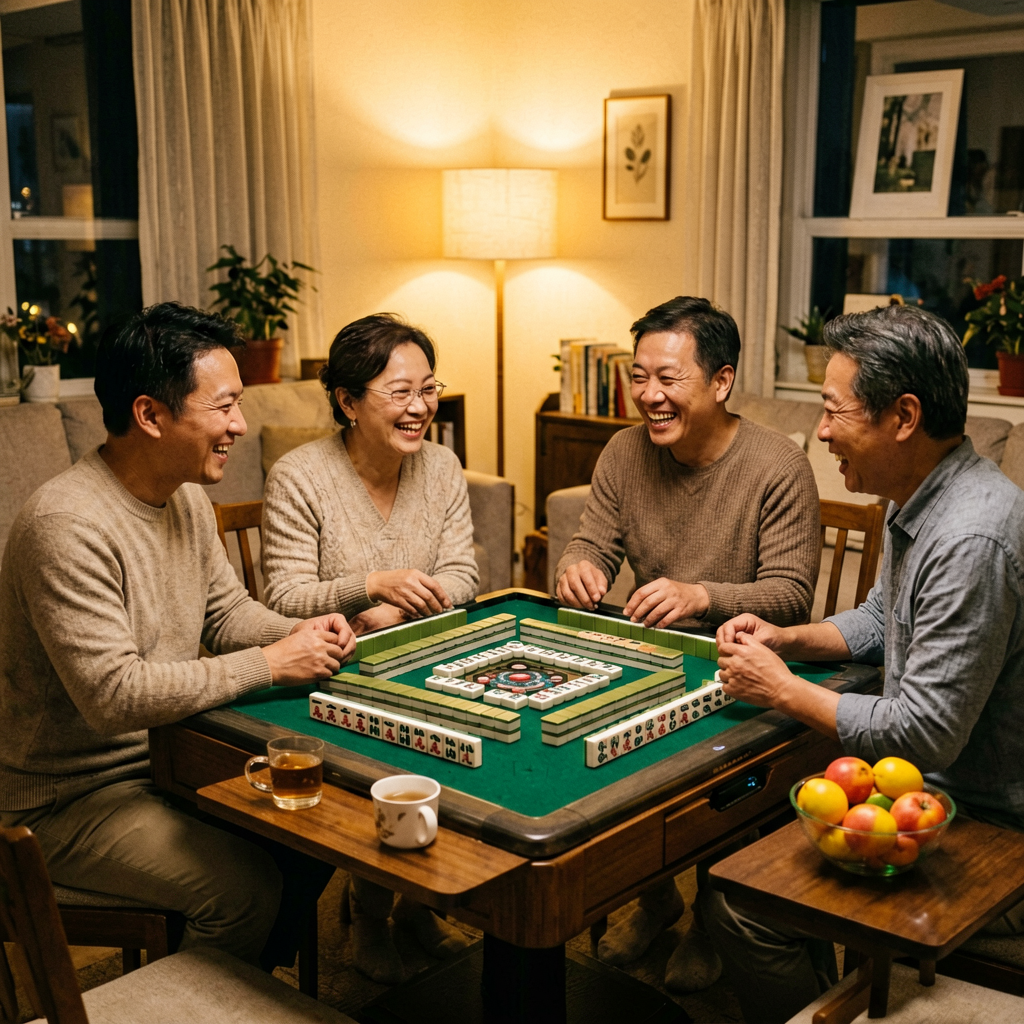
My favorite thing about American mahjong isn’t the strategy. It’s the fact that a seventy-eight-year-old and a thirteen-year-old can sit at the same table and both be genuinely interested. Not one of them politely humoring the other. Both of them in it.
That’s rarer than it sounds. Most family games split by age. Board games get too simple for adults or too fiddly for kids. Card games turn into gambling or math homework. Mahjong somehow lands in the middle: enough pattern-matching to keep a grandmother sharp, enough noise and shuffling and luck to keep a teenager from wandering off to their phone.
But it doesn’t happen automatically. If you throw a beginner and a forty-year veteran at the same table with no adjustments, one of them is going to have a bad time. Here’s what actually works.
Start with the tiles, not the rules
The instinct is to explain the card first. Don’t. The National Mah Jongg League card is a wall of numbers and colors, and handing it to a newcomer is the fastest way to lose them.
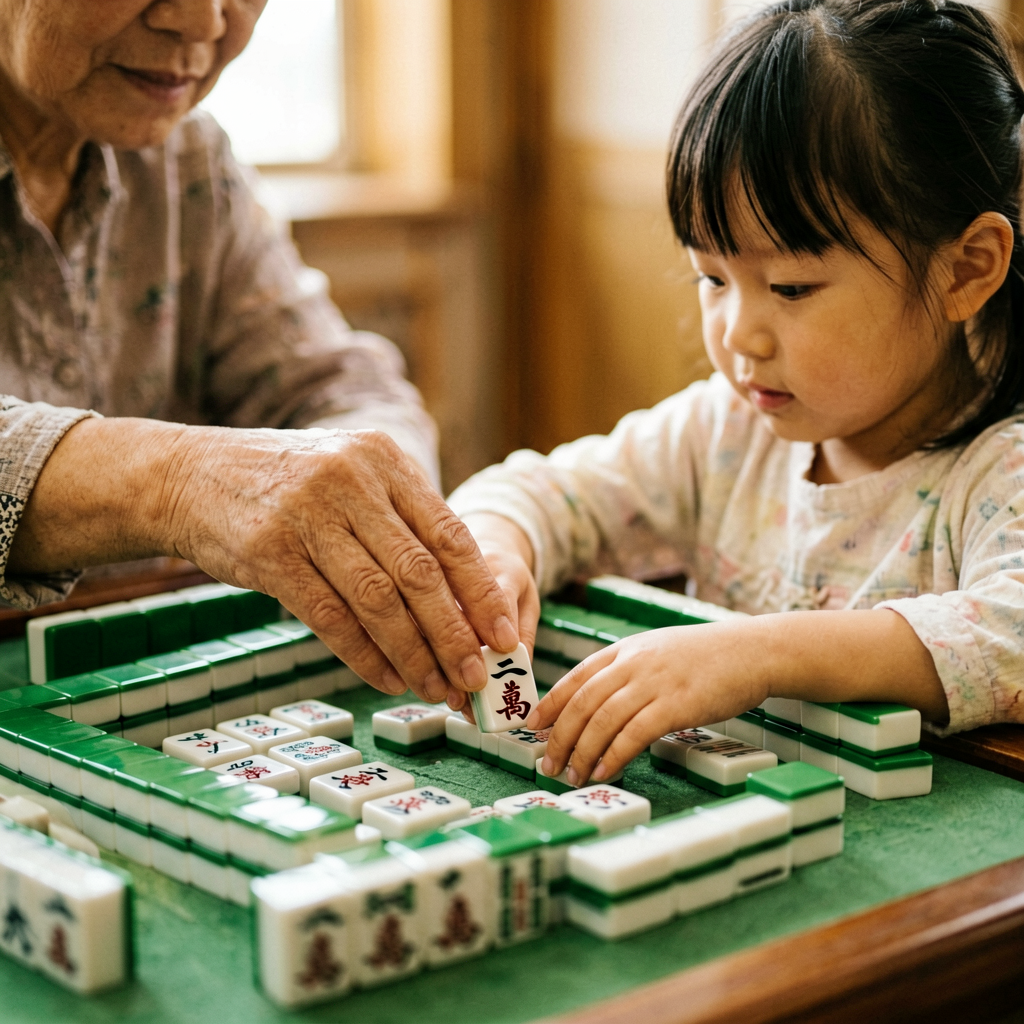
Instead, let people touch the tiles. Pour them out, shuffle them, let everyone feel the weight and the clack. Then walk through the suits: dots, bams, cracks, winds, dragons, flowers, jokers. That’s it. Fifteen minutes of just naming things and the intimidation drops by half.
Kids in particular learn the tiles faster than adults do, because they’re not trying to strategize yet — they’re just learning a new alphabet. Lean into it. Ask a ten-year-old to sort the whole set by suit and they’ll have the vocabulary down before you finish your tea.
Pick one hand and play toward it
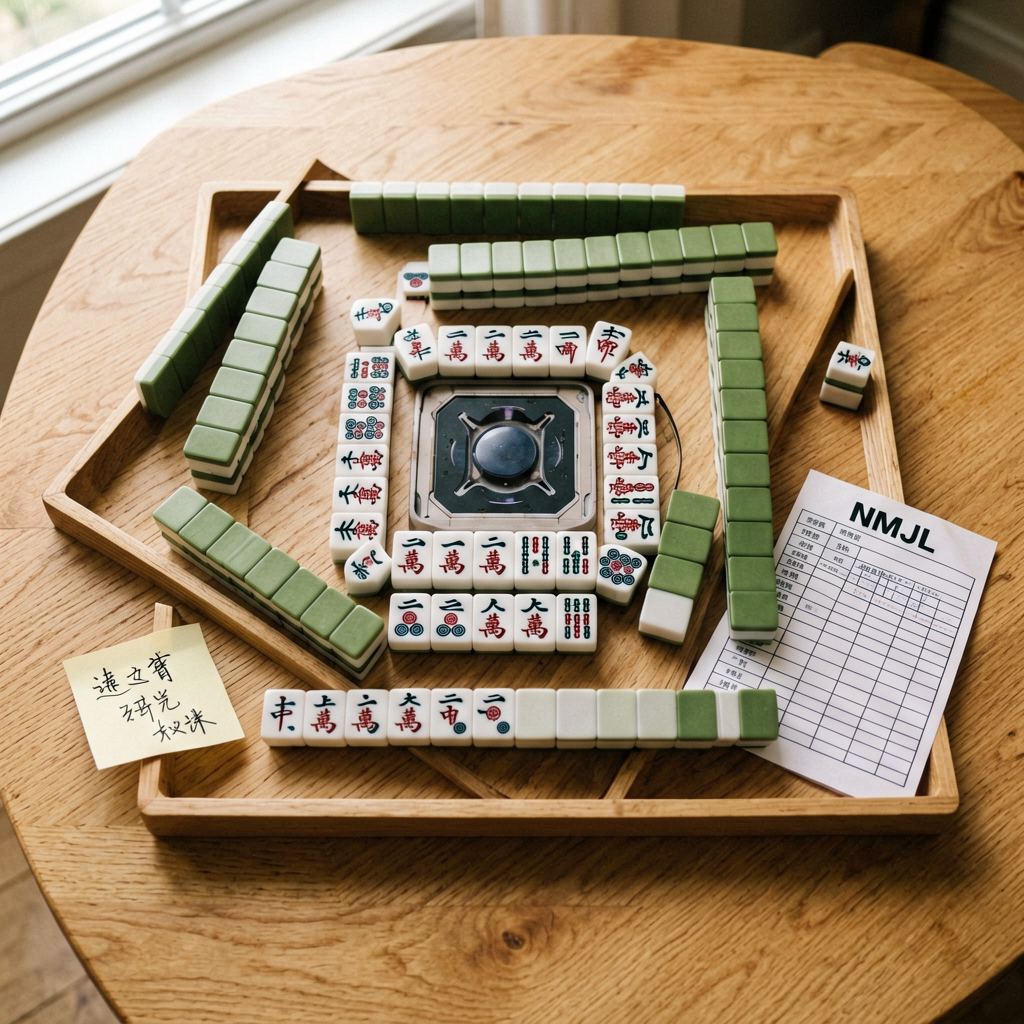
Here’s the single biggest unlock for mixed-age tables: don’t play the whole card. Pick one line from it — something with a clear repeating pattern, like a run of consecutive numbers in one suit — and have the beginner aim only at that. Circle it in pencil. Put a sticky note on the rack if you have to.
Everything gets easier once the target is fixed. The beginner isn’t scanning forty options every turn; they’re asking one question: does this tile help my line, or not? That’s a decision a nine-year-old can make and an eighty-year-old can make, and it’s the actual core skill of the game.
After two or three hands, most people start peeking at the rest of the card on their own. That’s the moment you know it took.
Let the grandparents run the table
If you’ve got an experienced player in the family, give them the job of caller and referee — not coach. There’s a difference. A caller keeps the game moving, announces discards, confirms wins. A coach leans over your shoulder and tells you which tile to throw, which is both against the etiquette of the game and a fast way to make a kid stop trying.
The best version of this I’ve seen: grandma plays her own hand normally, but between hands she does a thirty-second “what happened there” for the newer players. Short, specific, no lectures. It makes her the authority without making anyone feel managed.
Loosen the rules on purpose
Nobody at a family table is playing for tournament money. So bend things:
Open hands. Let beginners play with their tiles visible for the first few games. It looks strange, but it means the table can help them see patterns instead of watching them flounder in silence.
Skip the Charleston, or slow it way down. The Charleston — the passing ritual at the start of a hand — is fun once you know why you’re doing it. Before that, it’s just confusing. Play a hand or two without it, then add it back and explain what you’re trying to accomplish.
Forget the timer. No shot clocks, no sighing when someone takes forty seconds. If speed becomes a source of pressure, you’ve lost the youngest and the oldest player at the table simultaneously.
Let a bad call slide. Once. Then explain it. Then hold the line. Kids respect a rule they understand more than one that’s just enforced.
Play in short rounds
A full afternoon of mahjong is a beautiful thing, and it is not where you start with a mixed-age table. Aim for four hands, maybe an hour. Stop while people still want more. A twelve-year-old who leaves the table asking “can we do that again tomorrow” is worth ten times more than one who sat through three hours out of obligation.
Same goes at the other end. A ninety-minute cap keeps the game a pleasure rather than an endurance test for anyone whose back or attention isn’t what it was.
The set matters more than you’d think
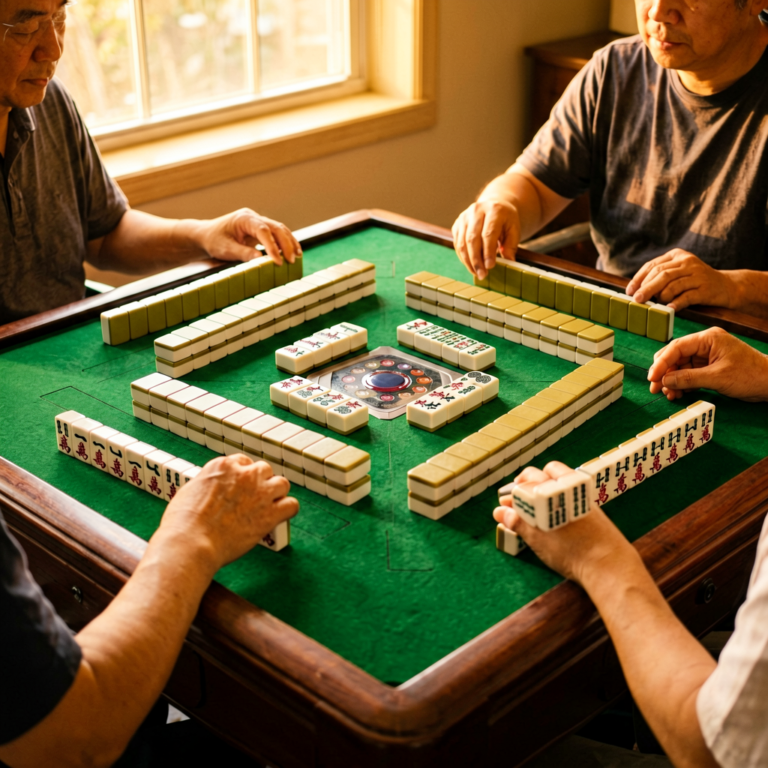
This is the practical part people skip. If the tiles are small, the engravings are faint, or the numbers are stylized to the point of decoration, older eyes will struggle and younger players will guess wrong. Both are avoidable.
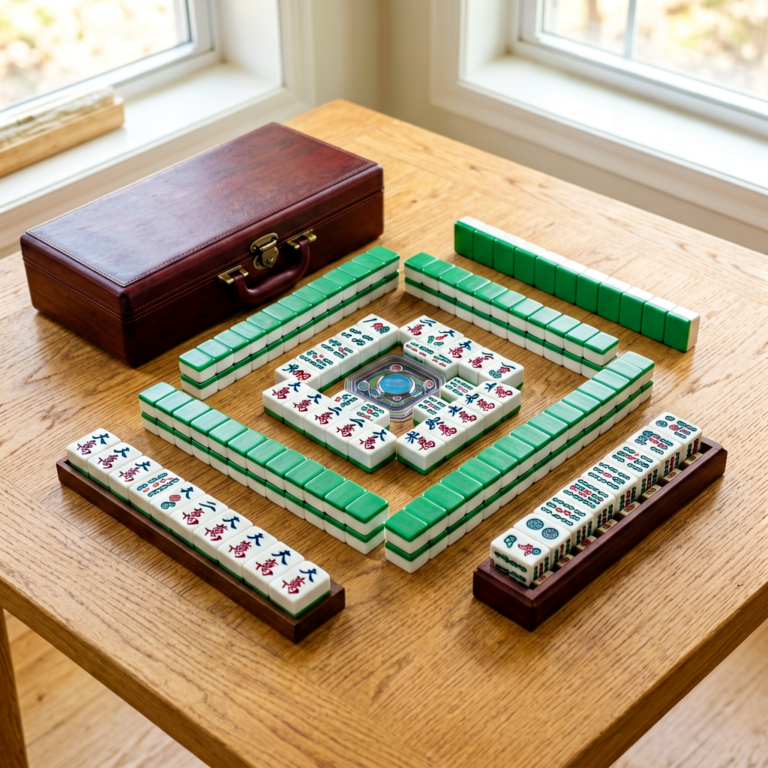
For a family table you want large tiles with high-contrast, clearly readable numerals, and enough weight that they don’t skate around when someone slaps one down. Racks with pushers help too — they save a lot of reaching for anyone with stiff hands, and they keep four sets of tiles from colliding in the middle.
It’s a small investment that quietly decides whether the game feels comfortable or annoying. A set built to be handled, rather than displayed, is what gets pulled off the shelf every week instead of twice a year.
Why it’s worth the setup
Here’s what happens after a few weeks of this. The kid starts recognizing hands faster than you do. The grandparent has a standing reason to be at the table, doing something they’re better at than anyone else in the room. And the parents in the middle — usually the ones organizing everything — get an hour where nobody needs anything from them.
Mahjong doesn’t ask people to be the same age or the same skill level. It just asks them to sit down and pay attention to the same thing for a while. In a house where everyone’s usually looking at a different screen, that’s not a small thing.
Get a decent set, circle one hand on the card, and give it an hour. That’s the whole trick.