What Every Symbol on an American Mahjong Tile Means (and Why the Tiles Look the Way They Do)
The first time you sort a rack of American mahjong tiles, something feels off if you have played any other version. The tiles are covered in big Arabic numerals and little letters. There are dragons in three colors. And then there is a tile that simply says JOKER. None of that exists in a classic Chinese set. So what are all these marks doing here, and what do they mean at the table.
The numbers you already recognize
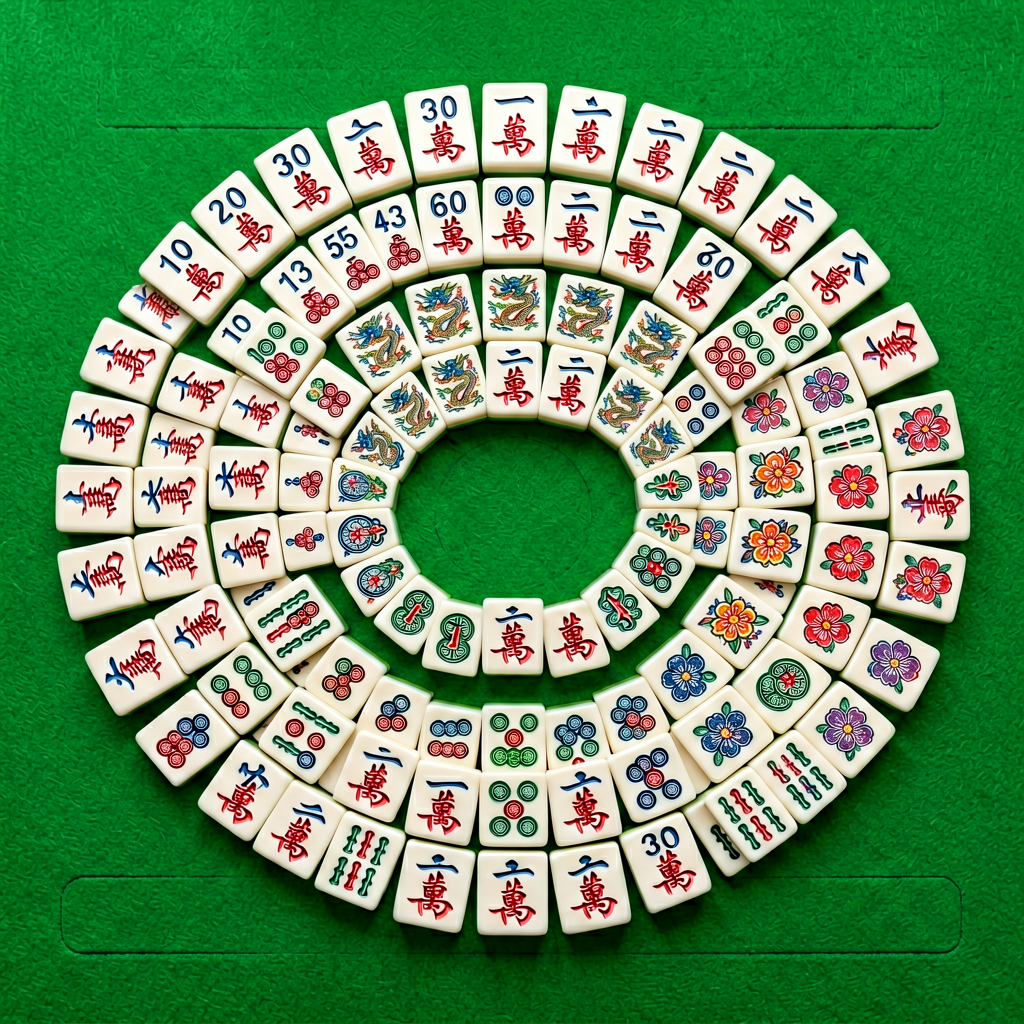
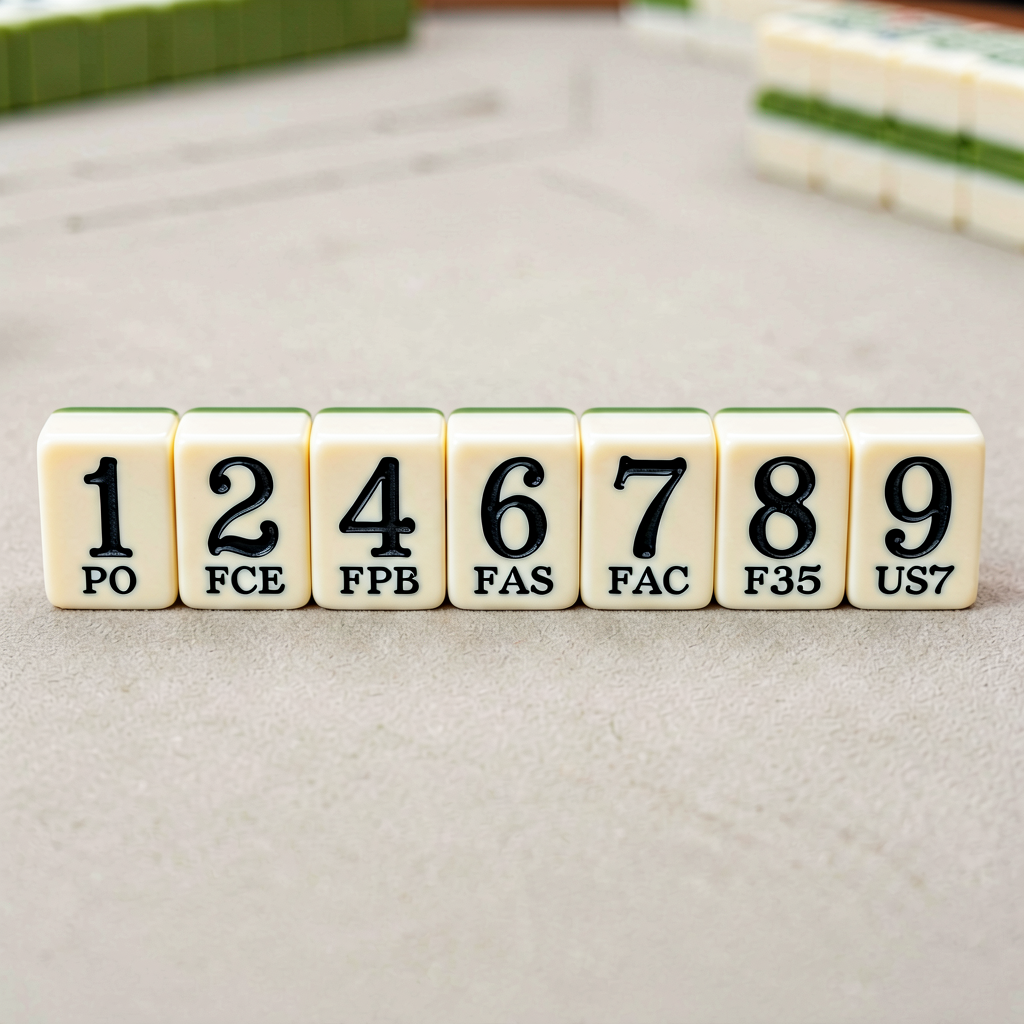
Start with the easy part. The three numbered suits each run one through nine. They are the same idea as every other mahjong game: three suits, nine ranks, four copies of each. What is different is how American sets write them. Instead of relying only on the traditional picture, the tile shows a huge Arabic numeral you can read across the table. That single change is why a group of near-strangers can sit down and play without anyone teaching the symbols first.
The three suits are dots, bams, and cracks. Dots are the circles. Bams are the bamboo sticks. Cracks are the characters. If you remember those three names you have already covered a hundred of the tiles in the box.
The small letters that stop the guessing
Under each numeral on an American tile there is a tiny letter. In most sets it is C for cracks, B for bams, and D for dots. That letter is the part Chinese and American mahjong players never share. A Chinese tile shows the suit symbol and expects you to know it. An American tile spells it out.
This matters more than it looks. When you are reaching for a tile mid-hand, you do not want to squint at a bamboo picture to decide if it is a five or a six. The numeral does the work, and the letter confirms the suit. It is a small design choice that makes the game far friendlier to new players, which was the whole point when the American version was put together.
Winds and dragons, with a color twist
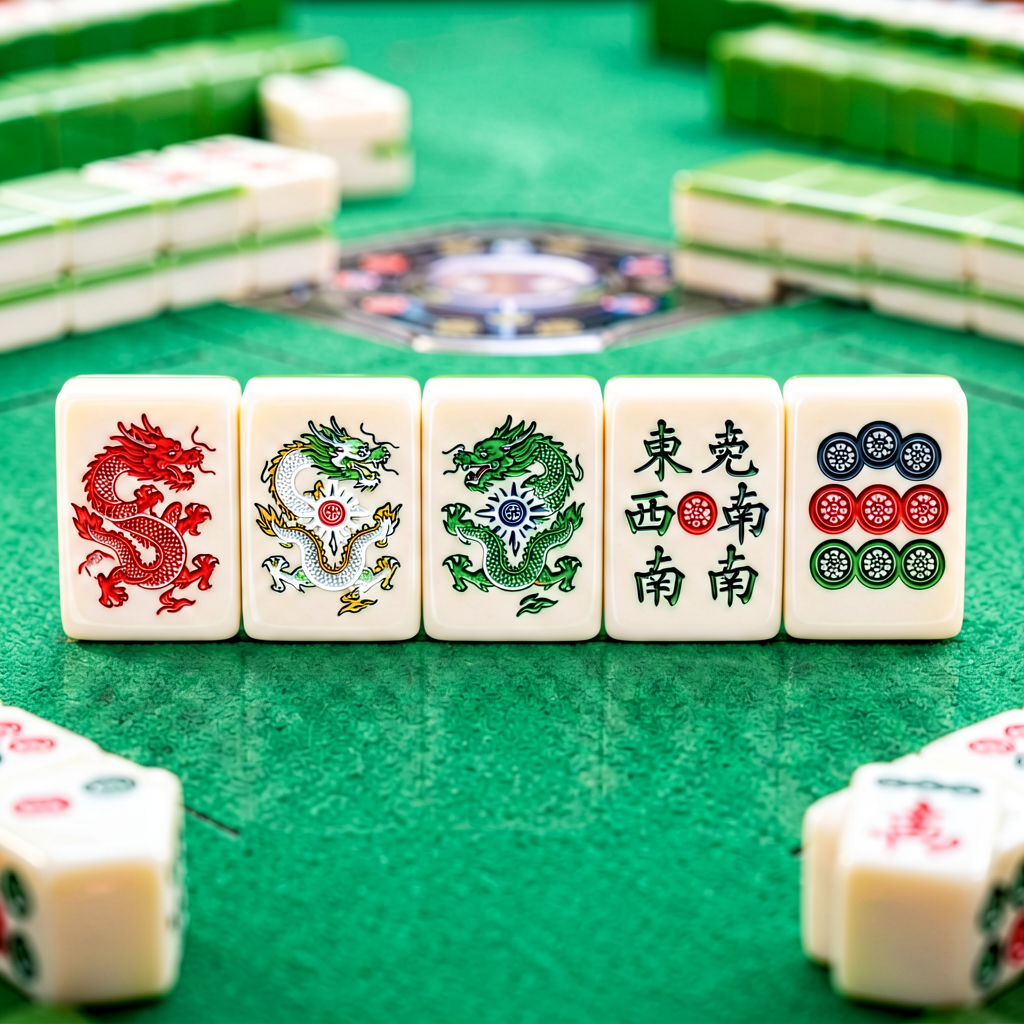
The winds are East, South, West, and North, usually marked with the letter rather than the full word. The dragons are where American sets get visual. There are three: red, green, and white. The red and green dragons carry their color right on the face, and the white dragon is often a blank tile or one with a blue frame, which throws people off the first time.
The colors are not decoration. They echo the old Chinese characters the dragons came from: the red dragon is the character for center or middle, the green dragon is the one for prosperity, and the white dragon is the blank slate. You do not need the history to play, but once you know the red and green are meant to be read as colored, the set stops feeling random.
Flowers, and the one tile that is pure American
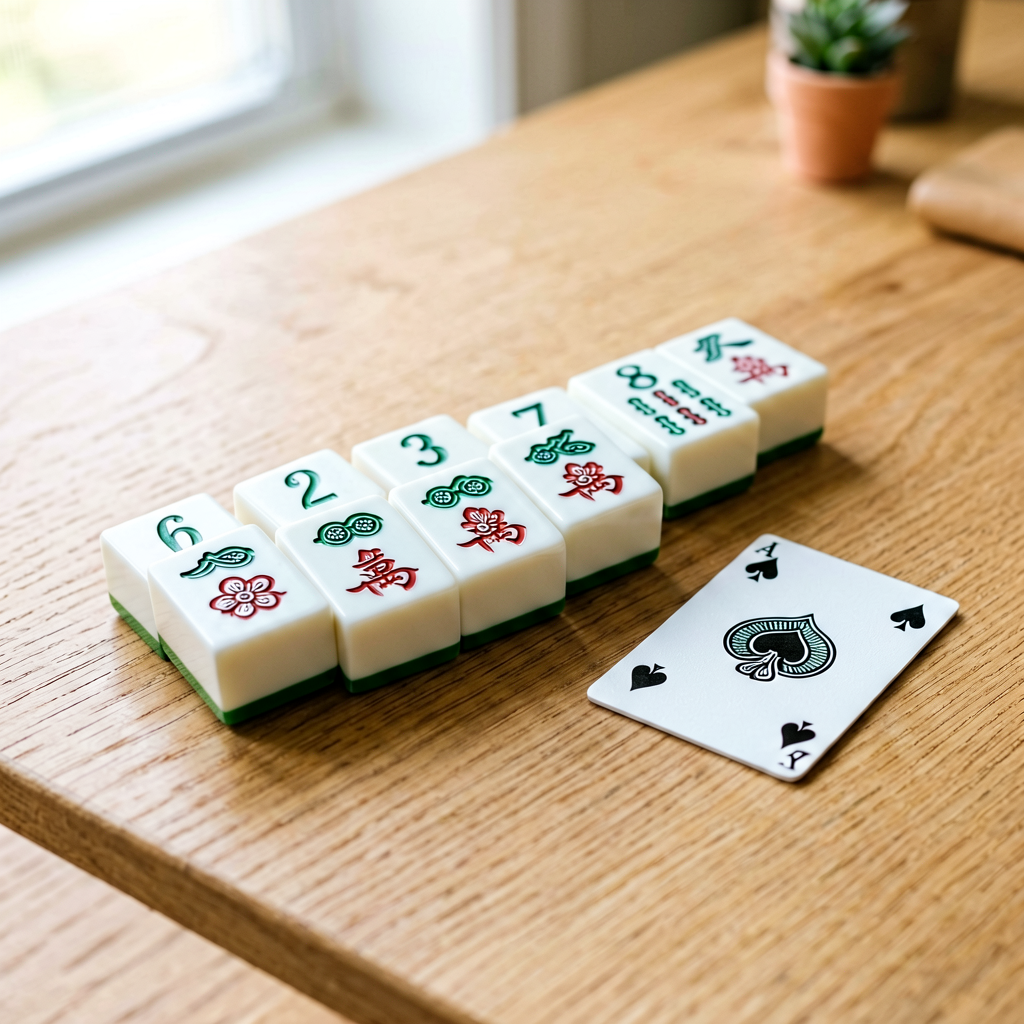
Alongside the main suits there are flower tiles, usually numbered one through eight, and they work as bonus tiles in many hands. They are pretty, but they are not the strangest thing in the box.
That title belongs to the joker. American mahjong is the only major version that uses a wild tile, and it prints the word JOKER right on the face. There are eight of them, and they can stand in for other tiles depending on the hand you are building. No other mahjong tradition has anything like it. If you want a single symbol that says this is American mahjong and not the original game, the joker is it.
Why American tiles ended up looking like this
Put the pieces together and the design has a clear logic. The game came to the United States in the 1920s and was reshaped to be played by people who did not grow up reading the Chinese characters. Big numerals, suit letters, color-coded dragons, and a plainly labeled joker all do the same job: they remove the need to memorize a foreign script before you can play.
The trade-off is that an American tile looks busy next to a spare Chinese one. But that busyness is the feature. It is what lets a table of four beginners be competitive inside an evening, and it is why the American card, with its hundreds of named hands, could exist at all. The marks on the tiles are the user interface for a very different game.
A quick way to read any tile
If you are new, here is the habit that saves the most confusion. Read the big number first, then the small letter for the suit, then check whether the tile is a wind, a dragon, a flower, or a joker. Almost every tile in the set falls into one of those buckets. Once your eyes sort automatically into number-suit, honor, flower, or joker, the rack stops being a wall of symbols and starts being a hand you can plan.
None of this is trivia. Knowing what the marks mean is the difference between wondering why a tile matters and seeing the hand it belongs to. The numerals tell you the rank, the letters tell you the suit, the colors tell you the dragons, and the joker tells you the game is American. Read those four things and you have read the whole set.
The short version
American mahjong tiles look the way they do because they were built for players who do not read Chinese. Arabic numerals, suit letters, red green and white dragons, and a labeled joker are all there to make the game readable at a glance. Learn what each mark means and the set stops being intimidating, which was the point from the start.