
Dice, Seats, and East: The Two Minutes Before an American Mahjong Game Starts
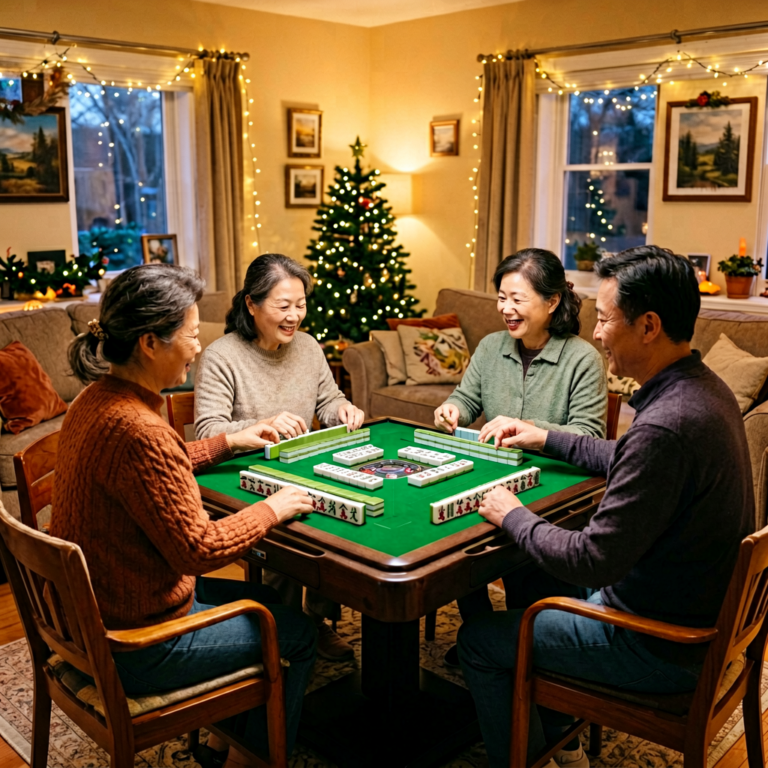
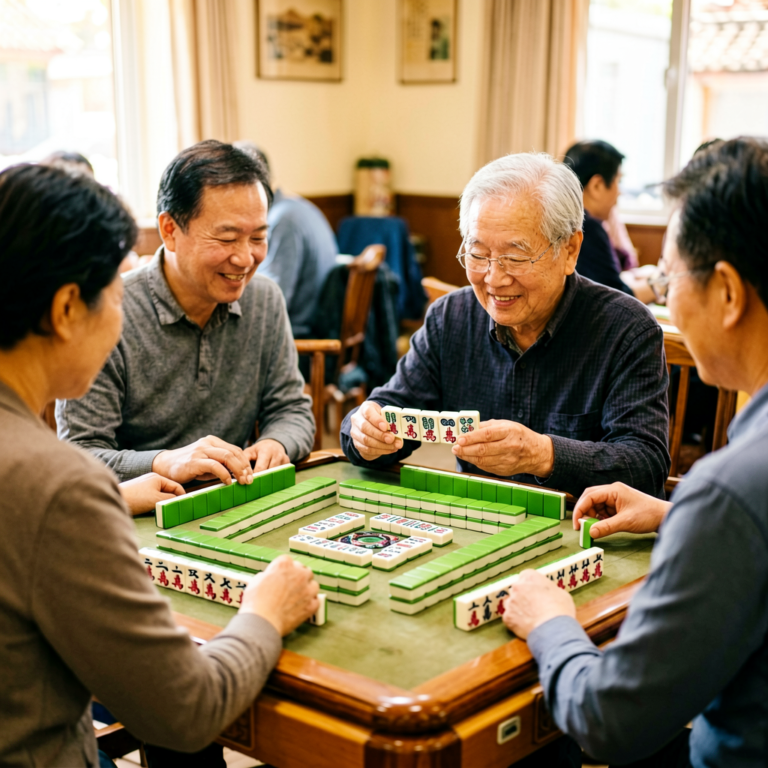
Watch a group that has played together for years and the first two minutes look like choreography. Dice come out, somebody says a number, seats shuffle around, a small marker lands in front of one player, walls get pushed and split, tiles fly onto racks. Nobody explains anything. Thirty seconds later the Charleston is already happening.
If you are new, that opening stretch is the most confusing part of the whole afternoon, and it is the part almost no beginner guide bothers to slow down. So here it is, slowly.
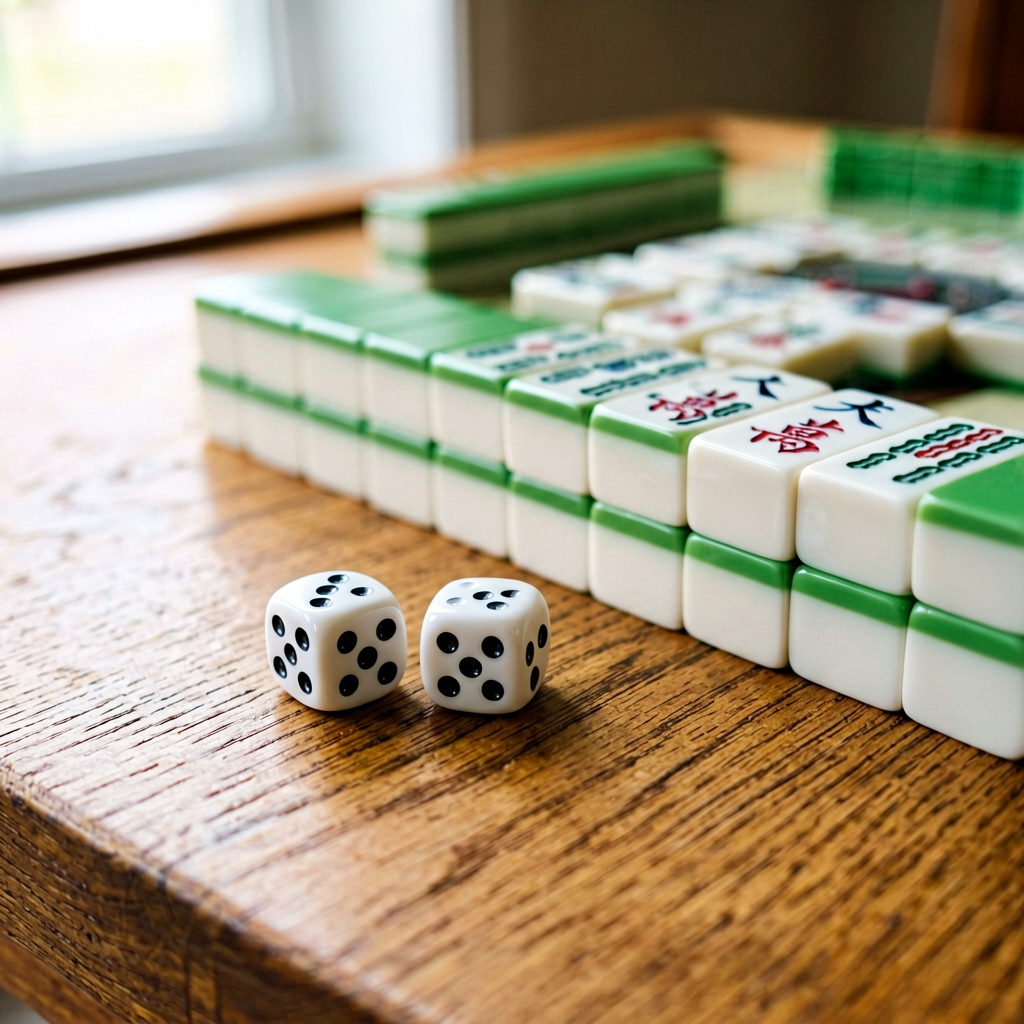
Why there are dice at all
Dice are in the box because mahjong needs a fair way to answer three questions before anyone touches a tile: who sits where, who deals first, and where the wall gets opened. Instead of arguing, you roll.
Here is the honest part though. Plenty of American mahjong groups barely use them. At a casual table, people sit where they sat last week, somebody volunteers to be East, and the wall gets broken wherever it is convenient. That is not wrong. The dice exist so that a table of strangers, or a tournament room, has a procedure that nobody can accuse of favoritism. At your kitchen table with three friends, the procedure matters less than getting started.
Still, it helps to know what the full version looks like, because at some point you will sit down with a group that does it properly and you will want to follow along.
Picking seats
The traditional way uses the four wind tiles. Take East, South, West and North out of the set, turn them face down, mix them, and each player takes one. The tile you drew is your seat. East sits wherever the group decides is East, and the rest follow in order, which in mahjong runs counterclockwise, not clockwise. That direction trips up nearly everyone at first.
Some groups skip the wind tiles and just roll dice, high roll picks first and the rest fall into place. Some skip the whole thing and sit down wherever the chairs are. What matters is that everyone knows where East is, because East deals and the deal moves from there.
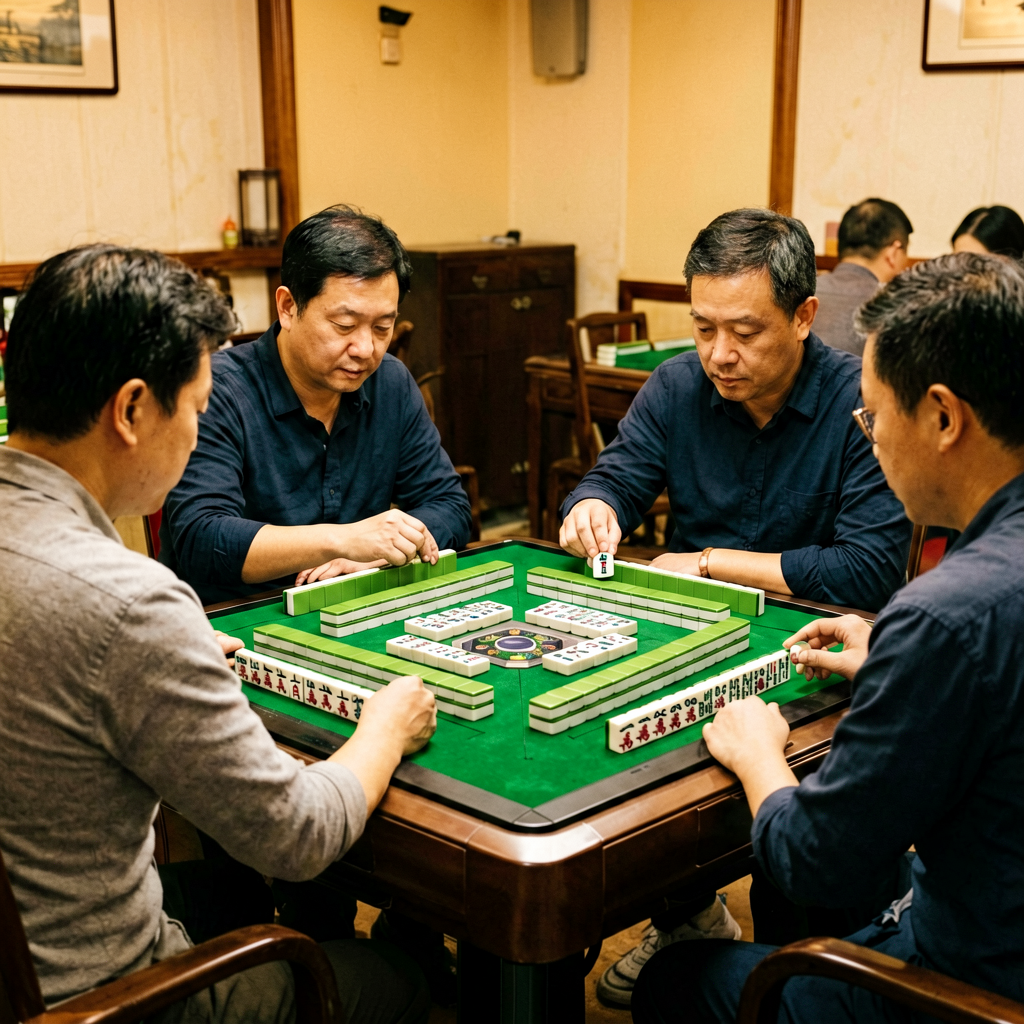
What being East actually means
In American mahjong, East is a job, not an advantage. The player who is East deals the tiles, gets one extra tile to start, and makes the first discard. That is basically it.
There is no bonus for winning as East and no penalty in most groups either, which is a real difference from Chinese and Japanese versions where the dealer position carries scoring weight. Do not overthink it. Being East just means you are doing the work this hand.
After the hand ends, the deal passes counterclockwise to the next player, so over four hands everybody takes a turn. The one exception most tables agree on: if a hand ends with nobody winning, the same player stays East and deals again. Some groups pass it anyway. Ask before the first hand rather than after.
Building the wall
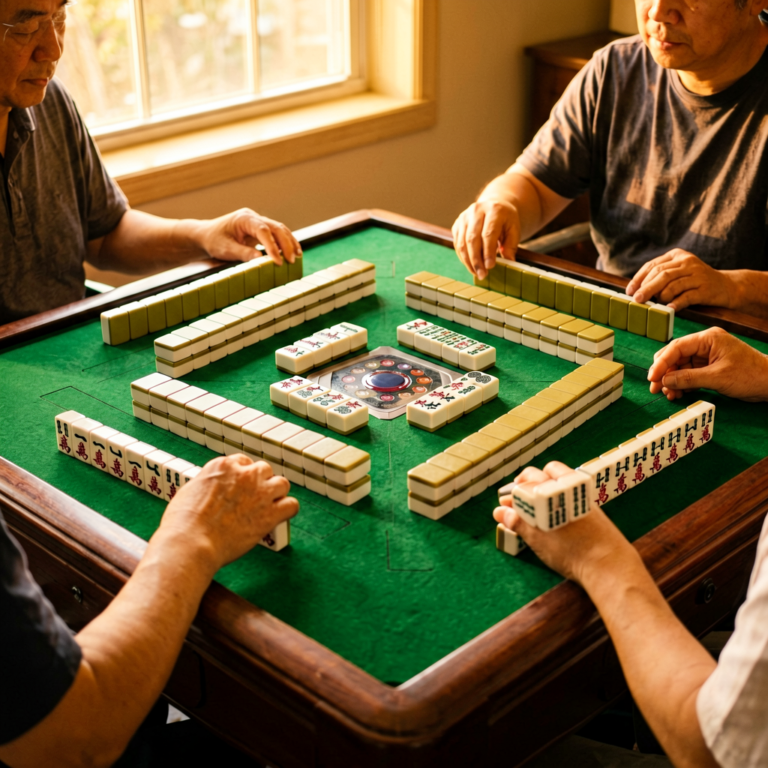
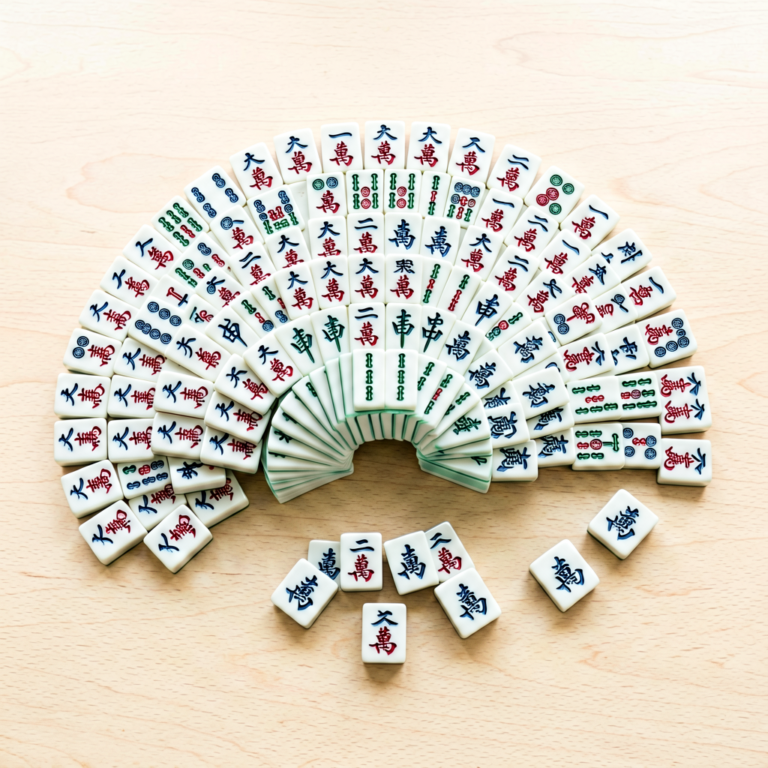
All 152 tiles go face down in the middle and everyone pushes them around for a while. This is not ceremonial, it is genuinely the shuffle, and it needs to be thorough. Then each player builds their quarter of the wall: two tiles high, in a straight line, pushed out to form a rough square in the center.
Two small things make this less annoying. First, build in stacks of two rather than laying a row and stacking on top, it is faster and straighter. Second, push your section forward so all four line up before anyone starts drawing, because a lopsided wall means somebody has to reach across the table every turn.
A quick practical note. Tile quality shows up here more than anywhere else in the game. Tiles with square edges and consistent thickness stack straight and stay standing. Cheap tiles with rounded, uneven edges slide off each other constantly, and you will spend the first two minutes of every hand rebuilding a wall that keeps collapsing. It is a small irritation that repeats hundreds of times a year.
Breaking the wall and dealing
East rolls the dice, counts around to figure out which section of the wall opens, and the deal starts there, moving counterclockwise. The counting method varies enough between groups that it is not worth memorizing a single version. What is universal: you open the wall at a semi-random point rather than always the same corner, so nobody can learn the pattern.
Then tiles go out in groups. East takes fourteen, everyone else takes thirteen. Most tables deal in batches of four at a time, going around twice or three times, then hand out the last singles. If you end up with twelve or fifteen tiles, say so immediately. A miscount caught before the Charleston is a shrug. A miscount caught after is a dead hand.
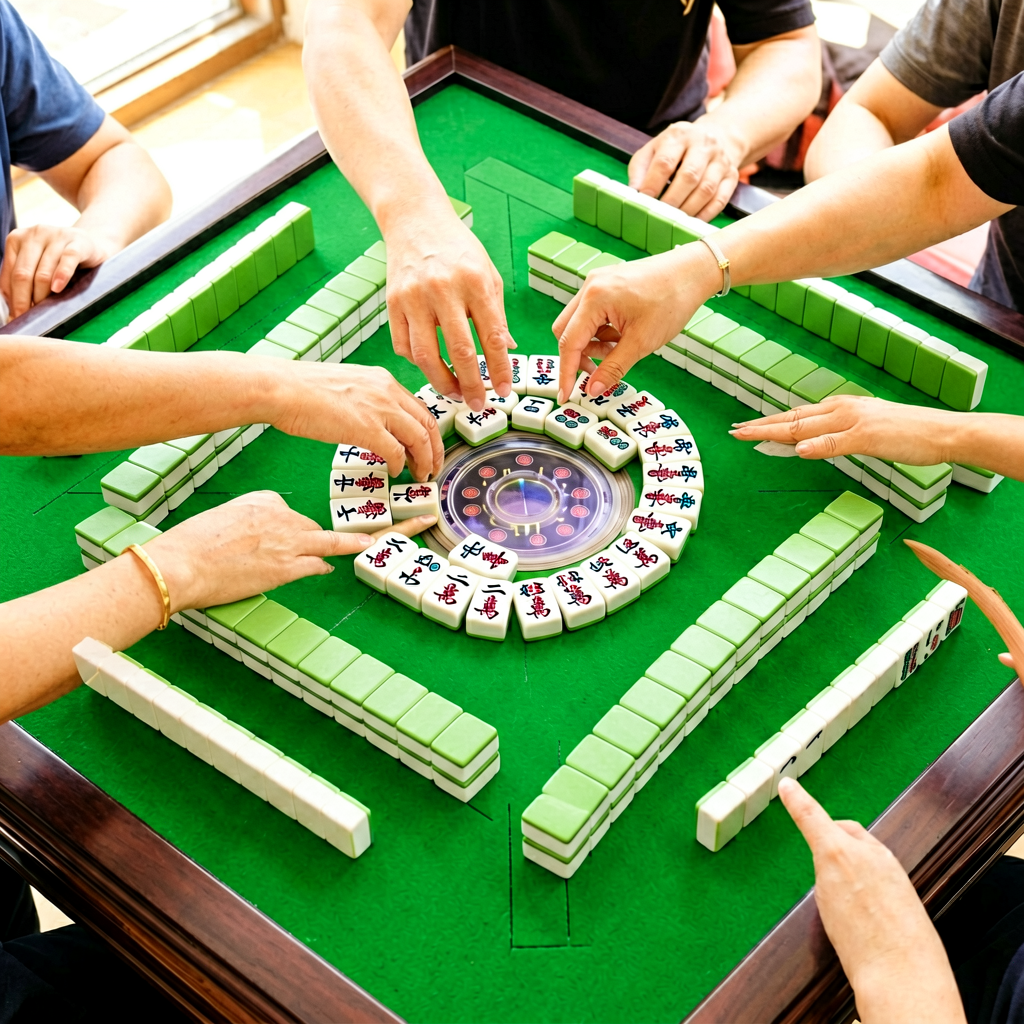
The version you will actually see
At most home games the whole sequence compresses into something like this: everyone sits down, someone says “you were East last time, so it is me,” tiles get shuffled and walls get built while people are still talking, dice get rolled or skipped, and the deal happens. Under two minutes, no ceremony.
That is fine. The formal procedure is there for tournaments and for tables where nobody knows each other. The reason to learn it anyway is confidence. When you can follow the setup without asking, you stop feeling like a guest at the table and start feeling like a player. And that feeling arrives a lot earlier than your first win does.