How to Read the NMJL Card: A Plain-English Guide for New Players
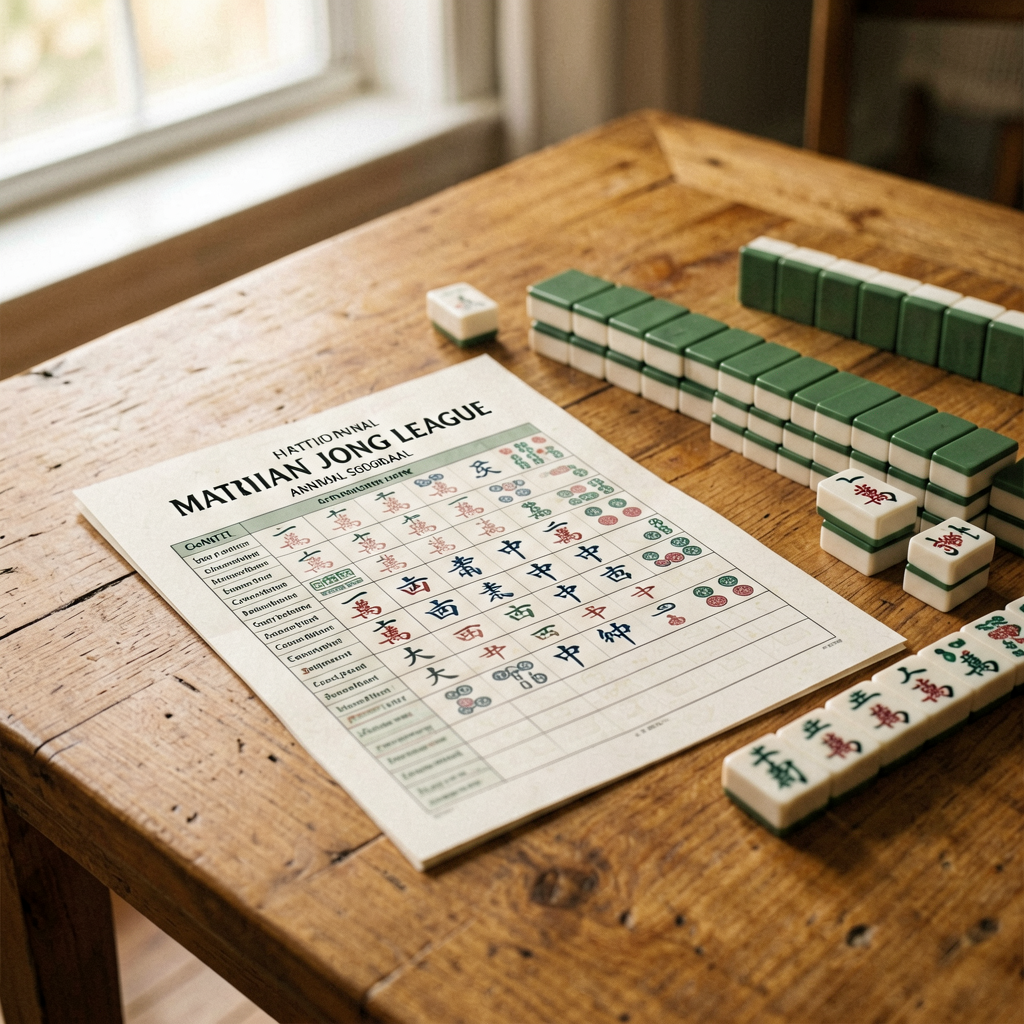
Somebody hands you a small folded card covered in colored numbers, stray capital letters, and what looks like a bus timetable. Then they tell you that everything you are allowed to win with is printed on it, and that you should probably pick a hand before the Charleston starts.
It is genuinely intimidating the first time. It is also, once three or four rules click into place, one of the tidiest cheat sheets in any game. Here is the whole thing, in order.
What the card actually is
The National Mah Jongg League publishes a new card every spring. On it is the complete list of hands that count as a win that year. Not examples. Not suggestions. The full and only list.
That is the part that surprises people coming from Chinese or Japanese mahjong, where you build toward a general pattern of sets and a pair. In American mahjong, if the 14 tiles in front of you do not match a printed line on the card, you have not won. You can be holding something beautiful and symmetrical and it means nothing.
Every hand on the card is exactly 14 tiles. Every single one. That fact alone will save you from about half of all beginner mistakes, and I will come back to it.
The colors are the whole trick
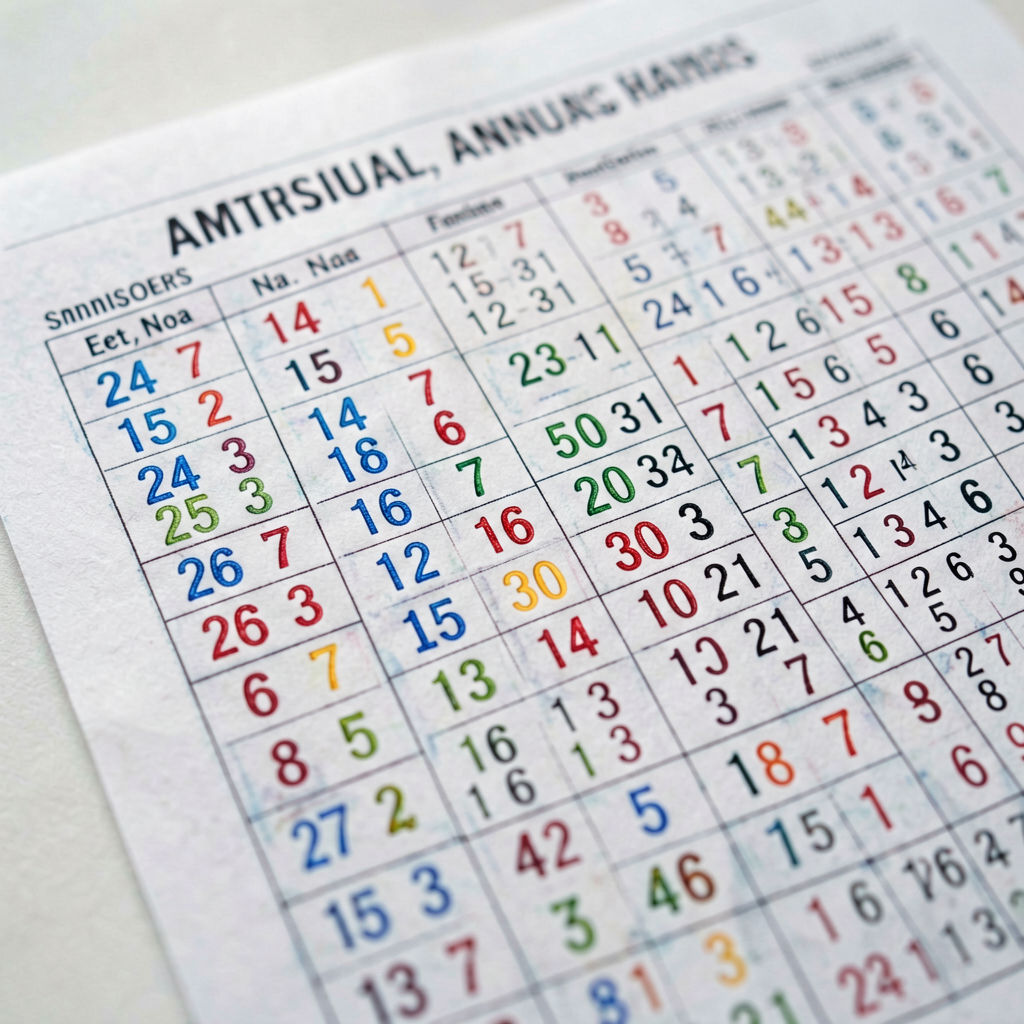
This is the one that trips everybody. The card prints hands in three colors, and the colors are not telling you which suit to use.
They are telling you when to switch suits. Same color means same suit. Different color means a different suit. Which suit goes where is entirely your choice, decided by whatever you happened to be dealt.
So a hand written in two colors needs two suits, and you pick them. A hand written in three colors needs all three. A hand in one color has to live entirely in cracks, or entirely in bams, or entirely in dots. Read the pattern, then map your tiles onto it.
The letters, decoded
Once the colors make sense, the alphabet soup is easy:
- F is a flower. Eight of them in the set, so FFFF is perfectly possible.
- D is a dragon, and it belongs to whatever suit its color represents in that hand. Red dragon goes with cracks, green with bams, white with dots.
- N, E, W, S are the winds, printed in black because they are not part of any suit.
- 0 is the white dragon, the tile everyone calls soap. It stands in for zero in the year hands, which is how a 2026 hand ends up reading 2, soap, 2, 6.
The letter at the end, and the number next to it
Every line finishes with a value and either a C or an X. That pair of marks matters more than the pretty tiles in the middle.
X means you may expose. Call a discard, lay the group face up on your rack, keep building in public. C means concealed: no exposures at all, nothing face up until you declare mahjong. You draw, you discard, you keep your mouth shut.
The number is what the hand pays. Most sit between 25 and 50 points, and the hardest ones climb higher. The pattern is not subtle once you notice it: the cheap hands are the exposable ones, the expensive hands are almost all concealed, and the very top of the value range lives in the Singles and Pairs section, where jokers are useless because jokers can only replace tiles inside a group of three or more.
A 50-point concealed hand looks great on paper. It is also a hand you cannot get help with, and you will be sitting there drawing while somebody across the table quietly exposes their way to a 25-point win. Both are legal. Only one of them ends the game.
Count to fourteen, every time
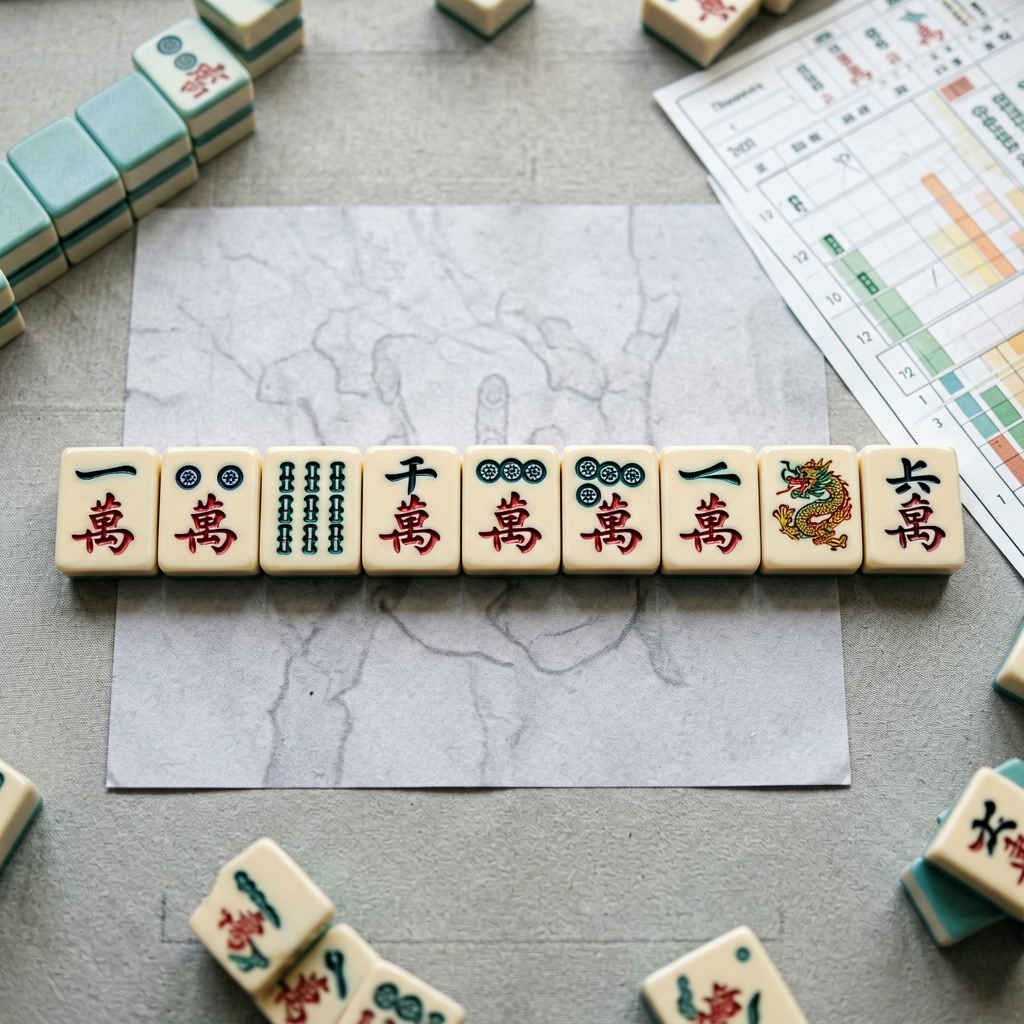
New players read a hand as a shape and skip the arithmetic. Then they get to the end of the game holding thirteen tiles that match a pattern requiring fourteen, and there is no way to fix it.
So count the groups. A pair is two, a pung is three, a kong is four, a quint is five. Add them up. It comes to fourteen or you have misread something, usually a single that you assumed was a pair.
How the sections are laid out
The card is grouped into categories, and although the exact lineup shifts a little year to year, the regulars are always there. The year section, built from the digits of whatever year the card was printed. 2468 and 13579, for even and odd runs. Consecutive Run, for numbers in sequence. Any Like Numbers, where you pick one number and repeat it across suits. Quints, with groups of five. Winds and Dragons. 369. And Singles and Pairs at the bottom, the expensive concealed stuff.
Learn the sections before you try to learn the hands. When you are dealt a rack full of 2s, 4s, and 6s, you want your eye to go straight to one block of the card instead of scanning the whole thing twice while three people wait on you.
Actually using it at the table
Reading the card and playing off the card are different skills. What works:
- Pick two candidates, not one. Before the first Charleston pass, find two hands you could plausibly reach. One will die. Having a second one already in mind is the difference between adapting and starting over.
- Commit by the middle of the game. Chasing three hands at once means you are short on every one of them. At some point you have to throw away the options.
- Read other people’s exposures against the card. Somebody lays down three 4 bams. Flip to the sections with pungs of 4 and you have narrowed their hand to a handful of lines. That is public information and most beginners ignore it completely.
- Mark up your own copy. Circle your favorites, cross out the ones you never manage. It is a cheap piece of paper, not a museum piece.
- Get the large-print version if you squint. It exists for a reason, and nobody has ever regretted buying it.

It expires, and that is the point
Next year’s card replaces this one entirely. Hands get retired, new ones appear, the year section changes by definition. Anyone playing seriously buys the new one, and tournaments require the current year’s card, so an old one is a practice tool at best.
People grumble about it, but the annual reset is a large part of why the game stayed alive for eighty-odd years. Nobody gets to memorize the card once and coast forever. Every April the whole table goes back to being slightly confused together, which is more fun than it sounds.
The short version
Colors mean suit changes, not specific suits. F is flower, D is a dragon in that suit, soap plays as zero. C means concealed and X means you can expose. The number is the payout and it tracks how hard the hand is. Every hand is fourteen tiles, so count. Pick two targets before the Charleston and commit to one by the middle of the game.
Give it three sessions. Somewhere in the third one you will stop reading the card line by line and start recognizing shapes, and the small folded piece of paper will turn from an obstacle into the most useful thing on the table.