
The Charleston in American Mahjong: What You Pass, When, and Why
Your first American mahjong game will go fine until about ninety seconds in. The tiles get dealt, everyone stares at their rack for a moment, and then three people start sliding tiles sideways at each other without a word of explanation. Nobody tells you what is happening. You are supposed to already know.
That is the Charleston. It is the part of the game that has no equivalent in Chinese or Japanese mahjong, and it is the part that decides most hands before a single tile is drawn from the wall.
So what is it, exactly
After the deal, every player is holding a pile of tiles that mostly do not go together. East has 14, everyone else has 13, and almost nobody has anything resembling a hand from the card yet. The Charleston is a fixed round of trading that lets the whole table dump what it cannot use and pick up what it might.
Three tiles at a time, face down, in a set direction. No talking about what you are sending. No calls, no exposures, no claiming anything. It happens entirely before play begins, and once East makes the first discard, it is over for that hand.
The first Charleston is not optional
Three passes, always in this order:
- Right. Three tiles to the player on your right.
- Across. Three tiles to the player opposite you.
- Left. Three tiles to the player on your left.
Everyone passes at the same time, face down. You do not get to skip a pass because your hand looks good. If you have nothing you want to give up, that is your problem to solve, and there is a rule for exactly that situation further down.
The blind pass, and why it is called that
Sometimes you get to the left pass and genuinely cannot spare three tiles. Every one of them is doing a job. This is where the blind pass saves you.
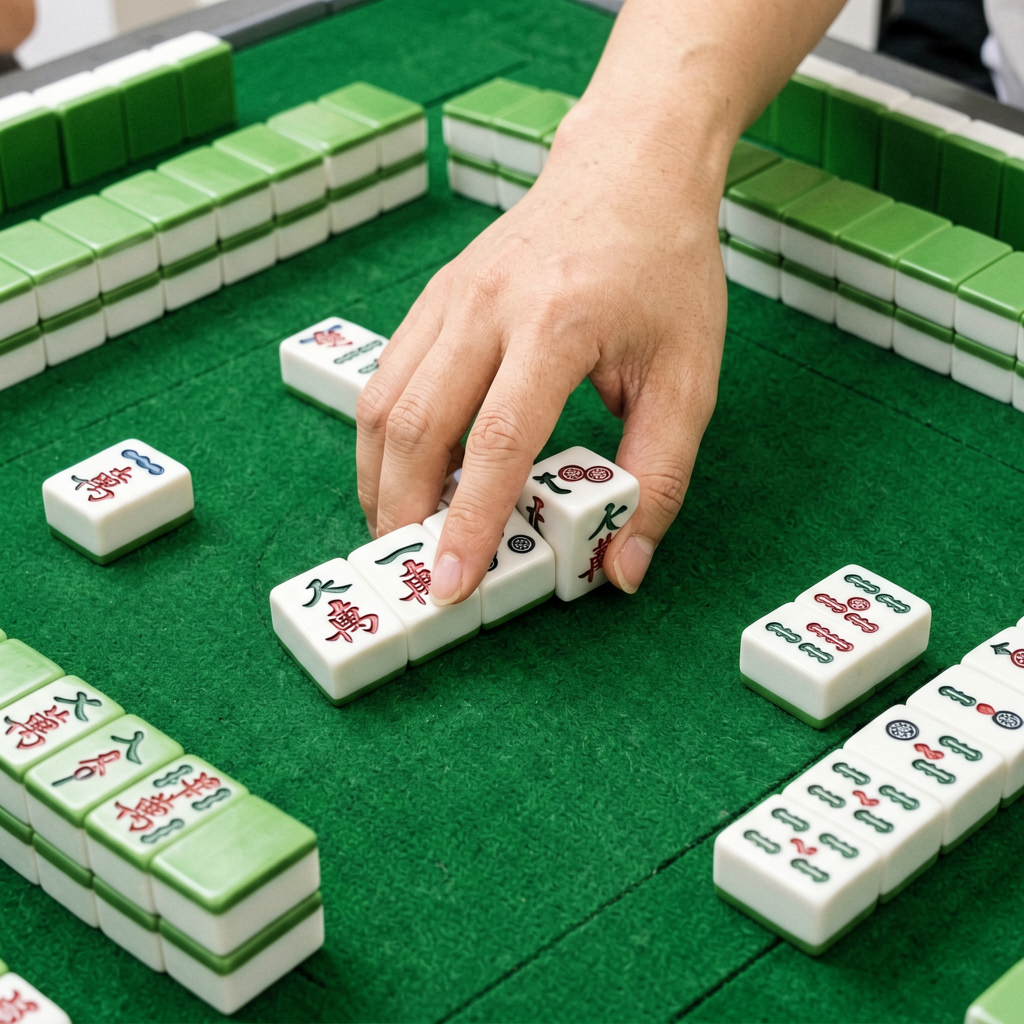
On the last pass of a Charleston, you may take one, two, or all three of the tiles coming toward you and send them straight along without looking at them. You steal from the incoming pass to fill your outgoing one. The rule is specific about the timing: it works on the first left and on the last right, meaning the closing pass of each Charleston. Not the right pass that opens things, not the across pass.
And you actually have to not look. That is the whole point of the name. Peeking is against the rules, though the League does not attach a formal penalty to it, so most tables just remind each other and move on. Saying “passing blind” out loud is a courtesy, not a requirement. More than one person at the table can do it on the same pass.
The second Charleston, and who gets to cancel it
After the first three passes, the table can run a second set. Same idea, mirrored direction:
- Left.
- Across.
- Right.
Here is the part worth remembering: any single player can shut it down. One person says no, and it is over for everyone. No vote, no discussion.
Experienced players use this more aggressively than beginners expect. If your hand came together nicely in the first Charleston, a second round mostly gives the three people who are struggling a chance to catch up. Stopping it is a legitimate move, not rudeness. It also leaks a little information, since anyone who kills the second Charleston is telling the table their hand is already in decent shape.
The courtesy pass
Once the Charlestons are done, you and the player across from you may trade up to three tiles. It only happens across, never left or right, and you both have to agree on the same number first. Two for two, or one for one, or nothing at all.
Most beginners forget this exists. Ask for it out loud every hand until it becomes a habit, because one specific tile is often the difference between a hand that closes and a hand that dies on the wall. Use it to fill a known gap, not to unload leftovers.
Jokers stay on your rack. All of them. Always.
This is the rule that trips up more new players than anything else in the game. You cannot pass a joker during the Charleston. Not on the right pass, not across, not left, not blind, not in the courtesy pass, not in the second Charleston. There is no situation where it is legal.
The temptation is real, because early on a joker can look useless for whatever hand you think you are building. But your hand is going to change three or four times over the next few minutes. Jokers substitute in any group of three or more later, which makes them the most flexible thing you will ever hold. If one slips through by accident, the receiving player hands it back and a regular tile goes over instead. The hand is not dead, since play has not officially started yet, but do not lean on that.
What to actually send
The habit to break is passing reactively, just shoving whatever feels least useful toward your neighbor. Better approach:
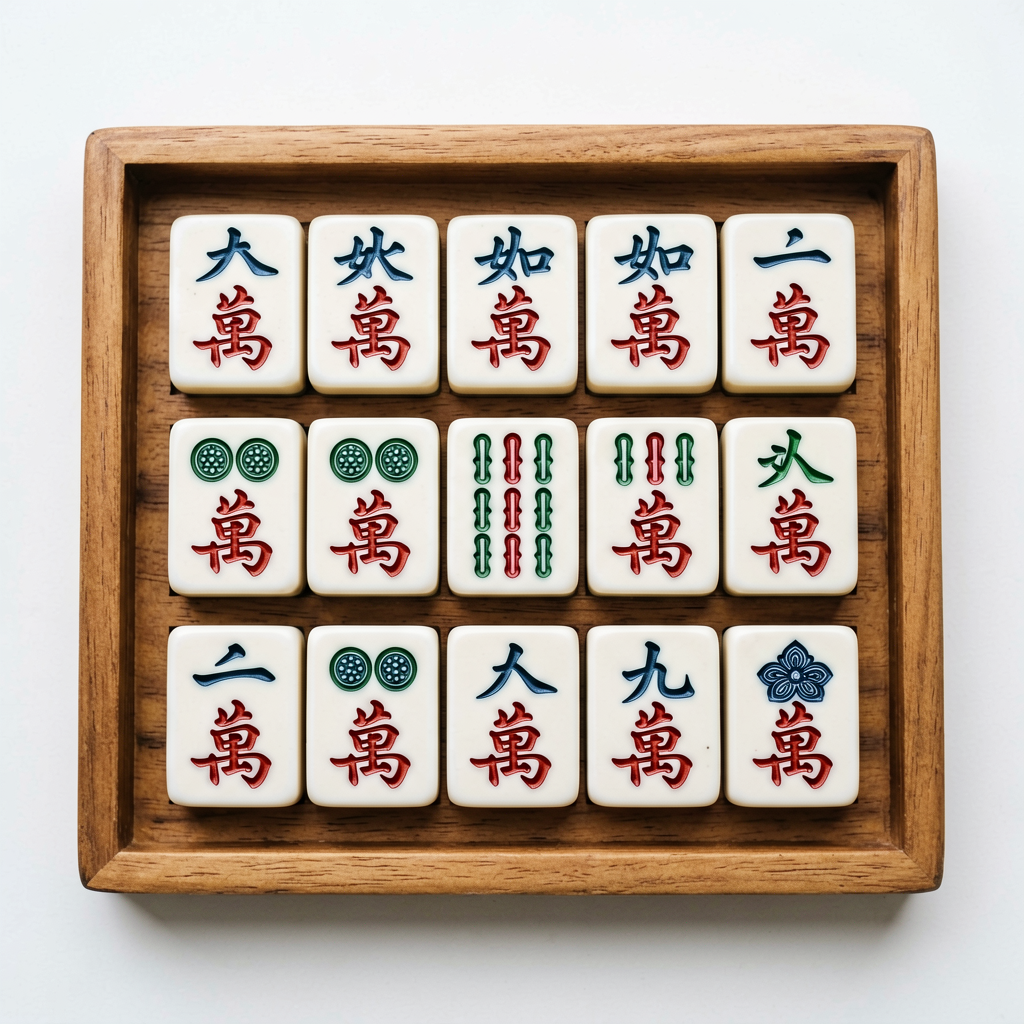
- Pick a section of the card before the first pass. Consecutive Runs, 2468, Singles and Pairs, whatever. You can change your mind later, but you should be aiming somewhere on that first right pass instead of just reacting.
- Release true orphans first. A lone wind, a flower you have no line for, the odd single you are keeping out of politeness.
- Watch what comes in. If your right-hand neighbor sends you three bams, she is almost certainly not building bams. That is free information about a quarter of the table.
- Be careful with duplicates. The third copy of a tile you do not need might be exactly the pair somebody else is waiting on.
- Keep the pace up. Long agonizing pauses broadcast that you have no plan. Decide, place the tiles, move on.
Common beginner mistakes
Four things I see constantly at new tables. Passing jokers, obviously. Passing in the wrong direction on the second Charleston, because the mirrored order does not stick until you have done it a dozen times. Skipping the courtesy pass. And treating the whole thing as a warm-up instead of the actual start of the hand.
That last one matters most. By the time East throws the first tile, six passes may have already happened, and your hand has been reshaped by all of them.

The short version
First Charleston, required: right, across, left. Second Charleston, optional and any player can cancel it: left, across, right. Courtesy pass across, zero to three tiles, both players agree on the count. Blind pass allowed only on the closing pass of each Charleston. Never a joker, under any circumstances.
Write that on an index card and keep it next to your rack for the first month. Everyone at the table did the same thing when they started, and most of them still remember which pass they kept getting backwards.