Jokers in American Mahjong: What They Can Do, What They Can’t, and When to Let One Go
Ask four American mahjong players what makes their game different from every other version played around the world, and you’ll get four answers. But the honest one is short: jokers. Eight of them, sitting in the wall, quietly deciding who wins.
They’re also the tiles new players get wrong most often. Not because the rules are complicated, but because jokers feel like they should be more flexible than they actually are. So let’s go through what a joker really does, where it stops working, and the judgment calls that separate a decent player from a good one.
Eight tiles that change the whole game
A standard American set carries 152 tiles, and eight of those are jokers. Chinese and Japanese sets don’t use them at all. That single difference is why a hand that would be nearly impossible in a Chinese game is routine on an American table — you’re not hunting for four identical tiles, you’re hunting for two plus whatever a joker can cover.
It also explains why American mahjong hands are built around groups of three, four, five, and even six matching tiles. The card can ask for a kong of anything because a joker can always fill the gap. Remove jokers from the deck and half the card becomes unplayable.
The one rule that trips everyone up
Here it is: a joker can stand in for any tile inside a group of three or more identical tiles. A pung, a kong, a quint, a sextet — all fair game. Need a fourth green dragon and only have three? Joker. Need a quint of five 7 Bams and you’re holding two? Two jokers, done.
What a joker can never do is replace a single tile or half of a pair. Not once, not with a house rule, not in a pinch. If your hand needs one lonely 4 Crak and a pair of West winds, you’re finding those tiles the hard way.
Which brings up the practical consequence nobody mentions to beginners: the Singles and Pairs section of the card is a joker-free zone. Every group in those hands is a single or a pair, so your jokers are dead weight there. If you’re sitting on three jokers after the Charleston, that whole section of the card should be off your list. Play where your tiles have power.
Jokers don’t travel
You can’t pass a joker in the Charleston. Not in the first pass, not in the last, not even in the courtesy pass at the end. Some players don’t learn this until they’ve already slid one across the table and someone politely slides it back.
The reason is obvious once you think about it. If jokers moved freely during the Charleston, the whole opening would turn into a joker auction. Keeping them locked in place means whoever draws them keeps them, and the passing rounds stay about shaping your hand rather than trading firepower.
This has a real strategic knock-on effect: your joker count at the end of the Charleston is basically fixed until you start drawing from the wall. So count them early, and pick your target hand accordingly.
The joker swap — the move most beginners miss
This is the part of the game that feels like a magic trick the first time you see it work.
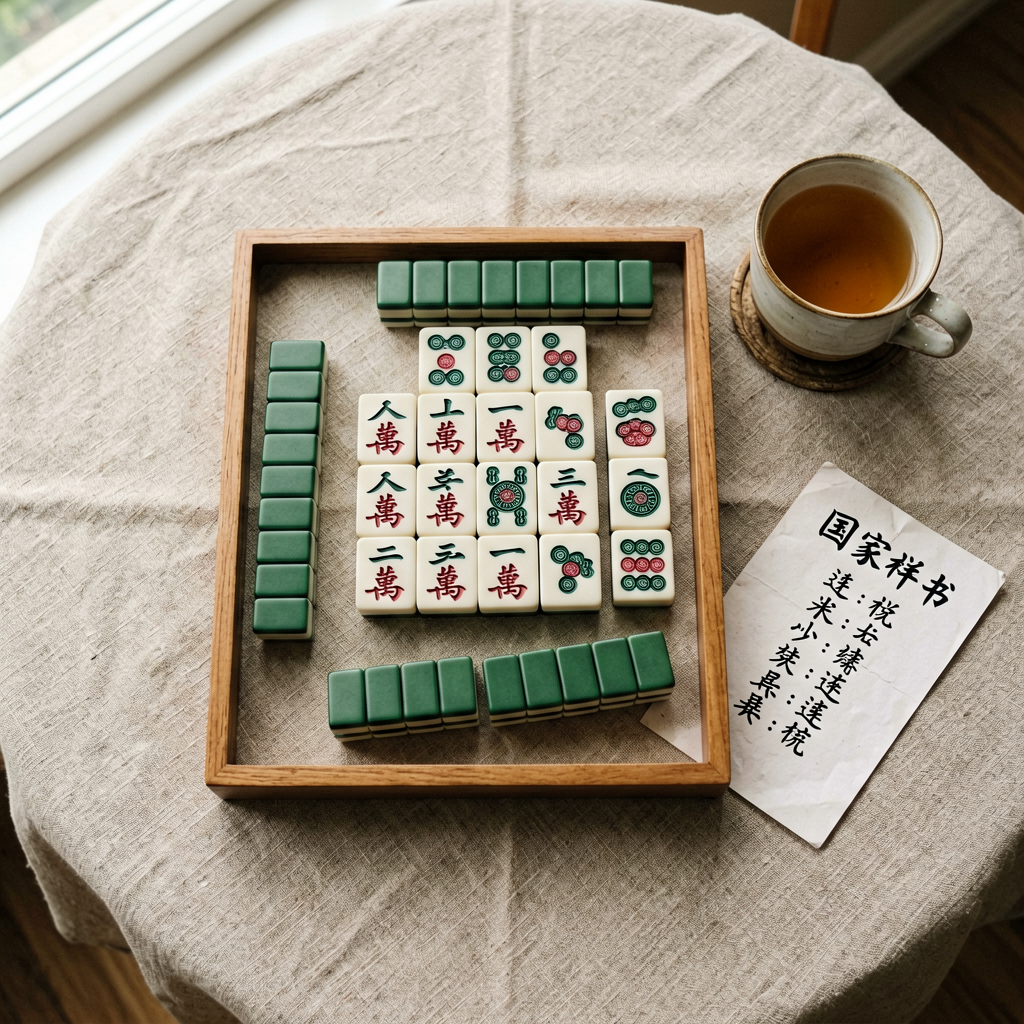
Once a joker is sitting in an exposed set on the table — yours or anyone else’s — it becomes redeemable. If you hold the actual tile that joker is standing in for, you may swap on your turn: put your real tile into their exposure, take the joker into your hand. The set stays complete, and you just gained the most valuable tile in the game.
A few things worth knowing about it:
Timing matters. You do it during your own turn, not whenever you notice it. And once someone declares mahjong, the window closes.
Exposures are public property. A joker in your opponent’s kong is just as swappable as one in your own. Scan the table every time someone exposes.
It cuts both ways. Every time you expose a set with a joker in it, you’re advertising a swap opportunity. Sometimes that’s fine. Sometimes it hands your best tile to the player across from you.
Good players watch exposures like a hawk for exactly this reason. Half the jokers that end a game were pulled off someone else’s rack.
When throwing a joker away is correct
Discarding a joker looks insane. Occasionally it’s the right call.
You’re allowed to discard one, and here’s the important part: a discarded joker is dead. Nobody can claim it, for anything. It goes in the middle and stays there. That makes it the only genuinely safe discard in the game.
So when is it worth it? When the joker can’t help you and someone else is close. If you’re chasing a Singles and Pairs hand, your joker is decoration — and if the player to your left has two exposures with jokers in them, holding it does nothing but keep it out of circulation. Late in a hand, when the discard pile is dangerous and every real tile you own could complete someone’s kong, tossing the joker buys you a safe turn.
The other case is defensive: you’re not winning this hand, and you’d rather nobody else does either. A joker in the discard pile is a joker permanently removed from the game.
That said — if you’re new, default to holding. The situations where discarding a joker beats holding one are real but rare, and misjudging it is expensive.
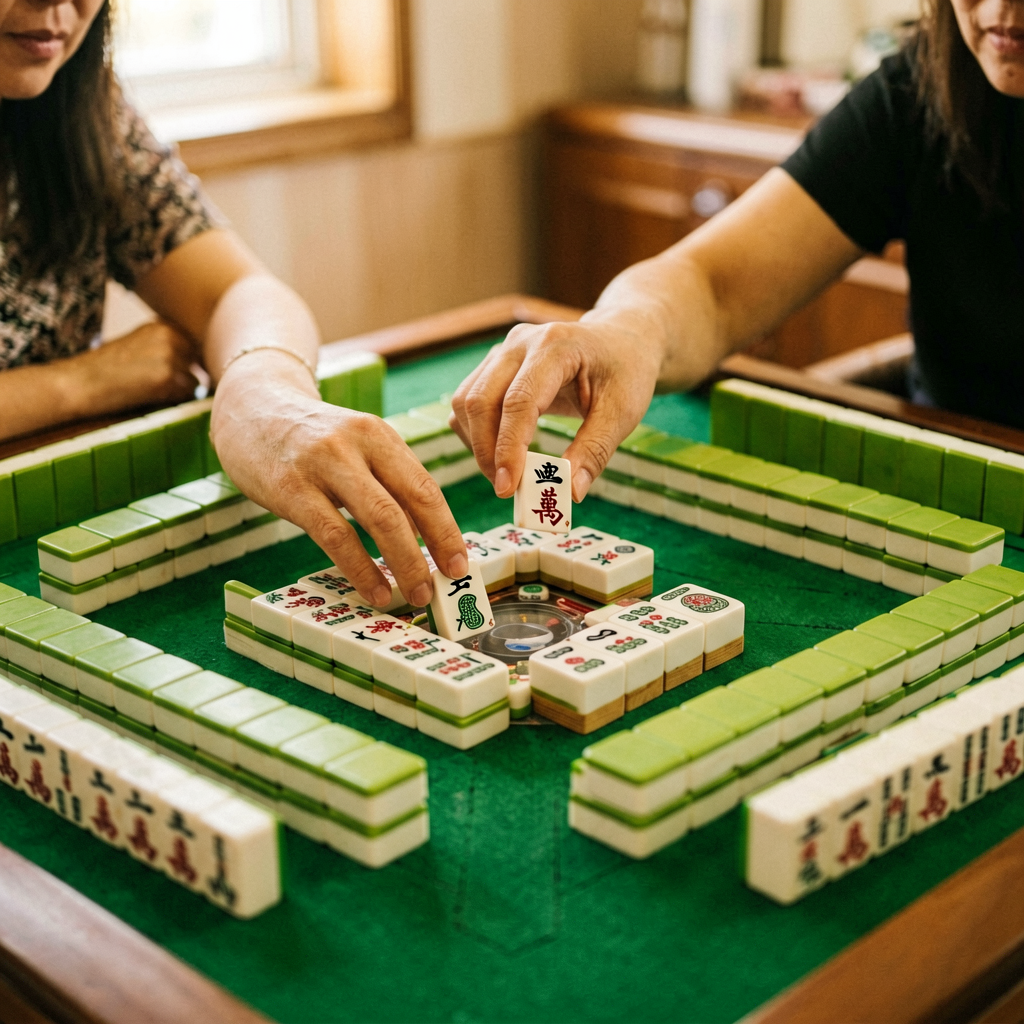
The jokerless bonus, and why anyone bothers
Look closely at the card and you’ll notice some hands are worth extra if you complete them without a single joker. It’s the League’s way of rewarding the hard road, and it’s a genuinely satisfying thing to pull off.
Should you chase it? Usually not on purpose. But if you’re deep into a hand and realize you’ve somehow never needed a joker, take a second look at the point value before you finish — you may be closer to a bigger score than you thought. Plenty of players have finished a jokerless hand without noticing and left points on the table.
How jokers should change the way you play
Strip it down to a handful of habits:
Count your jokers when the Charleston ends and let that number choose your section of the card. Two or more? Look for kongs and quints. Zero? Singles and Pairs suddenly looks a lot more attractive.
Scan every exposure for a swap before you discard. It takes three seconds and it’s free equity.
Think twice before exposing a set with a joker in it when the table is sharp.
And when a joker genuinely can’t help you and the discards are getting scary, remember that it’s the safest tile you’ll ever throw.
One small practical note
Joker tiles get handled more than any others in the set — picked up, swapped, passed between racks, pushed into exposures. On a cheap set they’re the first tiles to lose their finish, and a faded joker in a dim room genuinely slows the game down while someone squints at it.
It’s a small thing, but it’s the kind of small thing you notice on game night. Deep, clean engraving and a tile that keeps its face after a few hundred hands is worth more than it sounds — which is exactly why we obsess over it when we make ours.
Jokers are the reason American mahjong plays the way it does: faster, looser, more forgiving than its cousins, with a layer of table-watching strategy built right in. Learn what they can and can’t do, and the card stops looking like a wall of text and starts looking like a menu.