What’s Actually in an American Mahjong Set? A Plain Tour of Every Tile
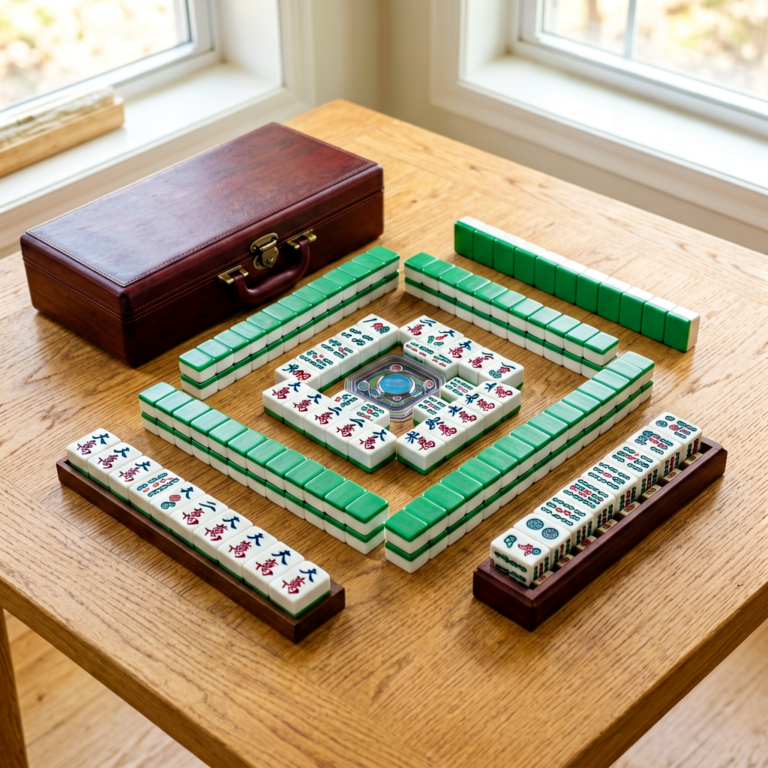
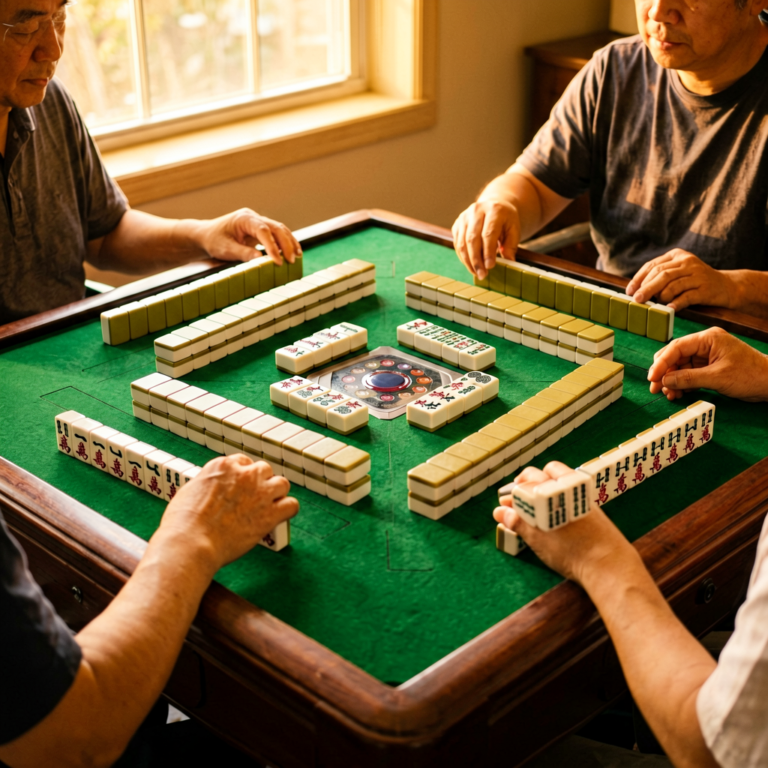
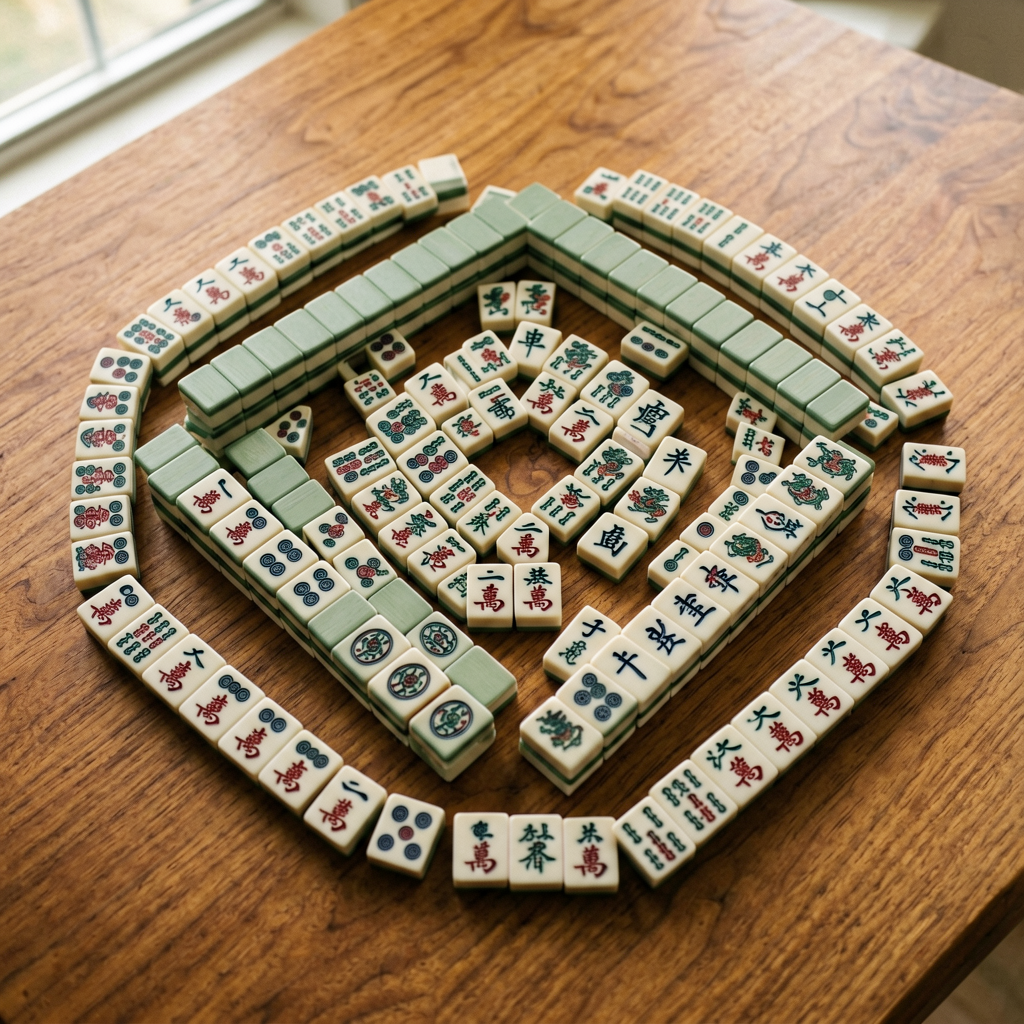
Open a new American mahjong set for the first time and it looks like somebody dumped a small library of tiny ivory bricks on your table. There are characters you don’t read, numbers you half recognize, dragons, flowers, and a handful of tiles that look like they belong to a different game entirely. One hundred and fifty-two of them.
Nobody tells you on the box where to start. So here’s the start: most of those tiles belong to one of three suits, a smaller pile are what players call the honors, and a few are special. Walk the set once and it stops being intimidating.
The three suits — your backbone (108 tiles)
A standard set carries 108 suit tiles, split evenly across three suits. Each suit runs from one to nine, and you get four identical copies of every single tile. That’s nine ranks, times four copies, times three suits — and there’s your 108.
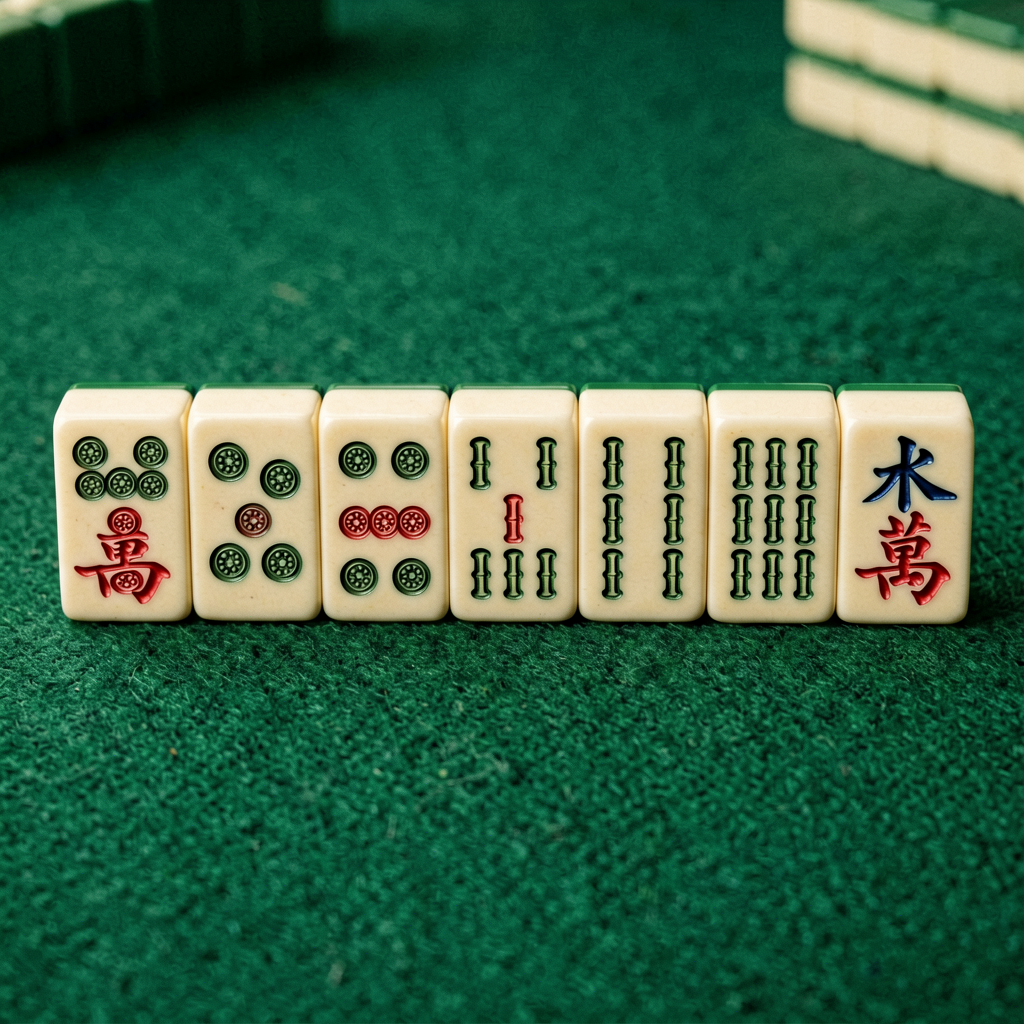
Dots (sometimes called Circles) are exactly what they look like: rings stacked in clean patterns. Bams (Bamboos) show stalks, with the one-bam usually drawn as a little bird. Craks (Characters) carry the Chinese numeral up top and the character for “ten thousand” underneath. If you’ve ever seen a Chinese mahjong set, these three suits are the same ones — they traveled over unchanged.
Everything you build eventually — every pung, kong, and run — comes out of these 108 tiles. When the card tells you to make a sequence of 2-3-4 Craks or a pung of 5 Dots, it’s pointing right here.
The honors — winds and dragons (28 tiles)
Past the suits sits a smaller, stranger group called the honors. Two kinds.
First, the winds: East, South, West, North. Four of each, sixteen tiles total. In American play they show up constantly on the card — whole hands are built out of winds, and your deal hands you a “wind of the round” and a “wind of the seat” that can be worth extra points when they line up.
Then the dragons: Red, Green, and White. Four of each, twelve tiles. The white dragon is the sneaky one — it’s usually a blank face with a thin blue or black outline, so newcomers stare at it wondering if the artwork fell off in shipping. It didn’t.
Winds and dragons never form sequences. You only ever match them in groups of identical tiles, which makes them predictable the moment you stop expecting runs out of them.
The flowers — eight tiles you’ll probably set aside
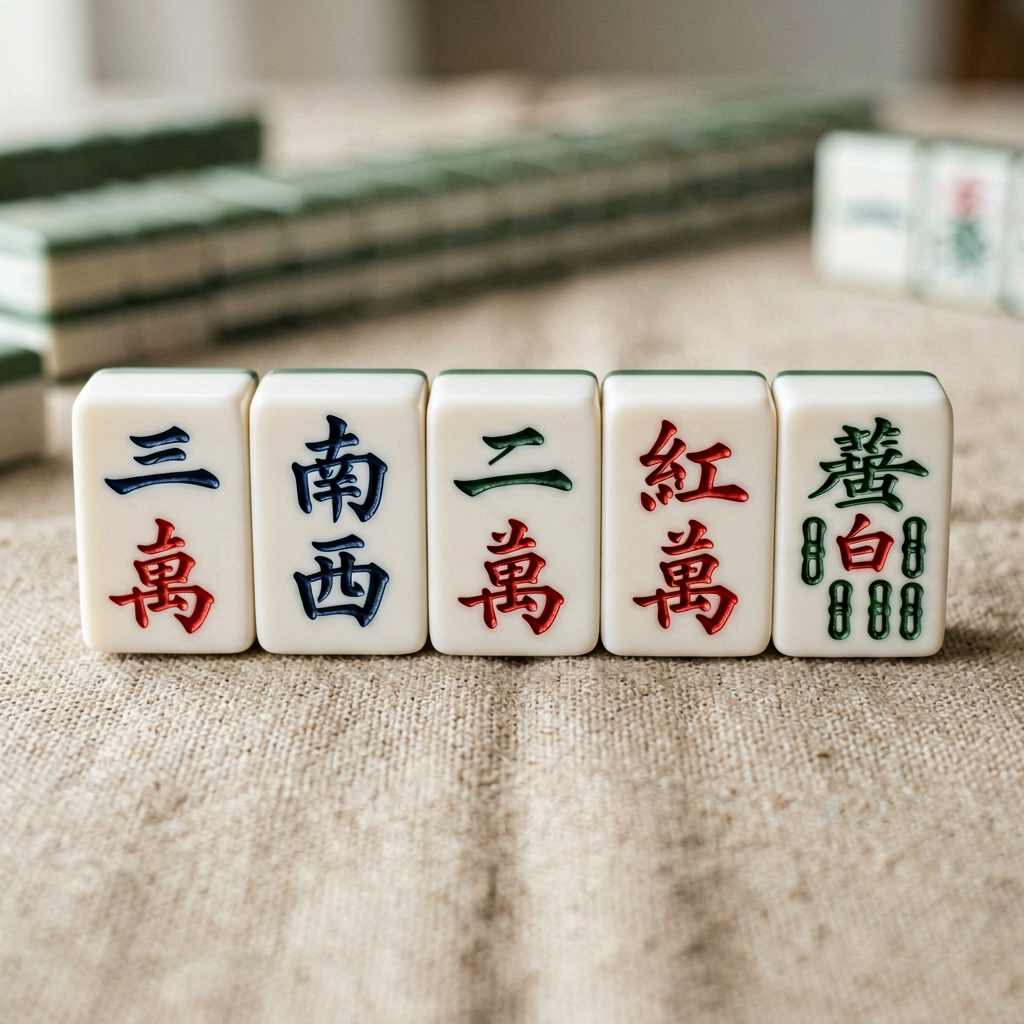
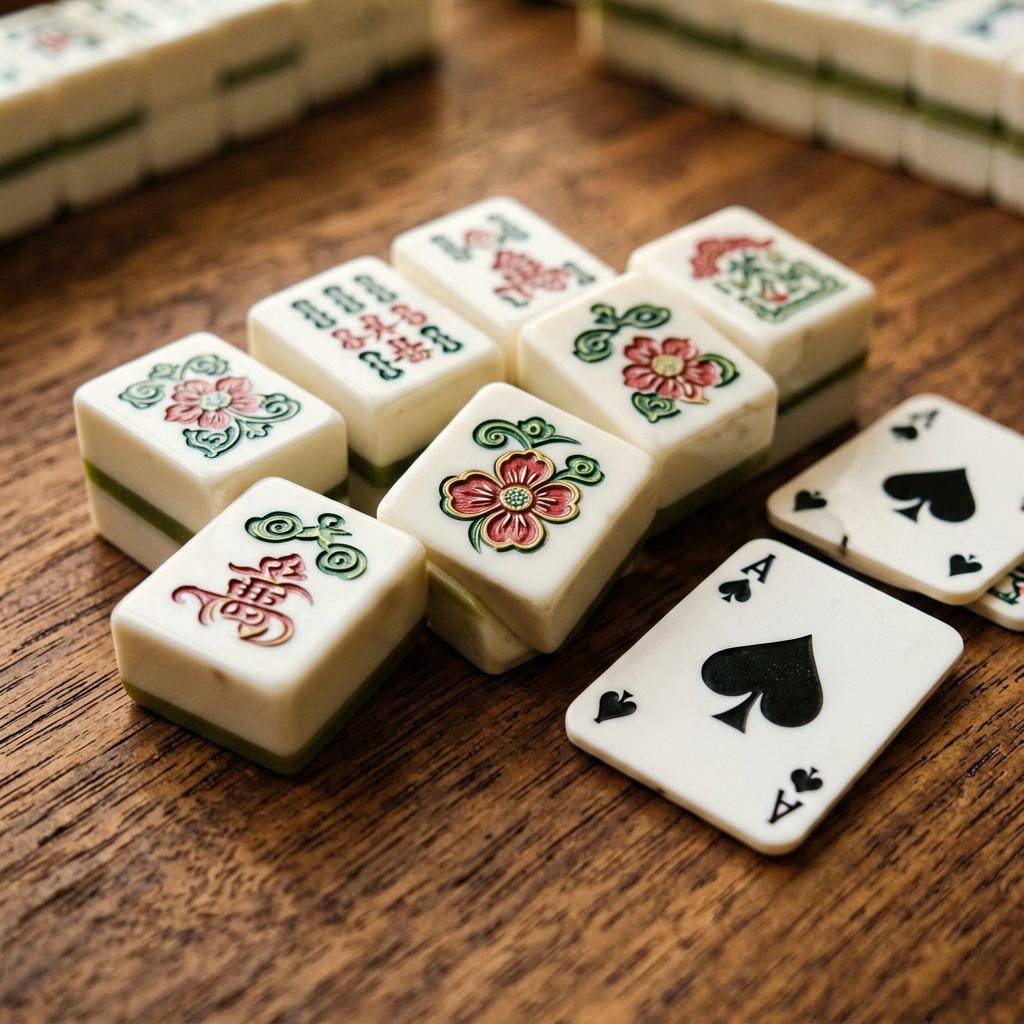
Here’s a quirk worth knowing up front. Your set includes eight flower tiles, and for most American League play you won’t actually use them. They’re carryovers from Chinese mahjong, where a flower scores as a bonus tile. The National Mah Jongg League card doesn’t call for them, so most groups just pull them out before dealing and let them sit in the box.
They’re part of why the count lands on 152 instead of 144, but don’t burn energy memorizing them. If you ever sit down with a house rule that does use them, somebody at the table will tell you before the first Charleston.
The jokers — eight wild tiles, and the reason the game feels different
And then there are the eight jokers. These are the tiles that don’t exist in any other version of the game, and they’re the single biggest reason American mahjong plays the way it does.
A joker stands in for any tile inside a group of three or more identical ones — pungs, kongs, quints. It can’t make a pair, and it can’t move during the Charleston. But it can be swapped off anyone’s exposed set if you happen to hold the real tile it’s standing in for, which opens up a whole layer of table-watching strategy that Chinese and Japanese players never have to think about.
I wrote a separate piece on how to actually use jokers well, because there’s more to them than “wild card.” For this tour, just know they’re in there, they’re powerful, and they’re uniquely American.
So what do you actually hold?
Count it up: 108 suits, 28 honors, 8 flowers, 8 jokers. That’s your 152.
When you sit down, your hand is thirteen tiles — fourteen once you draw — and almost all of them will be suits or honors. The flowers stay in the box; the jokers are mixed into the wall, waiting to be drawn or passed your way. The card tells you which combinations score; the tile types just tell you what’s possible.
Why this matters when you buy a set
A quick word from the manufacturing side, since that’s the corner we live in. The suit tiles and honors get handled hundreds of times in a single game — shuffled, racked, swapped, squinted at under bad lighting. On a cheap set the engraving goes soft fast, and a faded 5-Crak starts looking like a 6-Crak halfway through a hand. Clean, deep, consistent engraving across all 152 tiles isn’t a luxury. It’s the difference between a game that flows and a game that stalls while somebody argues about what they’re holding.
So the next time you tip a set onto the table, don’t see 152 mysteries. See three suits, a small pile of honors, some flowers you’ll ignore, and eight jokers doing the heavy lifting. Learn the suits and the honors and you’ve already got 136 of the 152 tiles figured out. The rest is just details — and now you know exactly where they live.