The Mental Game of American Mahjong: Small Habits That Quietly Make You Better
Most of what you need to play American mahjong is printed on the card. The hands are there. The scores are there. What the card can’t teach you is how to actually think at the table, and that’s the part that separates the people who keep improving from the people who stay stuck. The good news is the skills that matter are small, repeatable habits, not some talent you’re either born with or not.
Read the table before you read your hand
It’s tempting to grab your tiles and immediately start building toward a hand. Resist that for thirty seconds. Look at what’s already been discarded, and look at what your opponents have exposed. The discard pile tells you what’s safe and what’s gone. An exposed hand tells you what someone is chasing, which tells you what they might take from you.
You don’t need to be a detective. Just notice. If three dragons are already dead on the table, your dragon hand just got harder. If a player has stacked two same-suit runs, they’re not fishing for something random. A habit of glancing up costs you nothing and saves you from a lot of slow, doomed hands.
Patience beats cleverness more often than you’d think
New players fall in love with the flashy hands, the 50-point specials, the hands that feel like a flex. Then they sit there for an hour waiting for one specific tile that never comes. Patience in this game isn’t passive. It’s knowing when your current hand is already good enough and shifting toward it instead of chasing a bigger score that the table won’t give you.
The players who win regularly aren’t the ones attempting the hardest hands. They’re the ones who read the board, pick a realistic path, and don’t talk themselves into a longer shot just because it’s prettier. Boring and flexible beats ambitious and stuck, almost every time.

Decide your “out” early, then stay loose
Here’s a habit that sounds contradictory but works: pick a direction fast, then hold it lightly. Early in the hand, commit to a family of hands that fits your tiles. That stops you from dithering. But stay ready to pivot the moment the table shuts one option down. The mistake isn’t changing your plan. The mistake is clinging to a plan the discards have already killed.
A simple version of this: always know your second-best option. If your first hand dies, you should already have a rough sense of what you’d chase instead, so you’re not starting from zero mid-game. That readiness is most of what looks like “instinct” in better players.
Keep your reactions quiet
This one is underrated. When you pick up a great tile, don’t light up. When you get stuck, don’t sigh or slam anything down. The table is reading you exactly the way you’re reading it, and every visible reaction is free information you’re handing out. Calm is also just more pleasant to play with, and the players who are calm tend to get invited back and learn more from the regulars.
You don’t have to be a stone face. Just notice your tells and damp them a little. A steady pace, the same expression whether the draw is good or bad, makes you harder to read and easier to sit across from.
Practice the boring reps
People want the breakthrough, the one tip that fixes everything. There isn’t one. The real gain comes from playing often enough that the card stops being something you decode and starts being something you scan. Familiarity is a skill. The more hands you’ve seen, the faster you recognize which ones are alive in front of you.
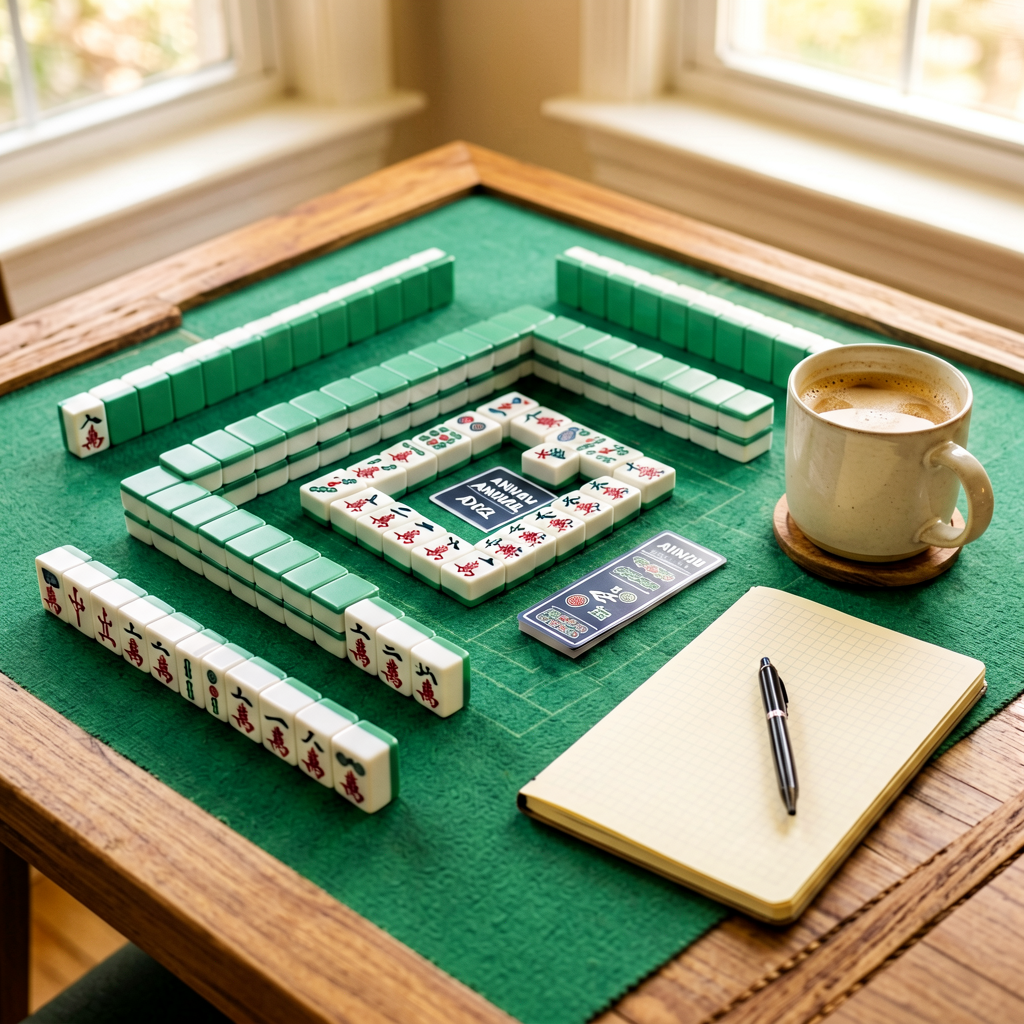
You don’t even need four players to build this. Spread the tiles, pick a hand, and work it solo. Run the Charleston in your head. Trace two or three paths to a win. Ten quiet minutes a few times a week will move you further than one frantic tournament.
Lose well, and you’ll win more
The last habit is the strangest one. When you lose, don’t spiral, and don’t blame the card. Ask yourself one useful question: what did I miss? Maybe it was a discard you should have read. Maybe it was a hand you clung to too long. The players who improve are the ones who treat a loss as a free lesson instead of an insult. Do that enough and the losses get shorter and the wins get longer, almost without you noticing.
The short version
American mahjong rewards the same quiet habits as most things worth getting good at. Watch before you act. Stay patient and flexible. Keep your face calm and your reactions your own. Put in the small, regular reps. And when you lose, take the lesson instead of the bruise.
None of this is on the card. All of it is why two people who know the same rules can play like different skill levels. The card gets you in the game. These habits are what keep you moving through it.