How to Spot Real Vintage Bakelite Mahjong Tiles (Before You Overpay)
There’s a particular kind of thrill that hits you at an estate sale. You’re digging through a box of somebody’s old games and there they are — a rack of tiles with that deep, warm glow you only see on the really old sets. Your brain immediately whispers: bakelite. Your wallet gets interested. Then the doubt kicks in: how do you actually know?
I’ve been burned by this. More than once I’ve carried home a “vintage bakelite” set that turned out to be modern resin with a good tan. So here’s the field guide I wish I’d had — the stuff you can check in the five minutes before you hand over cash.
First, what is bakelite anyway?
Bakelite isn’t plastic in the way we think of it now. It’s one of the first synthetic resins ever made, cooked up in the early 1900s, and it was the go-to material for American mahjong tiles through the 1930s, ’40s, and into the ’50s. The companies that made sets back then — names you’ll sometimes still find stamped underneath — poured this stuff into molds and then hand-finished each tile.
That handwork is the whole point. Real bakelite tiles were sanded, buffed, and engraved by people. Modern fakes are squeezed out of a machine in one clean shot. The difference shows if you know where to look.
The smell test (yes, really)
This is the oldest trick in the book and it still works. Rub a tile hard between your palms or against a wool sleeve for twenty seconds, then smell it. Genuine bakelite gives off a faint, chemical, almost medicinal scent — formaldehyde-ish, a little like a doctor’s office in 1952. Modern acrylic and resin smell like nothing, or like the craft store they came from.
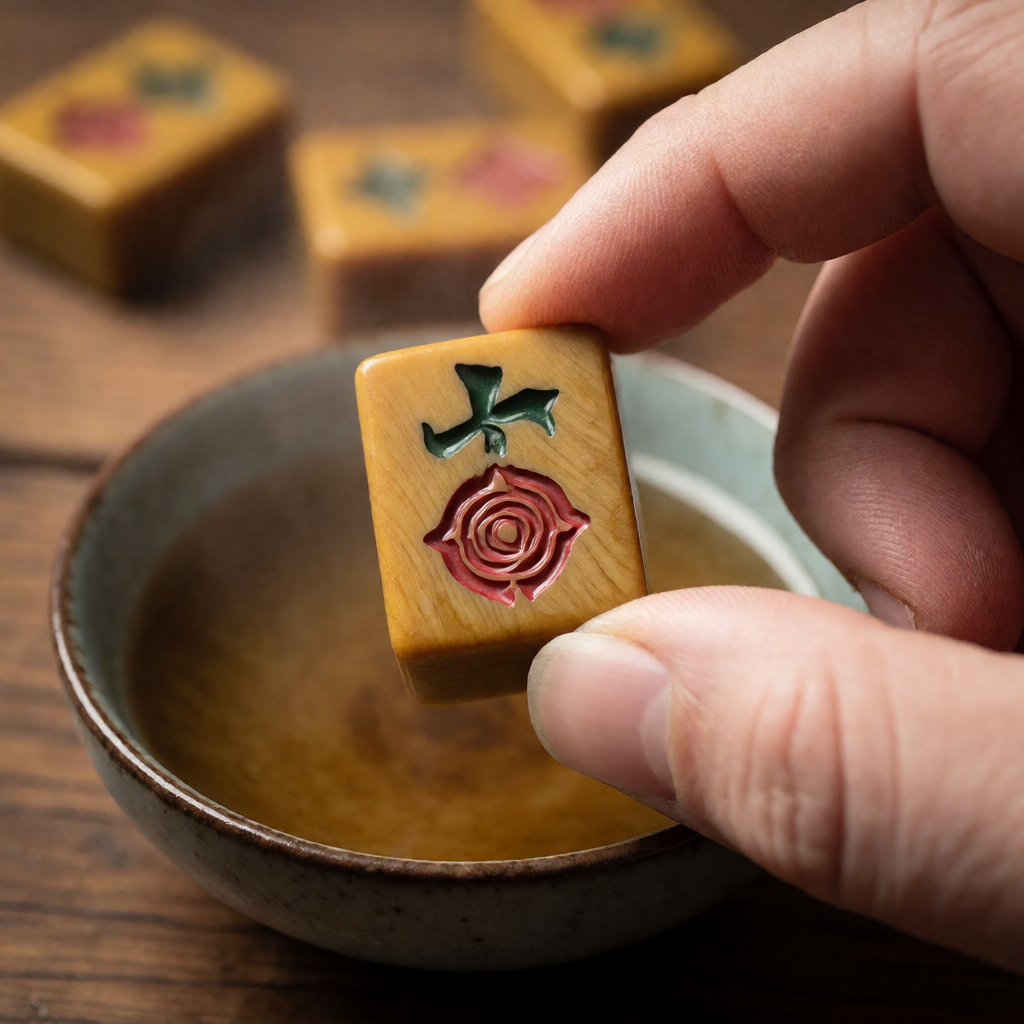
The hot-water version is even more reliable. Hold a tile under hot running water for a few seconds and sniff. Heat pulls the odor out fast. If there’s no smell at all, it’s almost certainly not bakelite.
Weight and the clack
Pick up a tile. Bakelite is dense and a touch heavy for its size. Drop it gently onto a wood table next to a modern tile and listen. Old bakelite lands with a lower, rounder clack — almost a knock. Acrylic rings higher and thinner, more like a knock on glass.
It’s subtle, but your ears learn it quick. After you’ve handled a few real ones, the sound alone starts giving sets away.
Look at the light through the edge
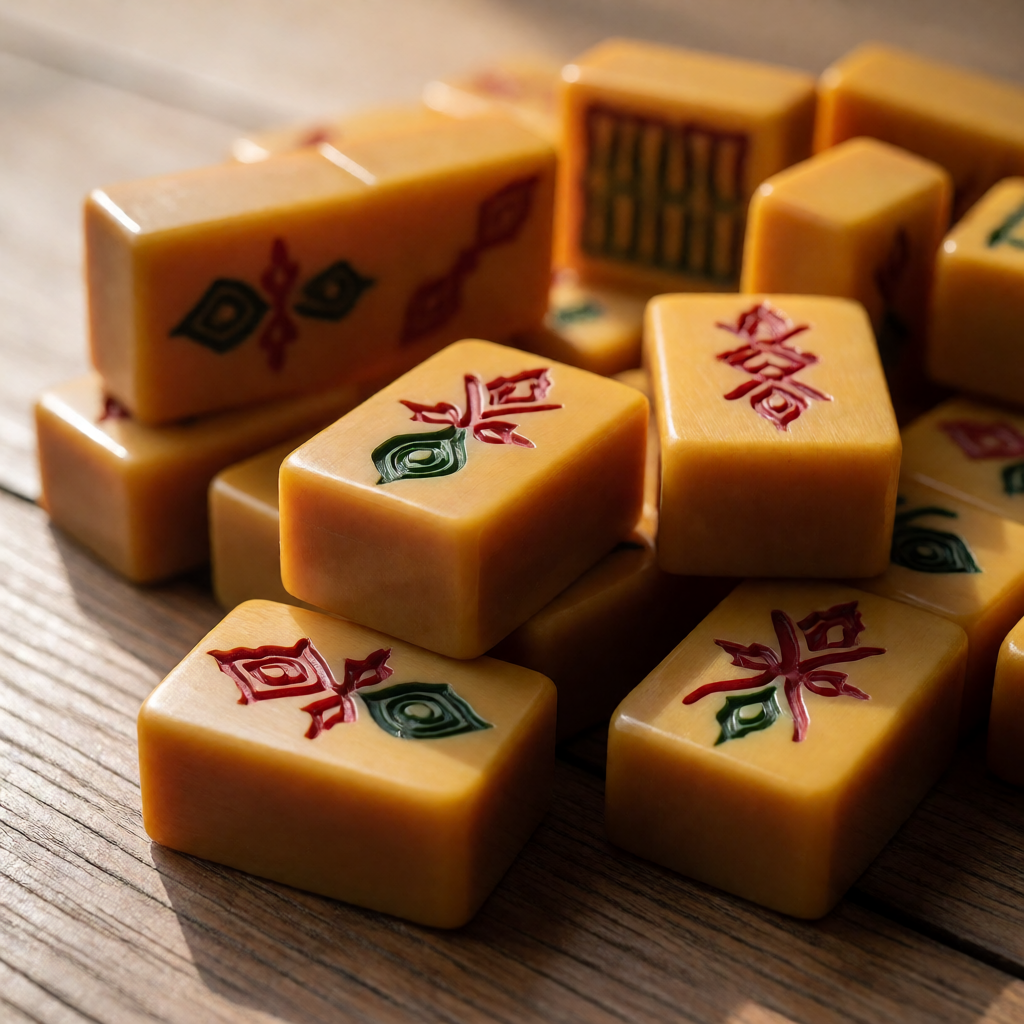
Hold a tile up to a bright window, edge-on. Real bakelite is semi-translucent — not clear, but it lets a little warm light bleed through, like honey. The color you see in the body is the color all the way through; bakelite wasn’t painted on the surface.
Modern resin fakes tend to be either dead opaque or suspiciously clear, and a lot of them have surface paint that scratches off. If the engraving shows bare white where the color wore through, that’s a tell.
The engraving tells on the fakes
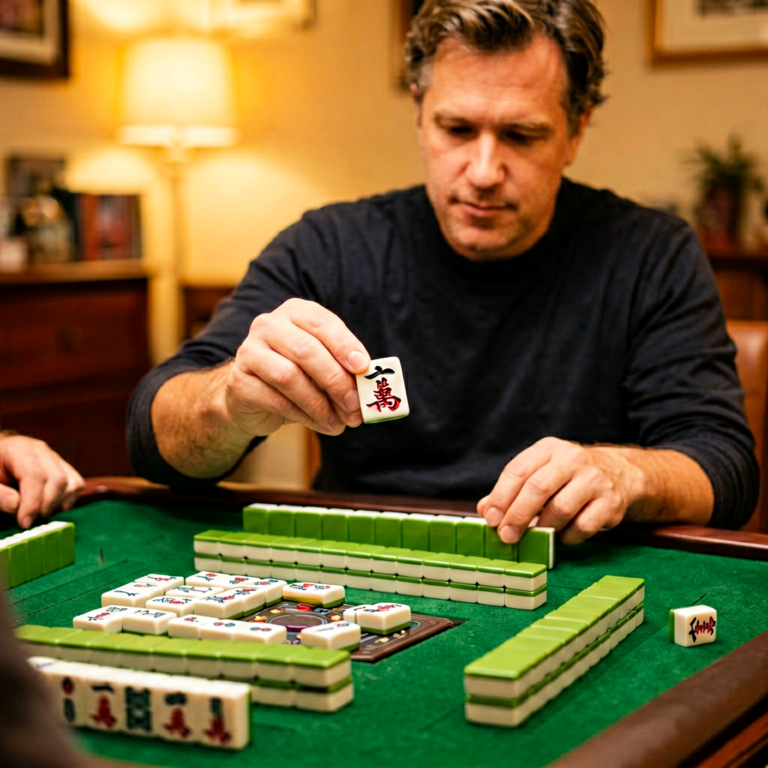
This is where the hand-finishing shows. On a true vintage tile, the symbols — the flowers, the dragons, the numbers — were carved and then the color was filled in by hand. You’ll see tiny inconsistencies. A line that’s a hair deeper here than there. A bit of color that pooled. That unevenness is your friend; it means a person made this.
Machine-made replicas are too perfect. Every tile in the set looks identical down to the micron, and the symbols sit proud of the surface like a sticker rather than cut into it.
Check the bottom for a maker’s mark
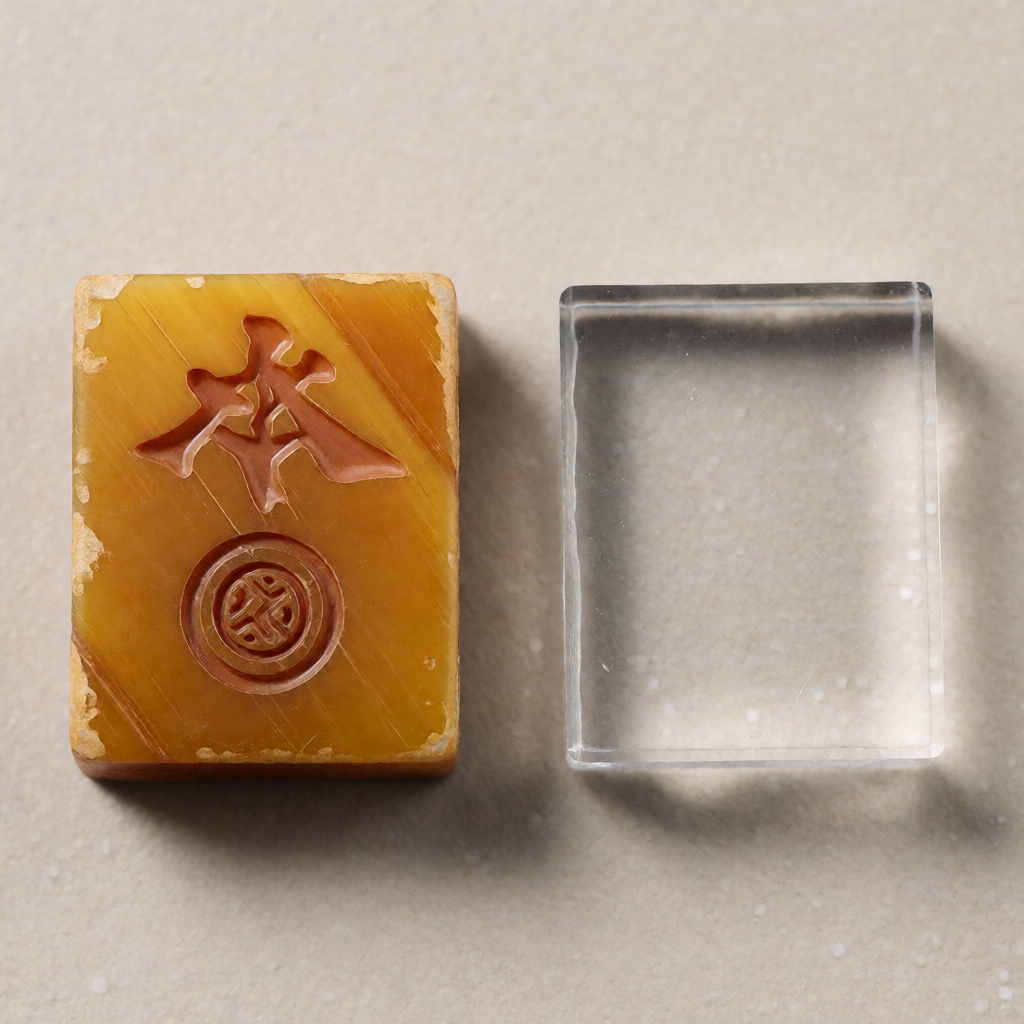
Flip the tiles over. Many American makers stamped or molded a mark on the base — C.C. Sales, Park Place, Royal, Oceana, and a handful of others show up on the better sets. A clear, period-correct mark isn’t proof by itself (reproductions copy them), but combined with the tests above it adds up.
Be careful with “complete set” claims, too. Old sets got mixed. If every tile is worn exactly the same and the marks all match, great. If half look fresher than the other half, you’ve got a marriage of two sets, which is fine for playing but worth less to a collector.
So what are they worth?
Honest answer: it depends, and it swings hard. A scuffed, incomplete bakelite set you’ll actually play with might run you under a hundred dollars. A clean, full, named-maker set in good color can fetch several hundred, and the rare ones go higher among collectors who care about the marks.
Don’t pay “antique” prices on a smell test alone. Run the whole checklist. The sellers who know what they have usually price it right; the ones who don’t are where the good finds hide.
Should you play with them?
You absolutely can, and a lot of people prefer it. The tiles feel different in the hand — warmer, grippier, with a weight that modern acrylic just doesn’t have. The only real caution is cleaning: skip the dishwasher, skip harsh solvents. A soft damp cloth and patience. Bakelite hates sudden heat and strong chemicals, and a cracked vintage tile is a small tragedy.
Where the new sets fit in
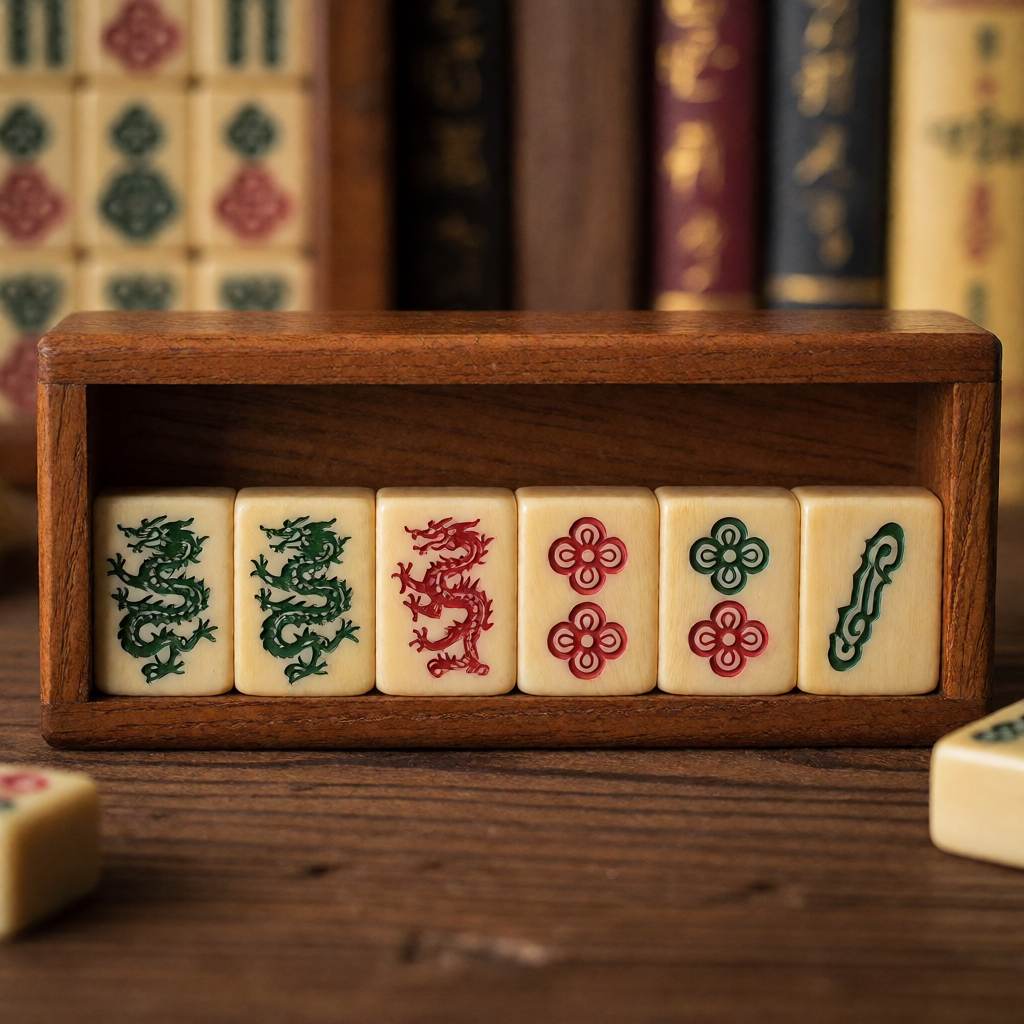
Here’s the thing I like about all this. The old bakelite sets are beautiful, but they’re finite — there’s only so much of it left, and most of it is worn or mixed. That’s part of why a good custom-made set still matters: you get the heft and the care in the hand without hunting estate sales on weekends. Whether you play vintage or new, the point is the same — tiles you actually want to pick up and pass around.
Next time you’re at a sale and that warm glow catches your eye, don’t just trust the label. Rub it, weigh it, hold it to the light. The real ones announce themselves if you give them thirty seconds.