
How to Read the American Mahjong Card (Without Panicking)
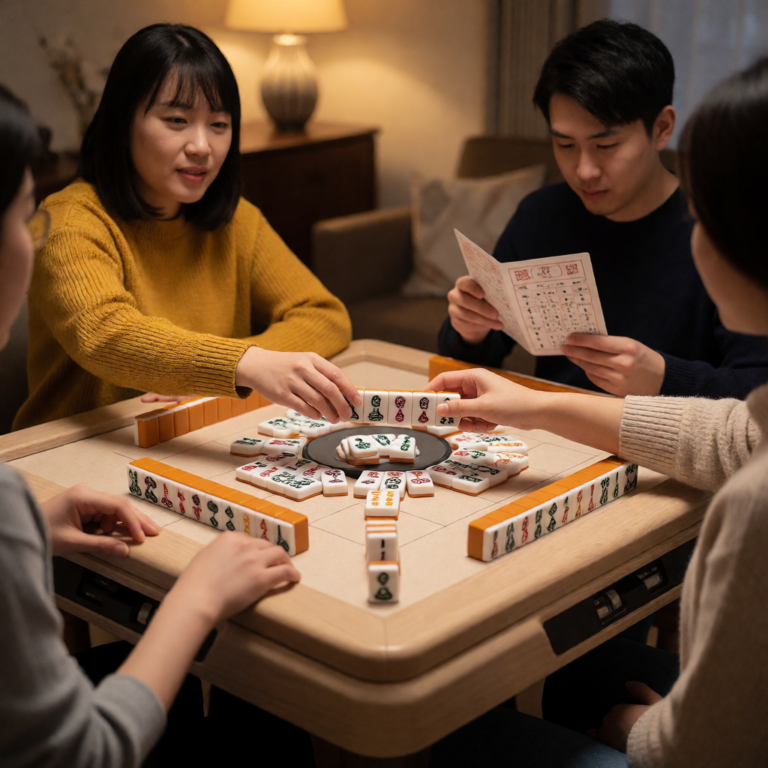
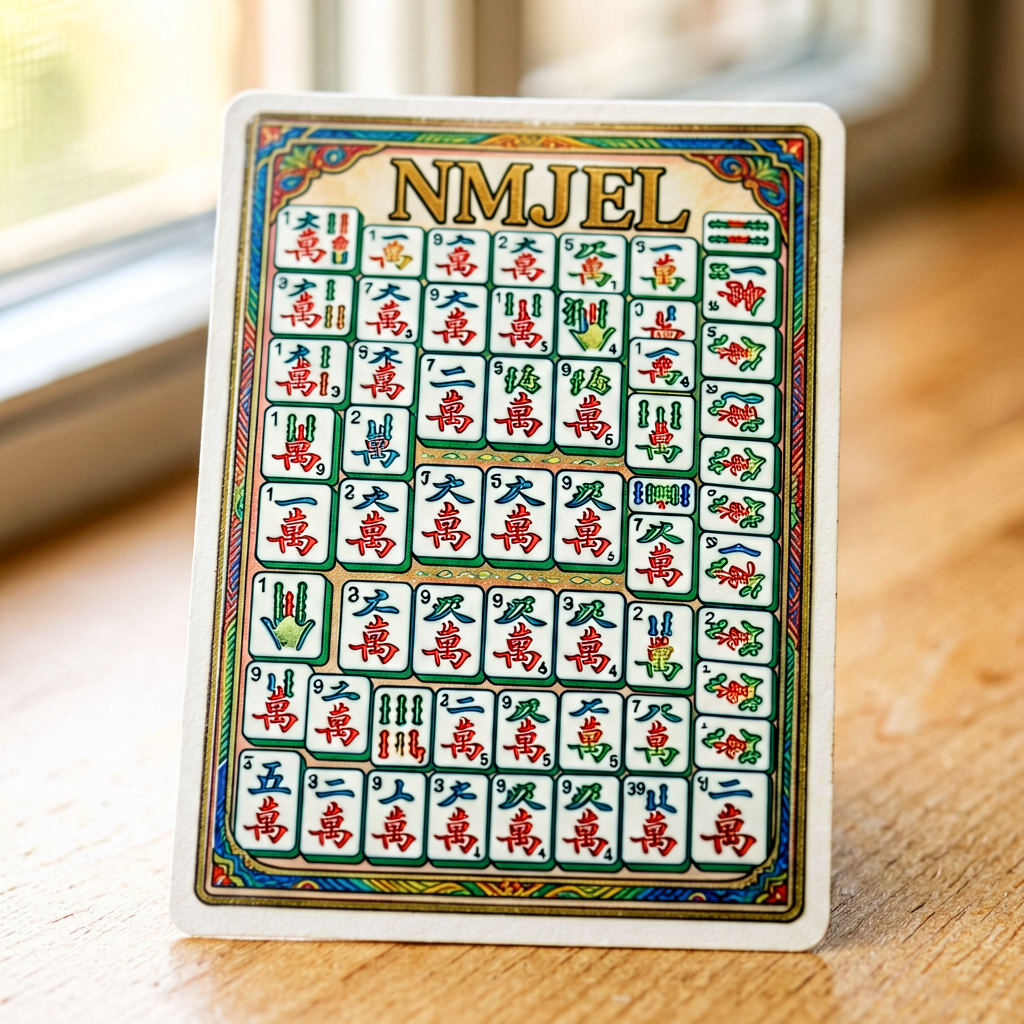
If you’ve watched a game of American mahjong for the first time, you’ve probably seen it: a player squinting at a small paper card like it holds the secrets of the universe. It kind of does. That card is the official annual rule sheet from the National Mah Jongg League, and in American mahjong it isn’t a suggestion — it’s the law of the table.
The good news? You don’t need to memorize it. You need to know how to read it. Here’s the walkthrough I wish someone had handed me on day one.
What the card actually is
Every year the NMJL publishes one card. It drops on July 1, and the previous year’s card is retired the same day. The card lists the exact hands you’re allowed to build that season, grouped into families. Miss the change and you’ll be calling “mahjong” on a hand that scored last year but is dead this year. It happens to everyone at least once, and the table will let you know.
The card is printed in color-coded sections. Each section is a hand family — things like “Youth,” “Year of…,” “Winds,” “Dragons,” “2468,” “Quints,” and “Nevada.” The family name tells you the theme; the lines underneath tell you the pattern.
How a single line works
Here’s the part that scares people, but it’s simpler than it looks. Each line on the card describes one legal hand as a row of tile groups.
Take a line that reads something like:
111 222 333 4444 + 55
Read it left to right. Each number group is a set of identical tiles. “111” means three ones of the same suit. “4444” means four fours — that’s a kong, and the way it’s written tells you it’s a four-of-a-kind. “55” is the pair that finishes the hand.
The suit is shown by the section’s column. Dots, cracks (bams), and bams (the sticks) each get their own place. So “111” in the dots column means three dot-ones, not three of anything else.
Jokers change everything
American mahjong has jokers, and the card loves them. A line marked “Any” or carrying a “+” lets you swap in jokers for some of the tiles. A “0” in a group often means “any tile works here.” A hand that says “NEWS” wants one of each wind — North, East, West, South.
The catch: jokers can’t be the pair that completes your hand, and they’re barred from certain designated spots (the card will say so). New players burn their jokers early and then can’t finish. If you can, hold at least one back.
Find your hand before you build
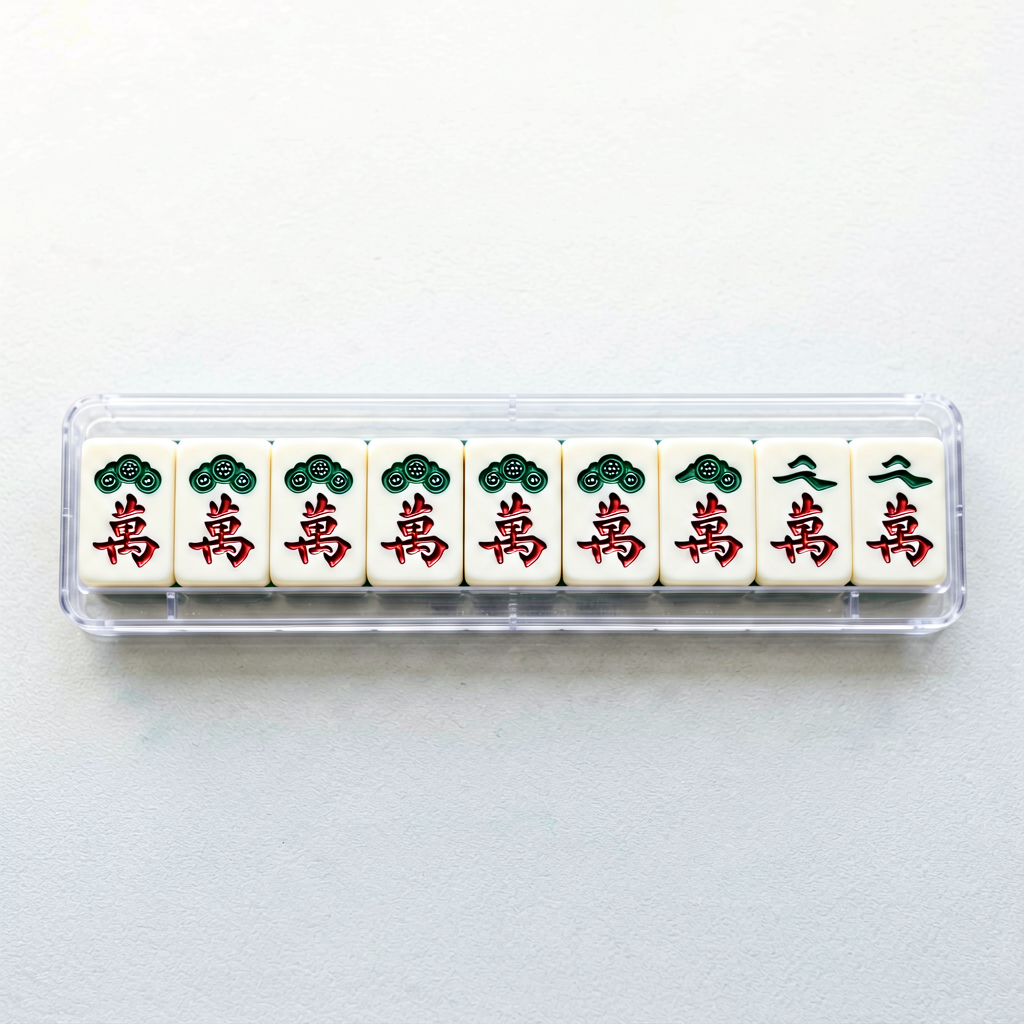
Don’t pick a hand and then pray your tiles fit. Do it the other way around. Sort your rack, look at what you’ve actually got, then scan the card for a family that matches your strongest suit. Drowning in dots? Start with a dots hand. Sitting on a pile of winds? Look at the Winds section.
Most beginners overcommit to one hand far too early. The better habit: keep two or three candidate hands alive until the Charleston — the tile-passing ritual — is done, then commit to the one your tiles are telling you to play.
When the card turns on you
Mid-game the card doesn’t change, but your tiles do. If your hand stalls, the card is still your reference — flip back, find a related line in the same family, and pivot. Players who only ever stare at one line get stuck. Players who read the whole family adapt.
A few things that trip everyone up
- The “X” symbol means one of each: often one dot, one crack, one bam.
- Flowers and zeroes are wild-ish but follow their own rules — read the note at the bottom of the section.
- Some hands want a specific run like “123 123 123,” a sequence, not a group of identicals.
- The “Year” hands change with the calendar year printed on the card.
Why it’s worth the effort
Once the card clicks, the game opens up. You stop playing memory and start playing strategy — reading opponents, managing jokers, knowing when a hand is dead. And if you ever want a card that’s easier on the eyes, that’s exactly why custom-printed cards and tiles exist.
The card isn’t the enemy. It’s the scoreboard, the rulebook, and the puzzle all at once. Give it ten minutes before your next game and you’ll wonder why it ever felt intimidating.