-
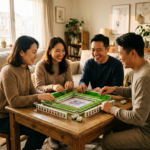
The Etiquette of American Mahjong: Unwritten Rules That Keep the Table Friendly
You can learn the rules of American mahjong in an afternoon. The card, the Charleston, the jokers — none of it is that hard once someone walks you through it. But there’s a second layer that nobody prints on the rule sheet, and it’s the part that decides whether people actually want to play with you again. It’s etiquette. The little unwritten habits that keep four strangers, or four friends, at the same table for three hours without anyone wanting to flip the board. If you grew up with the game, a lot of this is muscle memory. If you’re…
-
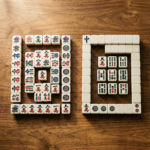
American Mahjong vs. Japanese Riichi: Two Totally Different Games With the Same Tiles
Walk into any game shop and you’ll see them sitting side by side — same little rectangles, same dragons and winds, same satisfying clack when you shuffle. But here’s the thing nobody tells you up front: American mahjong and Japanese riichi are not the same game wearing different clothes. They share an ancestor and a tile set that looks familiar, and then they go completely their own way. If you’ve only ever played one, the other will feel like learning chess after years of checkers. American tiles carry extra suits, flowers, and those all-important jokers. How American mahjong actually plays…
-

Why American Mahjong Is Good for Your Brain and Your Social Life
You think you are just playing a game. Two hours pass, you look up, and you have laughed more than you did all week. The tiles are still warm from your hands. Something about American mahjong does that to people, and it is not only the winning. Players have been saying mahjong is good for you for a hundred years, usually in the same breath as crossword puzzles and a good walk. The difference is that mahjong asks for your hands, your eyes, your memory, and three other people at the same time. That combination is rarer than it sounds,…
-
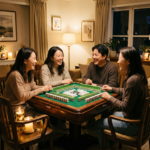
How to Host an American Mahjong Night Your Friends Will Actually Want to Repeat
You sent the text. Four people said yes. Now what. Hosting an American mahjong night sounds more intimidating than it is, mostly because everyone assumes they need to be a tournament player before they are allowed to own a table. You do not. You need a set, a card, and a plan that keeps people laughing instead of googling the rules under the table. The hosts who pull it off almost never do the thing beginners fear most: they do not run a class. They set up the room, hand people the card, and let the game teach itself while…
-
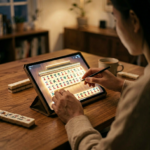
How to Play American Mahjong Online: Apps, Virtual Tables, and What You Actually Learn
Someone asks this almost every week: can I just learn American mahjong on my phone? The honest answer is yes, with a catch the app store blurbs do not mention. You can absolutely learn the shape of the game online. You will not learn the part that makes people keep playing, and that part is physical. This is not a takedown of the apps. A few of them are genuinely good, and I have sent more than one nervous beginner to one before a first game. But there is a difference between learning the rules and learning the game, and…
-
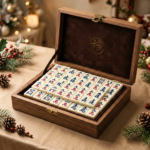
Why Custom American Mahjong Tiles Make the Best Gift (and How to Get Them Right)
Most gift guides tell you the same thing: give an experience, not a thing. Nice line, useless advice. You still have to walk in holding a bag, and a cooking-class voucher feels thin next to what most people actually want, which is a reason to put the phone down and sit with people they like. Custom American mahjong tiles are weirdly good at this. They look like a nice object on a shelf, then come out and become an entire evening. They get used, they get personalized, and if you order them right they last long enough to be the…
-
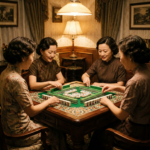
How American Mahjong Became a Women’s Game: A Hundred-Year Story
In the spring of 1922, a New York importer named Joseph Babcock started handing out small green booklets with a strange request attached. Play this Chinese game the way the booklet says, he wrote, not the way your friend in the next town learned it. Within two years, Americans had bought somewhere north of a million mahjong sets, and the click of tiles was coming out of parlors from Brooklyn to Beverly Hills. Then, almost as fast, it collapsed. The 1920s craze ran out of steam, and for a while mahjong looked like a fad that had simply burned off.…
-
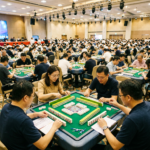
American Mahjong Tournaments: What to Expect at Your First One
Tournaments scare people who only know the weekly game. The casual table is forgiving. Someone miscounts, you laugh, you fix it, nobody cares. A tournament is the same game with a clock on the wall, a scorekeeper at the table, and three strangers watching your discard. It is also, honestly, the most fun a lot of players ever have with the game. If you have learned the basics and you are wondering what the competitive side looks like, here is the version nobody writes down. How a tournament differs from your Tuesday night At home you play for points or…
-
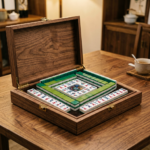
How to Take Care of Your American Mahjong Set: Quiet Tiles, Clean Cases, and a Set That Lasts
There is a moment, a few months into owning a set, when you notice the tiles don’t sound the way they used to. They clack instead of click. Or the case lid doesn’t quite close. Or a number has worn pale on your most-played tile. None of it is dramatic. It adds up. A good American mahjong set is not a cheap thing, and the ones worth owning are built to last decades if you treat them right. Here is what actually keeps a set in playing shape, from someone who has ruined one by not paying attention. The tiles:…
-
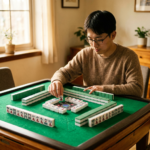
The Most Common Mistakes Beginners Make in American Mahjong
Every game has a learning curve, and American mahjong has one of the steeper ones. Not because the rules are hard to read, but because the habits that trip people up are sneaky. You can know the card inside out and still lose half your hands to small, repeatable errors. Here are the mistakes new players make most often, and the simple fixes that actually stick. 1. Waiting too long to commit to a hand This is the big one. In American mahjong you do not just build any hand that comes together. You pick a pattern off the annual…