-

No Two Tables Alike: How American Mahjong Changes From City to City and Family to Family
People talk about American mahjong as if it is one game with one rulebook. It is not. The tiles are identical, the card is shared, but the way a table actually plays can be totally different depending on where you are sitting and whose mother taught you. Spend a month visiting clubs and you start to notice it: the same hand, called a different way, with a different rhythm, and a house tradition nobody wrote down. This is not a bug. It is the whole charm. Mahjong in the US grew up in living rooms and community centers, not in…
-

Why American Mahjong Is Suddenly Everywhere Again: The New Wave of Players Picking It Up
If you have been online much this past year, you have probably seen it. A clip of tiles clacking, a friend’s story from a game night, a cafe you like posting that it now hosts mahjong on Thursdays. Eighteen months ago almost nobody under forty I knew had touched a mahjong set. Now half of them own one. This is not the first time the game has surged, and it will not be the last. But the shape of this wave is different, and if you are thinking about joining it, it helps to know what is actually going on.…
-
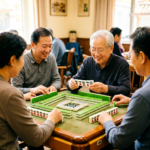
American Mahjong for Every Hand and Eye: Left-Handed Racks, Large Tiles, and Tables Everyone Can Join
There is a version of American mahjong that a lot of people quietly drop out of, not because they stopped enjoying it, but because the table stopped fitting them. Hands get stiff. Eyes need more light than they used to. A right-handed rack just does not work for a left-handed player. None of that means the game is over. It usually means one or two small changes are missing. This is the guide I wish more groups had. None of it is complicated, and most of it costs nothing. It is about keeping the people you like playing at the…
-

Dice, Seats, and East: The Two Minutes Before an American Mahjong Game Starts
Watch a group that has played together for years and the first two minutes look like choreography. Dice come out, somebody says a number, seats shuffle around, a small marker lands in front of one player, walls get pushed and split, tiles fly onto racks. Nobody explains anything. Thirty seconds later the Charleston is already happening. If you are new, that opening stretch is the most confusing part of the whole afternoon, and it is the part almost no beginner guide bothers to slow down. So here it is, slowly. Two dice decide seats, the dealer, and where the wall…
-
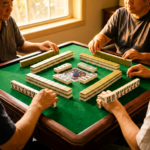
When Nobody Wins: Wall Games in American Mahjong and How to Play the Last Tiles
Nobody warns you about this one. You spend your first few games learning the card, the Charleston, the calling, and then one afternoon the tiles in the middle simply run out. Someone says “that’s a wall game,” everyone shrugs, and the tiles get pushed together for a reshuffle. No winner. No points. The whole hand just evaporates. New players usually take it as a mistake, like something went wrong. It did not. A wall game is a normal, expected outcome, and how you handle the last stretch of a hand says more about your play than the flashy exposure you…
-
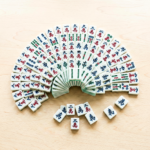
American Mahjong Glossary: Every Term You’ll Hear at the Table, Decoded
You sit down at your first American mahjong table and within five minutes you are completely lost. Someone calls pung, someone else announces a Charleston, and a third person is arguing about an exposure like it is the most normal thing in the world. It is not normal. Not yet. American mahjong has its own vocabulary, and nobody hands you the dictionary on the way in. This is that dictionary. Keep it open on your phone for the first few games. You do not need to memorize it. You just need to recognize the words when they get said out…
-

How to Teach a Friend American Mahjong in One Afternoon (Without Either of You Quitting)
The fastest way to get someone into American mahjong is not a rulebook. It is you, a table, and one lazy afternoon. Most people who say they would never learn a game this complicated change their mind the moment a friend sits down and makes it feel like play instead of homework. The trick is not what you teach. It is how much you are willing to leave out. I have walked a lot of first-timers through their first hands, and the ones who came back were never the ones who learned the most in session one. They were the…
-
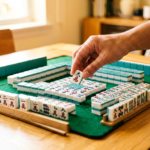
How to Discard Smarter in American Mahjong: A No-Math Guide to Tile Efficiency
There is a moment every American mahjong player hits, usually around their twentieth game. You are staring at your rack, the wall is nearly gone, and you realize you have been one tile away from a hand for the last eight draws. Meanwhile the person across from you, who you were sure was lost, quietly calls a discard and wins. The difference was not luck. It was what each of you threw away an hour earlier. The thing nobody tells beginners is that in American mahjong your draws matter less than your discards. You have no control over what comes…
-
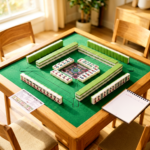
House Rules in American Mahjong: The Table Variations Nobody Writes Down
You can learn the card, memorize the Charleston, and still sit down at a new table and get quietly corrected within five minutes. Not because you were wrong, but because that table does something a little differently than the one you learned on. Welcome to house rules, the layer of American mahjong that nobody prints in a booklet and everybody assumes you already know. House rules are not cheating and they are not sloppy play. They are what happens when a group plays together for years and settles small questions their own way. The problems only start when four people…
-
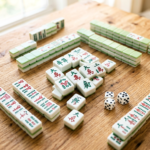
Luck vs. Skill in American Mahjong: How Much of the Game Is Actually in Your Hands?
Every newcomer asks the same question, usually after a hand they thought was dead suddenly lands a win, or a hand they built perfectly falls apart on the last draw. Is American mahjong luck or skill? People want a clean answer. The honest one is messier: it is both, and which one is running the show changes depending on who is sitting at the table. You cannot remove the luck. You also cannot pretend the skill is not there. The interesting part is figuring out where one ends and the other begins, because that line is exactly where you get…